Introduction
Most sales pipelines aren't small — they're just full of the wrong leads. Reps chase contacts who will never buy, marketing celebrates volume while sales rejects half the queue, and quotas slip despite high activity levels.
According to Salesforce, reps already spend 60% of their time on non-selling tasks. Add unqualified leads to that equation, and the math gets painful fast.
Lead qualification gets discussed constantly, yet the cost of doing it poorly is concrete: reps burn out chasing dead-end accounts, forecasts miss by wide margins, and marketing budgets keep getting optimized for lead volume rather than revenue.
This article breaks down what a Sales Qualified Lead actually is, why the definition matters beyond CRM taxonomy, and what changes operationally when your team gets it right.
Key Takeaways
- An SQL is a prospect who fits your ICP and has taken a specific high-intent action signaling readiness for direct sales engagement
- SQLs differ from MQLs in position and intent — MQLs show interest, SQLs show buying readiness
- A shared SQL definition forces sales and marketing to align around revenue quality, not lead volume
- Undocumented SQL criteria leads to inconsistent qualification and unreliable pipeline forecasts
- Real-time engagement signals help sales teams reach SQL-ready prospects while buying intent is still active
What Is a Sales Qualified Lead (SQL)?
An SQL is a prospect who fits your Ideal Customer Profile (ICP) and has taken a specific high-intent action — requesting a demo, asking about pricing, or initiating a sales conversation — that signals they're ready for direct engagement with a sales rep.
That distinction matters. An SQL isn't just an interested person. It's a person whose behavior justifies the cost of a rep's time.
The Lead Lifecycle
SQLs sit at a specific point in the qualification journey:
Lead → MQL → SQL → Opportunity → Closed Won/Lost
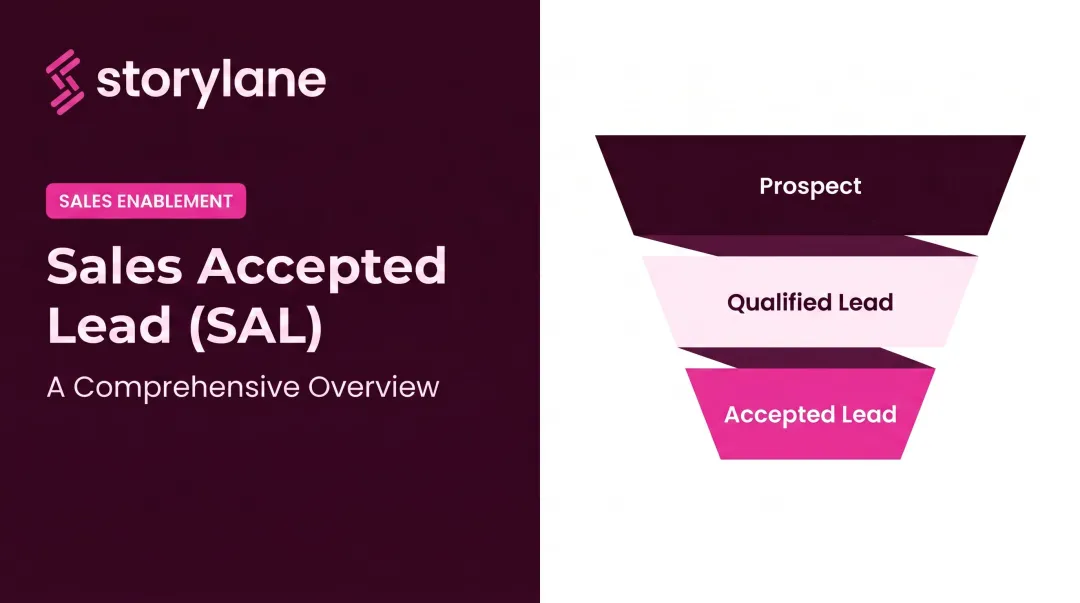
Each stage represents a higher bar. Leads are unvetted contacts. MQLs have shown engagement worth marketing to. SQLs have crossed into demonstrated buying intent. Opportunities are active deals with a clear path forward.
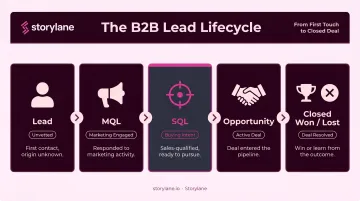
The SQL stage is the gatekeeping decision — the moment a rep's direct involvement becomes justified rather than premature.
SQL vs. MQL: Key Differences
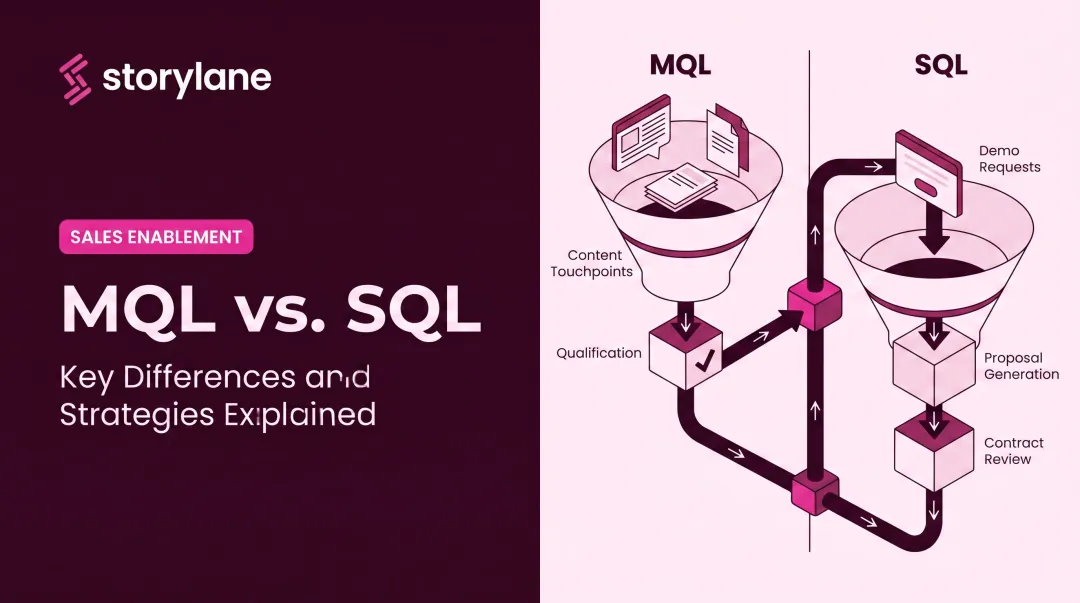
The gap between MQL and SQL isn't about interest level. It's about whether a prospect has taken a definitive action that signals they're evaluating a purchase.
| Signal Type | MQL | SQL |
|---|---|---|
| Content download | ✓ | — |
| Webinar attendance | ✓ | — |
| Pricing page visit | ✓ (borderline) | — |
| Demo request | — | ✓ |
| Free trial activation (ICP fit) | — | ✓ |
| Pricing inquiry or consultation booking | — | ✓ |
What counts as the SQL threshold varies by business model:
- B2B SaaS: Demo request or free trial sign-up with ICP fit
- Professional services: Consultation booking or scoped project inquiry
- Enterprise software: RFP submission, proof-of-concept request, or economic buyer meeting
Conflating MQLs with SQLs has a direct cost: reps chase prospects who aren't ready to buy, and close rates fall. McKinsey's analysis of nearly 500 B2B companies found non-selling activities already consume two-thirds of the average sales team's time. Unqualified leads push that number higher.
Key Advantages of Making SQLs Central to Your Sales Process
The value of a clear SQL definition isn't theoretical. It shows up in how reps spend their hours, how marketing measures impact, and how accurately leaders can forecast the quarter.
Sales Reps Spend Time Where It Counts
Without SQL criteria, reps distribute effort equally across inbound leads. High activity, low conversion. The SQL stage acts as a prioritization filter, directing energy toward prospects most likely to close.
The SQL stage also changes the texture of rep conversations. Instead of generic outreach, reps enter each interaction with context: what the prospect did, which features they explored, how far along they are in their evaluation. That context makes follow-up relevant rather than random.
For smaller teams, rep capacity is the real bottleneck. Every hour spent on an unqualified lead is an hour not spent on a deal that could close.
McKinsey found top-performing B2B organizations improve sales productivity by up to 30% by offloading non-selling work and opening more customer-facing capacity. Tighter SQL criteria achieves the same effect by filtering what reaches reps in the first place.
Tools that surface engagement signals in real time accelerate this advantage. Platforms like Storylane show exactly how deeply a prospect explored your product — which features they spent time on, where they dropped off, whether they clicked a demo CTA — and alert sales teams when high-intent behavior occurs. That level of specificity lets reps prioritize SQLs by demonstrated engagement, not guesswork.
Aligns Sales and Marketing Around Revenue, Not Volume
When SQL criteria are vague or inconsistently applied, a familiar pattern emerges: marketing optimizes for MQL volume, sales rejects a large share of those leads, and both teams blame each other for pipeline failures.
A shared SQL definition breaks this loop. It converts alignment from a topic on meeting agendas into a measurable operating rule. The criteria become objective: ICP fit plus a specific intent action. Marketing now has a meaningful KPI beyond lead count. Sales receives leads they trust.
Forrester found that firms with high alignment across customer-facing functions report 2.4x higher revenue growth and 2x higher profitability growth than low-alignment peers. That gap widens as organizations scale — informal alignment between two people doesn't survive headcount growth. Documented SQL criteria does.
Improves Pipeline Predictability and Win Rate
SQLs create a cleaner, higher-confidence cohort of deals. Because entry criteria are defined, the average quality of opportunities flowing from SQLs is more consistent, which makes it significantly easier for sales leaders to forecast revenue accurately.
Tracking MQL-to-SQL rate and SQL-to-close rate over time also creates a feedback loop. Patterns emerge: which lead sources produce the strongest SQLs, which qualification signals correlate with closed-won, which rep behaviors accelerate progression. Each sales cycle adds data that sharpens the next one.
The pipeline quality stakes are measurable. Ebsta and Pavilion's 2024 B2B Sales Benchmark Report analyzed 4.2 million opportunities and $54 billion in revenue, and the findings are hard to ignore:
- 44% of deals slipped past their expected close date
- 31% of opportunities were already overdue when examined
- Win rates dropped 77% when close dates moved more than three times
- Opportunities that skipped a qualification stage were 46% less likely to close
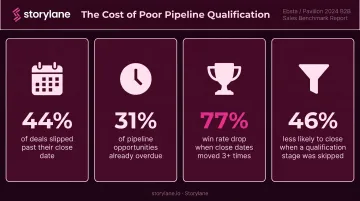
A rigorous SQL process is what keeps deals from entering that pipeline in the first place.
What Happens When SQL Qualification Is Missing
Poor qualification rarely announces itself clearly. It disguises itself as a pipeline problem, a market problem, or a rep performance problem. By the time teams trace it back to missing SQL criteria, the damage is already done.
Here's what actually happens when SQL criteria are absent or ignored:
- Reps burn capacity chasing deals that were never going to close. The Ebsta/Pavilion report found 69% of reps missed quota in 2024, even after average targets dropped by 19%.
- Forecasts stop reflecting reality — the pipeline fills with deals that look active but have no real buying motion behind them.
- Marketing shifts focus to volume over quality, because without a feedback loop to closed revenue, lead characteristics become meaningless signals.
- New reps qualify inconsistently. Without documented criteria, each rep builds their own mental model, and those models don't transfer or scale.
Gartner's research on premature lead handoffs points to another cost: passing leads to sales before they're ready erodes buyer relationships and damages marketing-sales alignment at the same time. The friction isn't just internal — it degrades the prospect experience directly.
How to Get the Most Value from Your SQL Process
A well-functioning SQL process requires three components working in sync: documented qualification criteria, a consistent scoring methodology, and timely action on intent signals.
Document Qualification Criteria Explicitly
Write down the specific ICP attributes — company size, industry, job title — alongside the specific actions (demo request, pricing inquiry, consultation booking) that trigger SQL status. Rep intuition doesn't scale, and marketing can't optimize for a target they can't see.
Use Lead Scoring to Systematize the Decision
Lead scoring assigns numerical values to both firmographic fit and behavioral signals. Prospects crossing a defined threshold automatically escalate to SQL status without manual review for every inbound lead. Adobe's Marketo defines lead scoring as a methodology for ranking prospects against a scale representing their value to the organization, using demographic, firmographic, and behavioral data to determine sales readiness. Whether rule-based or AI-assisted, scoring removes subjectivity from the qualification decision.
Act on Intent Signals Before They Go Cold
The most actionable SQLs are time-sensitive. A prospect who just completed a full product demo, clicked a pricing CTA, and revisited two specific feature sections in the same session is signaling something — and that signal has a short half-life.
Storylane's demo analytics surface exactly this kind of behavioral data: which features a prospect explored, how long they spent on each section, whether they clicked a call-to-action, and how many times they returned. When engagement crosses a high-intent threshold, the platform triggers real-time Slack alerts to the assigned rep, with full context on what the prospect viewed.
That window — roughly two hours post-engagement — represents peak buying intent. Teams that act within it report significantly higher response and conversion rates than those following up days later.
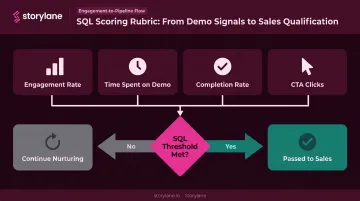
BigTeams, for example, built a SQL scoring rubric incorporating four Storylane-specific signals: engagement rate, time spent on demo, completion rate, and CTA clicks. Only prospects meeting that combined threshold get passed to sales. The result is a cleaner handoff, better-prepared reps, and a feedback loop that tightens qualification criteria with every cycle.
Conclusion
An SQL is the point at which a sales team's effort becomes justified — and everything downstream of that decision becomes more efficient when the criteria are clear.
Better-qualified leads produce higher win rates. Shared SQL definitions reduce sales-marketing friction. Consistent pipeline criteria improve forecast accuracy. As qualification data accumulates, the criteria themselves improve — a feedback loop that tightens over time.
The teams that scale revenue predictably don't treat SQL qualification as a one-time definition exercise. They treat it as an ongoing practice — refining criteria with real deal data, closing the feedback loop between marketing and sales, and acting on intent signals before they fade.
The alternative is a pipeline that's technically full but practically unreliable — and that's where quota misses originate.
Frequently Asked Questions
What is considered a sales qualified lead?
An SQL is a prospect who fits your ICP (right company size, industry, and role) and has taken a high-intent action — requesting a demo, asking about pricing, or initiating direct contact. That combination of fit and intent signals they're ready for a sales conversation, not continued nurturing.
What are MQL and SQL?
An MQL (Marketing Qualified Lead) fits the ICP and shows early engagement signals — content downloads, webinar attendance, repeat website visits — that make them worth marketing to. An SQL has moved further by demonstrating clear buying intent through a definitive action, making them ready for a sales conversation rather than continued nurturing.
What is lead qualification in sales?
Lead qualification is the process of evaluating whether a prospect is worth pursuing based on ICP fit and readiness to buy. Common frameworks include BANT (Budget, Authority, Need, Timeline) for mid-market deals and MEDDIC for complex enterprise sales; lead scoring can automate this using firmographic and behavioral data.
What comes after a sales qualified lead?
After SQL classification, the lead is typically converted into an active Opportunity in the sales pipeline. The rep then conducts a discovery call, delivers a tailored demo or proposal, and handles objections. Each stage progressively validates whether the deal is likely to close.
How do you score and prioritize sales qualified leads?
Lead scoring assigns numerical values to firmographic attributes (job title, company size, industry) and behavioral signals (pricing page visits, demo requests, demo completion rate). Prospects crossing a defined threshold are escalated to SQL status — managed manually or automated through a CRM or dedicated scoring tool.
What qualification frameworks work best for identifying SQLs?
The most widely used frameworks are BANT (Budget, Authority, Need, Timeline) for transactional mid-market deals, MEDDIC or MEDDPICC for complex enterprise sales where buying group dynamics matter, and CHAMP (Challenges, Authority, Money, Prioritization) for inbound or pain-first discovery motions. For most mid-market teams running inbound motions, BANT or CHAMP is sufficient; MEDDIC becomes essential once deal cycles exceed 90 days or multiple stakeholders are involved.