
Introduction
Most deals don't die at the close. They die in a weak discovery call where the rep talks too much, asks surface-level questions, or hangs up without understanding the buyer's real pain, budget, or decision process.
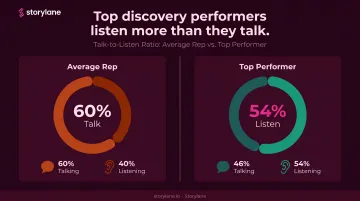
Gong's research shows the average sales rep talks 60% of the time on calls — yet top discovery performers flip that ratio, talking just 46% and listening 54%. Reps who listen more close more. The data is consistent across industries and deal sizes.
This guide gives B2B sales reps and sales managers a complete, phase-by-phase discovery call checklist covering:
- Pre-call research — what to know before you dial
- In-call execution — how to run the call with structure
- Discovery questions — what to ask and when
- Post-call follow-up — how to keep momentum going
Each phase is designed to build consistency, sharpen qualification, and drive higher conversion rates.
Key Takeaways
- A discovery call checklist removes guesswork — reps show up prepared and focused on the buyer's real problem, not their pitch.
- Effective checklists span three phases: pre-call research, in-call execution, and post-call follow-up.
- Layered questions (situational → pain → impact → value) separate top performers from average reps.
- The goal is mutual qualification: confirm the fit for both sides before advancing the deal.
- Post-call follow-up — especially a personalized interactive demo — converts discovery momentum into pipeline.
What Is a Discovery Call Checklist and Why Does It Matter?
A discovery call checklist is a structured reference guide that helps sales reps prepare for, execute, and debrief after a discovery conversation. It covers prospect research, agenda-setting, question sequencing, and next steps. Think of it as a framework, not a script — one that ensures nothing critical gets missed while still leaving room for a real conversation.
Why Structure Matters
Without a shared framework, discovery call quality varies wildly across a sales team. One rep asks sharp pain questions; another pitches the product before the prospect has finished describing their problem. Checklists create a floor — the whole team performs closer to the level of the best rep.
Salesforce's State of the Connected Customer research found that 87% of business buyers expect sales reps to act as trusted advisors, and 71% say most sales interactions feel transactional. A checklist is one practical way to close that gap by shifting reps from reactive pitching to genuine diagnosis.
Discovery Calls vs. Cold Calls
These are fundamentally different conversations:
| Discovery Call | Cold Call | |
|---|---|---|
| Intent | Prospect has shown interest | Prospect is unaware or disengaged |
| Goal | Qualify and diagnose | Generate interest |
| Length | 20–45 minutes | 5–10 minutes |
| Format | Conversational, exploratory | Brief, punchy, agenda-light |
Everything in this guide focuses on that second column: conversations where a prospect has already engaged and is open to a deeper exchange.
Pre-Call Checklist: How to Prepare for a Discovery Call
Showing up to a discovery call without research signals to the prospect that their time isn't valued. Strong preparation is what makes every question feel relevant rather than generic.
Research the Prospect
Start with LinkedIn. Look for:
- Tenure and role — how long have they been in this position, and what are their likely KPIs?
- Recent activity — what have they posted or engaged with? This reveals priorities.
- Promotions or team changes — new leaders often come in with mandates to fix things.
- Shared connections — a warm reference can open the call differently.
Understanding what the person cares about professionally makes every question land with more precision.
Research the Company
Go beyond the website. Check for:
- Recent funding rounds or acquisitions
- Headcount changes (growing vs. contracting)
- News coverage or press releases
- Their competitive position in the market
- What they sell and who they sell to
This context shapes your situational questions. A company that just raised a Series B has different pressures than one that's restructuring.
Define Your Desired Outcome Before the Call
Document two things before every discovery call:
- What you need to learn — level of pain, decision-making process, timeline, budget, and key stakeholders
- What you need the prospect to agree to — a specific, committed next step
Calls without a defined outcome drift. They end in "I'll follow up soon," which is not a next step.
Prepare a Two-Way Agenda
Send a short agenda in the calendar invite that:
- Confirms the time allotted
- Lists 2–3 discussion topics
- Signals it's a conversation, not a pitch
This reduces no-shows and sets the prospect's expectations before they dial in.
Send a Pre-Call Interactive Demo
Some sales teams send a short, personalized interactive demo before the discovery call. When prospects arrive having already explored the product, the conversation shifts from "what does your product do?" to "how does this solve my specific problem?" — a far more productive starting point.
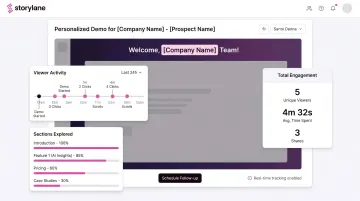
Tools like Storylane make this practical at scale. Reps can send private demo links personalized with variable tokens (company name, logo, role-specific messaging), then review exactly which features the prospect explored before joining the call. That insight means discovery starts with context already established:
- Which features caught the prospect's attention
- Where they spent the most time
- What questions are likely already forming
During the Call Checklist: How to Structure a Discovery Call
Open with a Disarming Opener
Set the time expectation, confirm the agenda, and frame the call as two-way. Give the prospect explicit permission to stop you if it's not a fit. This reduces the "sales guard" most buyers bring to early-stage calls and positions you as someone worth talking to.
Confirm Individual Goals at the Start
If there are multiple people on the call, ask each person their priority for the meeting. Write down their names and stated goals. This gives you a map for the rest of the conversation and ensures you don't miss a concern that matters to a key stakeholder.
Run Layered Discovery
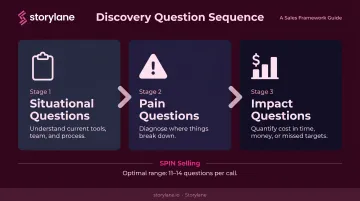
The biggest mistake reps make in discovery is jumping to solutions. Follow this sequence instead:
- Situational questions — understand their current tools, team, and process
- Pain questions — diagnose where things are breaking down
- Impact questions — quantify what the problem costs them in time, money, or missed targets
This maps directly to the SPIN Selling framework (Situation → Problem → Implication → Need-Payoff) — one of the most proven question frameworks in B2B sales. Gong's conversation intelligence research puts the sweet spot at 11 to 14 questions per discovery call, spread evenly throughout rather than front-loaded.
Practice Active Listening
After a prospect shares a pain point, paraphrase it back before moving on. This confirms your understanding, shows genuine interest, and often prompts the prospect to add critical context they hadn't planned to share.
The common mistake: using the pause after a buyer speaks to think about your next question instead of absorbing what they just said.
Close with a Concrete Next Step
Before hanging up:
- Connect 1–2 specific outcomes your product delivers to the pain points uncovered
- Lock in a specific next step (demo, stakeholder intro, another call) with a date and clear purpose
A strong close sounds like: "Based on what you shared about [pain point], I'd like to show you [specific feature] on Thursday at 2 PM — does that work?" That's a commitment. "I'll follow up soon" is not.
Discovery Call Questions Checklist
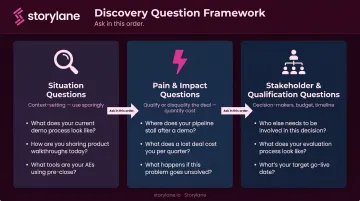
Bucketing questions into categories helps reps understand when and why to use each type — not just what to ask. The three categories below cover context-setting, pain qualification, and deal mechanics, in roughly the order you'd work through them on a call.
Situation Questions
These establish context quickly. Keep them brief — too many situational questions bore prospects before the conversation gets interesting.
- "Can you walk me through how your team currently handles [process]?"
- "What tools are you using today for this?"
- "How many people are involved in this workflow?"
- "How long have you been running it this way?"
Pain and Impact Questions
These are where deals get qualified or disqualified. They shift the conversation from how things work today to what it's actually costing the business.
- "What does it cost you when that happens — in time, money, or missed targets?"
- "What have you already tried to fix this, and what got in the way?"
- "If you could change one thing about how this works today, what would it be?"
- "What happens if you don't solve this in the next six months?"
- "How does this problem affect your team's ability to hit [specific goal]?"
Stakeholder and Qualification Questions
These prevent deals from stalling due to missing decision-makers or budget surprises. Ask them before you're three calls deep.
- "Who else on your team would need to be part of this decision?"
- "Is there budget allocated to solve this, or would that need to be created?"
- "What does your evaluation process typically look like?"
- "What would need to be true for you to move forward?"
Work through these categories in order — situation first to build context, pain questions to qualify the opportunity, and stakeholder questions to ensure the deal can actually close.
Post-Call Checklist: What to Do After a Discovery Call
Send a Follow-Up Email Within 24 Hours
A prompt recap email does three things: keeps momentum alive, signals professionalism, and gives the prospect a written record they can share internally. Include:
- Key pain points discussed
- The agreed next step and date
- Any resources or materials promised on the call
Keep it under 200 words — the goal is a shared record, not a recap essay.
Run a Structured Self-Debrief
Before updating the CRM, ask yourself:
- Does this person have real, specific pain?
- Do they have decision-making authority or direct access to it?
- Is there enough urgency to drive an evaluation?
- Is this deal worth the pipeline space?
This prevents the most common CRM problem: reps adding deals out of optimism rather than evidence.
Send a Personalized Interactive Demo
Rather than attaching a generic PDF or slide deck, send a tailored interactive demo that directly reflects the pain points and use cases discussed on the call.
With Storylane, reps can:
- Auto-populate the prospect's name, company, logo, and metrics using dynamic tokens
- Build demo paths around the exact features relevant to the buyer's challenges
- Set expiring links and email-restricted access so the demo doesn't circulate indiscriminately
- See who viewed the demo, which sections held their attention, and when they returned
Forrester research shows 81% of B2B purchases involve three or more decision-makers, meaning the person you spoke with almost certainly has to sell this internally. A trackable, personalized demo gives them something compelling to share — and gives you real-time Slack or email alerts on who's engaging and when.
ContactMonkey, one of Storylane's customers, reported a 28% demo-to-opportunity conversion rate — double that of other inbound sources — and attributed $1.3M in pipeline directly to interactive demo engagement.
Common Discovery Call Mistakes to Avoid
Pitching Before You've Diagnosed Anything
Jumping into product features before you understand the buyer's problem destroys trust fast. Prescription before diagnosis is malpractice — and it applies equally in sales. Gong data shows discovery calls that lead with slides are 17% less likely to close.
Asking Binary Questions
Yes/no questions kill conversational depth. Instead of "Do you have a problem with X?" ask "Walk me through how you're currently handling X" — then follow up with "Why do you think that's happening?" Gong links longer buyer responses, produced by open-ended questions, to higher win rates.
Leaving Without a Committed Next Step
"I'll be in touch" is not a next step. Every discovery call should end with a specific action, a confirmed date, and mutual clarity on what happens next. Gong's research shows top performers spend 12.7% more time discussing next steps than average performers — that deliberate investment is what keeps deals moving.
Frequently Asked Questions
What is a discovery checklist?
A discovery call checklist is a structured guide covering what to research before the call, what to cover during it, which questions to ask by category, and how to debrief and follow up afterward. It gives sales reps a consistent, repeatable framework so discovery quality doesn't vary by rep or day.
What questions should I ask during a discovery call?
Discovery questions fall into four categories: situational (current state), pain (where it's breaking down), impact (what it costs them), and stakeholder/qualification (who decides, what's the timeline). The best reps ask layered follow-up questions rather than running through a static list sequentially.
How long should a discovery call last?
Most effective discovery calls run 20–45 minutes — long enough to uncover real pain and qualify the deal, short enough to stay focused. The right length depends on deal complexity and how many stakeholders are on the call.
What is the difference between a discovery call and a cold call?
A cold call is unsolicited outreach to someone with low or unknown intent. A discovery call happens after a prospect has already shown interest. Discovery calls are longer, more conversational, and focused on qualifying the opportunity rather than generating it.
How do you end a discovery call effectively?
Connect the prospect's stated pain to one or two specific outcomes your solution delivers, confirm all priorities were addressed, and lock in a next step with a specific date. Ending with "I'll be in touch" is not a next step.
What are the most common discovery call mistakes?
The most common: pitching before diagnosing the problem, asking surface-level questions that don't reveal real pain, and ending without a committed next step. All three are preventable with a structured checklist.