Introduction
Great products don't sell themselves. Behind every breakout success — from Spotify's viral year-end recaps to Dropbox's explosive referral growth — sits a carefully crafted product marketing strategy. The difference between a product that takes off and one that stalls is rarely the product itself. It's how well the team bridges the gap between what it does and why buyers should care.
The challenge is that most teams conflate product marketing with either product management or brand marketing. They end up with launch checklists instead of positioning strategies, and awareness campaigns instead of adoption drivers.
According to Gartner's 2025 survey, 61% of B2B buyers prefer a rep-free buying experience — meaning your product's story must do the convincing before a salesperson ever enters the picture.
This post covers seven real-world product marketing examples across B2C and B2B SaaS, the strategic patterns that made them work, and a practical framework you can apply to your own campaigns.
Key Takeaways:
- Customer empathy, clear positioning, and cross-channel consistency drive every winning campaign
- Personalization at any scale consistently outperforms generic messaging
- Product-led growth turns usage itself into a marketing engine
- Interactive demos let buyers self-qualify before sales gets involved
- Internal alignment is product marketing's first job, not an afterthought
What Makes a Product Marketing Campaign Actually Work?
Before studying the examples, it helps to understand what separates campaigns that drive real outcomes from those that simply generate buzz.
The Three Traits Every Effective Campaign Shares
1. Deep customer empathy — The campaign reflects something real about the buyer's life. Not what the company thinks matters, but what the customer actually experiences. Spotify's Wrapped works because it celebrates your listening habits, not Spotify's engineering achievements.
2. Clear, differentiated positioning — It answers the question every buyer is silently asking: "Why this over everything else?" Positioning isn't a tagline. It's the reason a buyer chooses you when alternatives exist.
3. Consistent cross-channel execution — The message holds up from the paid ad to the sales call to the onboarding email. When messaging fragments across channels, trust erodes.
Product Marketing vs. Brand Marketing
These two functions are often blurred, and the confusion causes real strategic problems.
- Brand marketing builds company-wide affinity over time — think of it as managing how people feel about the company as a whole
- Product marketing drives demand and adoption for a specific product or feature — it converts awareness into action
In practice, brand marketing creates the credibility that product marketing converts into pipeline.
Timing and Internal Alignment
Even well-positioned campaigns fall flat when launched before the market — or the organization — is ready. The strongest campaigns go external only after sales, product, customer success, and marketing are aligned on the same narrative. Product marketing's first job is internal evangelism. If your own team can't tell the story consistently, buyers won't hear a coherent one.
7 Product Marketing Examples That Drove Real Results
Apple's "Shot on iPhone" Campaign
Apple launched its worldwide "Shot on iPhone 6" campaign in March 2015, spanning 77 photographers, 70 cities, and 24 countries. The approach was deceptively simple: instead of listing camera specs, Apple invited everyday users to submit their best iPhone photos and turned the results into global billboards, print ads, and social content. The product's capability was the ad.
The campaign won the Outdoor Grand Prix at Cannes Lions in 2015, along with five Gold Lions — validation that stripping away the marketing veneer in favor of authentic proof resonates far beyond the target audience.
The lesson: User-generated content eliminates skepticism by replacing brand claims with real proof. Authentic customer outcomes are more persuasive than polished copy, regardless of how good your copywriters are.

Coca-Cola's "Share a Coke" Campaign
Coke launched "Share a Coke" in Australia in 2011, replacing its iconic label with the 150 most popular names in the country. The result: more than 250 million named bottles and cans sold in a country of under 23 million people. The US rollout followed in 2014, using the 250 most popular names among teens and millennials ages 13–34.
Marketing Mag, citing WSJ/Nielsen data, reported the campaign reversed a decade-long decline in US Coke consumption, with sales rising approximately 2.5% since rollout — no small feat for a commodity product in a declining category.
The lesson: Personalization creates emotional ownership. Even in mass-market products, making individual buyers feel "this was made for me" dramatically increases engagement and purchase intent.
Spotify's "Wrapped" and "Only You" Campaigns
Spotify's year-in-review experience launched in 2015, attracting more than 5 million unique users in its first year. Rebranded as "Wrapped" in 2016, it became an annual cultural event. Wrapped 2023 engaged a record 227 million monthly active users, and TechCrunch reported that Wrapped 2025 reached more than 200 million engaged users in its first 24 hours — up 19% year-over-year — and was shared more than 500 million times.
"Only You," launched June 2021, extended the concept mid-year, celebrating each user's unique listening combinations and habits through shareable in-app experiences.
The lesson: Data is a storytelling tool. When companies use behavioral data to reflect individual customer habits back at them, they transform analytics from a back-end metric into a front-end marketing asset that users willingly share across their networks.
Patagonia's "Don't Buy This Jacket" Campaign
On Black Friday 2011, Patagonia placed a full-page ad in the New York Times urging customers not to buy a new jacket unless they truly needed one. The ad simultaneously promoted its Worn Wear repair program — an infrastructure of care and repair guides, trade-ins, and used gear sales that backs up the brand's anti-consumption stance with real action.
Patagonia is privately held and has not publicly confirmed specific revenue figures tied to the campaign. What's documented is the strategic outcome: a brand that challenged its own customers to buy less became more trusted for doing so.
The lesson: Purpose-driven positioning builds loyalty that outlasts any single campaign. But it only works when values are backed by real action — not just rhetoric. Audiences can tell the difference.
Dropbox's Referral Program
Dropbox's paid search economics were a problem. Andrew Chen documented AdWords costing $233–$388 per customer for a $99 product.
The solution was embedding growth into the product itself: offer both referrer and new user additional free storage space for each successful referral. The result, as documented by Andrew Chen, was growth from 100,000 users to 4 million users in 15 months, with referrals accounting for approximately 35% of daily signups at peak. By 2012, Forbes reported Dropbox had reached 100 million users.
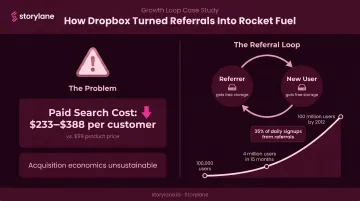
The lesson: The best product marketing often makes the product itself the growth engine. When you design incentives that reward sharing, adoption becomes inherently social — and acquisition costs drop dramatically.
Slack's Bottom-Up Product-Led Growth
Slack received 8,000 invitation requests on the first day of its preview release in August 2013, growing to 15,000 within two weeks. Rather than targeting IT decision-makers, Slack focused on individual team managers, letting organic adoption spread upward through organizations.
The key was identifying the "aha moment": teams that exchanged 2,000 messages had a 93% retention rate. That single insight shaped the entire product marketing strategy — reduce friction to the aha moment, and growth follows.
By early 2019, Slack reported more than 10 million DAUs and 88,000 paid customers, with its S-1 showing more than 600,000 organizations using the platform.
The lesson: For B2B SaaS, identifying the moment a user experiences core value and designing the product experience to reach it faster is a form of product marketing no ad campaign can replicate.
HubSpot's Content-to-Product Alignment
HubSpot built one of the most widely recognized inbound content engines in B2B marketing. But for a long time, readers left that content unclear about what HubSpot actually sold. When product marketing layered case studies, clear positioning, and persuasive product pages onto existing content, conversion rates from that content began to climb.
The results speak to how well-aligned content and product marketing compound:
- 110% increase in website traffic for Content Hub customers
- 15% increase in deals created within six months
- 200,000+ professionals certified through HubSpot Academy
- 258,258 customers and $714.1M in revenue reported in Q1 2025
The lesson: Content attracts buyers, but product marketing converts them. Informative content without clear product positioning leaves significant revenue on the table.
Key Product Marketing Strategies to Steal From These Examples
Personalization Drives Action
From Spotify's data stories to Coke's name labels, personalization outperforms generic messaging — reliably. McKinsey research puts the revenue lift from effective personalization at 10–15% on average, with company-specific results ranging from 5–25%.
The job for product marketers: identify the one insight about your buyer that makes your message feel tailor-made. That might be an industry-specific pain point, a role-based outcome metric, or a behavioral pattern your best customers share.
Let Customers Be the Story
Apple's UGC campaign and Patagonia's authenticity both show that third-party voices carry more credibility than brand-owned claims. Structure your referral programs, case studies, and community campaigns to amplify this:
- Referral programs: Design mutual-benefit incentives (both parties gain), as Dropbox did
- Case studies: Lead with the customer's metric, not your product's feature
- Community campaigns: Build UGC prompts that showcase outcomes, not brand loyalty
Design the Product for Virality
Dropbox and Slack didn't rely on campaigns alone — they embedded growth mechanics into the product. Work with your product team to identify:
- Natural sharing triggers (collaborative features, invite flows, referral loops)
- Moments of value that naturally prompt users to bring others in
- Friction points between free and paid that can be reduced without removing monetization incentives
Clear Positioning Wins Before Launch
Growth mechanics get products adopted — but positioning determines whether they're understood. HubSpot's example shows that great content without clear positioning leaves revenue on the table. Before any launch, answer these five questions:
- Who is it for? (Specific persona, not "everyone")
- What does it do? (Functional outcome, not just features)
- Why do they need it? (The pain it solves)
- Why now? (What's changed in their world)
- Why you over alternatives? (Your genuine differentiator)
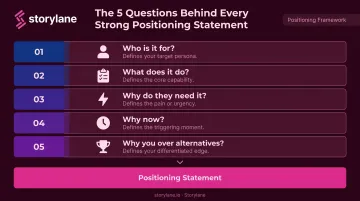
Compress those answers into one positioning statement. If your sales rep and your demand gen lead can't say it the same way, your launch messaging will fracture before it lands.
How Interactive Product Demos Fit Into Your Product Marketing Strategy
Modern B2B buyers don't wait for a sales call to evaluate your product. Gartner found 67% of B2B buyers prefer a rep-free experience in 2026, and TrustRadius reported that 71% of buyers who used demos identified them as the most influential resource in their purchase research.
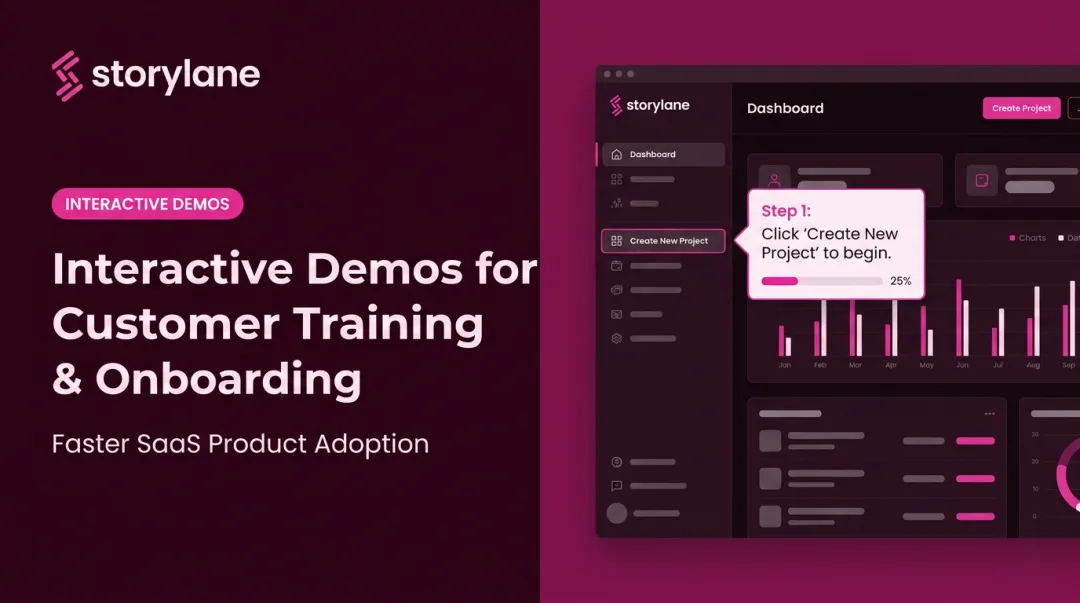
Interactive demos address this directly — they let prospects experience your product's value before a single sales conversation.
What Interactive Demos Actually Do for Product Marketers
An interactive demo isn't just a sales tool. It simultaneously:
- Shows (not tells) what the product does, reinforcing positioning with proof
- Lets prospects self-qualify before engaging a rep, reducing sales friction at the top of funnel
- Generates behavioral intelligence: which features captured attention, where prospects dropped off, and what messaging drove the deepest engagement
That last point matters. Unlike video, which tells you watch time, interactive demos reveal what buyers cared about. That's messaging research happening in real time.
How Storylane Enables Product Marketing Teams
Storylane gives product marketing teams the tools to build, personalize, and distribute interactive demos across the full buyer journey — not just sales calls.
Creation and personalization:
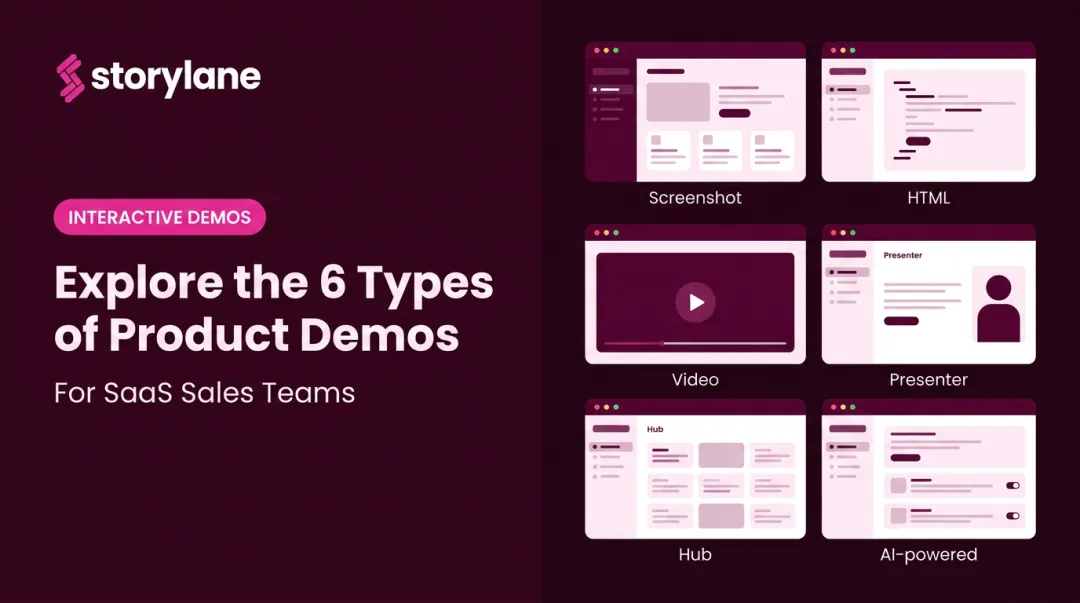
- Build guided demos (screenshot, HTML, or video format) or sandbox environments where prospects explore freely
- Insert dynamic tokens — first name, company name, logo, revenue figures — so each prospect sees a demo that feels built for their account
- Use AI voiceovers, video avatars, and one-click annotations to cut demo production time from days to minutes, with support for 25+ languages for global campaigns
Distribution across every channel:
- Embed demos in paid ad landing pages, email nurture sequences, and conference booth displays (offline mode works without WiFi)
- Publish Demo Hubs — centralized galleries organized by use case, persona, or product area — where prospects self-navigate rather than following a single prescribed path
- Companies like SentinelOne use Demo Hubs to address multiple buyer personas simultaneously, from security teams to executives, across products like Purple AI and Singularity Cloud
Intelligence and analytics:
- Track step-level engagement: which features prospects explored, time spent per screen, drop-off points, and return visits
- Account Reveal de-anonymizes demo visitors and enriches data with firmographic details, surfacing buyer intent before any form fill
- Intent scoring (Low, Medium, High) automatically prioritizes accounts for follow-up based on engagement depth
- All engagement data syncs to Salesforce, HubSpot, and other CRM platforms, so sales teams enter conversations knowing exactly what a prospect explored
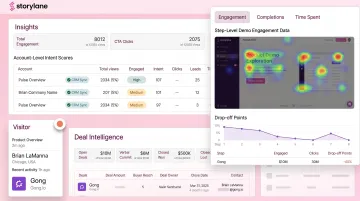
That intelligence loop is what separates interactive demos from passive content. Phenom's product marketing team used Storylane to build an immersive AI and automation lab for their annual IAMPHENOM event, giving HR leaders hands-on product exploration at conference scale. Attendees who engaged with the interactive lab moved further down the conversion funnel — an outcome a video replay couldn't replicate.
When product marketing controls the demo experience, every channel carries the same product story — and every engagement adds to the buyer intelligence your sales team acts on.
Building Your Own Product Marketing Strategy: A Quick Framework
Step 1 — Know Your Buyer
Build personas from customer interviews, not assumptions. Each persona needs:
- Core pain points — what keeps them from doing their job well
- Success metrics — how they measure outcomes, not just satisfaction
- Research behavior — where they look for solutions before talking to vendors
- Purchase objections — what stops them from buying or switching
Step 2 — Define Positioning and Messaging
Answer the five positioning questions (who, what, why, why now, why you), then distill them into a statement your entire team uses consistently. Test it in sales conversations before committing to external copy. If sales reps can't deliver it naturally, it needs revision.
Once messaging holds up in real conversations, you're ready to build the launch plan around it.
Step 3 — Build and Launch with a Cross-Functional Plan
A launch checklist should include two parallel tracks:
Internal enablement:
- Sales training and messaging guides
- CS briefings on new positioning
- FAQ documents for common objections
External assets:
- Landing pages and demo content
- Case studies and social proof
- Paid ads and email sequences
Track results across two metric categories post-launch:
- Demand metrics: pipeline generated, trial sign-ups, ad conversions
- Adoption metrics: feature engagement, upsell rates, activation benchmarks
Which category you weight more heavily depends on whether the campaign's primary goal is awareness, adoption, or revenue growth.
Frequently Asked Questions
What are the 4 P's of product marketing?
The 4 P's are Product, Price, Place, and Promotion — the foundational marketing mix framework. In product marketing, they inform how a product is positioned (what it is and what it costs), where and how it reaches buyers, and how its value is communicated to the right audience.
What are the 4 types of products in marketing?
The four types are convenience products (frequently purchased, low effort), shopping products (compared before buying), specialty products (unique, high involvement), and unsought products (not actively sought). Product type determines how aggressive, educational, or proof-heavy your marketing strategy needs to be.
What is the 3-3-3 rule for marketing?
The 3-3-3 rule refers to capturing attention in 3 seconds, communicating the core message in 3 sentences, and driving action within 3 steps. For product marketing, it's a useful forcing function: if your positioning can't clear those bars, your messaging is too complex.
What is the difference between product marketing and brand marketing?
Brand marketing builds company-wide awareness and affinity over time. Product marketing focuses specifically on positioning and driving demand for individual products or features. Both matter, but product marketing operates at the level of specific buyer decisions, not general brand perception.
How do you measure the success of a product marketing campaign?
The right metrics depend on the campaign's goal: awareness campaigns track reach and engagement, while adoption campaigns measure feature usage, retention, and upsell performance. Core indicators include product adoption rates, demo sign-up volume, win rates, lead-to-customer conversion, and feature engagement post-launch.