
The gap isn't knowledge. Most sales leaders know what good pipeline management looks like. The problem is execution: inconsistent processes, bloated pipelines full of stale deals, and reviews that feel more like status updates than actual coaching sessions.
This guide covers everything you need to build a predictable, scalable revenue engine — from defining pipeline stages and tracking the right metrics, to the best practices that separate high-performing sales teams from the rest.
Key Takeaways
- A healthy pipeline requires a 3–5x coverage ratio, clean data, and defined stage entry/exit criteria
- Pipeline velocity — not just deal count — is the best early warning signal for revenue shortfalls
- Deals with more than 7 days of inactivity see win rates drop by 65%, making hygiene a revenue issue
- Standardizing the sales process drives measurably higher win rates and quota attainment
- Sending interactive demos before live meetings means prospects show up informed — shortening discovery time and lifting close rates
What Is Sales Pipeline Management?
A sales pipeline is a visual, stage-by-stage representation of every open deal and where it sits in your sales process. Pipeline management is the ongoing discipline of tracking, prioritizing, and actively moving those deals toward close.
Three terms get confused constantly, and mixing them leads to poor decisions:
| Term | Perspective | Purpose |
|---|---|---|
| Sales Pipeline | Seller-facing | Action-oriented view of open deals by stage |
| Sales Funnel | Buyer-facing | Journey from awareness through decision |
| Sales Forecast | Finance/leadership | Revenue projection derived from pipeline data |
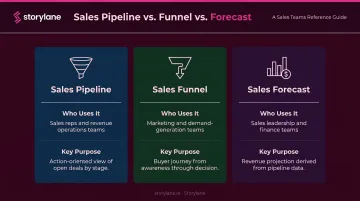
Your pipeline tells reps what to do next. Your funnel tells marketing where leads drop off. Your forecast tells leadership what's coming. Each one answers a different question — use them accordingly.
Why Pipeline Management Matters Operationally
A well-managed pipeline does four things that a disorganized one cannot:
- Enables accurate forecasting — stage-based data produces better revenue predictions than gut feel
- Drives smarter resource allocation — you know where to focus rep time and management attention
- Surfaces at-risk deals early — before they slip the quarter, not after
- Gives managers visibility into rep performance — not just outcomes, but the behaviors driving them
According to Gartner, organizations that prioritize pipeline quality are 2x more likely to exceed customer acquisition expectations.
Sales Pipeline Stages Explained
Most B2B sales pipelines have five to seven stages. The exact number depends on product complexity and sales cycle length — what matters is that each stage reflects a real buyer commitment, not just a seller action.
Stage 1 — Prospecting
Prospecting means identifying potential buyers through inbound channels (content, referrals, social selling) and outbound efforts (cold outreach, events). One important distinction: a prospect doesn't enter the pipeline until there's a real problem and genuine intent to act. Everything before that is pre-pipeline activity.
Stage 2 — Lead Qualification
Qualification filters prospects against your ideal customer profile using criteria like budget, authority, need, and timeline. Structured frameworks like MEDDPICC formalize this step and prevent unqualified deals from clogging the pipeline. Only 15% of opportunities are fully qualified in most organizations, according to Ebsta's benchmark research.
Stage 3 — Meeting and Demo
This is where reps evaluate business fit and demonstrate the product. The challenge: B2B buyers complete nearly 60% of their purchasing decision before contacting a supplier, and 75% prefer a rep-free experience for familiar technology. That means prospects often arrive at your demo already half-decided. Your job is to make sure it's in your favor.
Sending an interactive, self-serve demo before the live meeting directly addresses this. Tools like Storylane let sales teams share personalized, tracked demo links ahead of scheduled calls, so prospects can explore the product at their own pace before the call happens.
Storylane supports this with features like:
- Buyer Hub — a centralized demo gallery prospects can browse on their own
- Multi-chapter demos tailored to a prospect's specific role
- AI-guided walkthroughs that move prospects through key features without a rep present
By the time the live call happens, prospects have already experienced the product. That turns a basic intro into a consultative conversation. Customers like Cin7 and PDQ use exactly this approach to prevent prospects from losing interest between the demo request and the actual meeting.
Stage 4 — Proposal and Negotiation
A good proposal connects directly to the specific pain points uncovered during discovery — not a generic deck. Negotiation involves adjusting scope, pricing, and terms toward mutual agreement. When deals stall here, it's usually a signal of unresolved objections or misaligned value communication, not a pricing problem.
Stage 5 — Closing and Post-Sale Retention
The signed contract is a milestone, not the finish line. Post-sale onboarding quality, proactive account management, and renewal conversations determine whether a customer becomes a source of expansion revenue and referrals — the most capital-efficient growth path available.
Key Sales Pipeline Metrics to Track
Pipeline Coverage Ratio
Definition: Total pipeline value ÷ quota target.
A healthy ratio of 3–5x gives you enough buffer to absorb deals that stall or fall out without missing the number. Enterprise teams often need 4–5x to account for longer, more complex cycles. Pipeline coverage is one of the earliest structural risk indicators available before a quarter closes — if yours drops below 3x mid-quarter, that's a problem you can still address.
Pipeline Velocity
Formula: (Number of deals × average deal size × win rate) ÷ average sales cycle length
Velocity is the most direct measure of whether your pipeline is moving fast enough to meet revenue commitments. It combines volume, value, and efficiency into one number. A sustained drop in velocity — even if deal count looks healthy — is typically the earliest warning sign of a coming shortfall.
Stage Conversion Rate
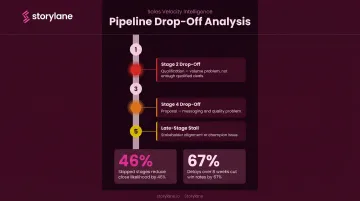
Track the percentage of deals advancing from each stage to the next, not just your overall close rate. The distinction matters because each drop-off points to a different root cause:
- Stage 2 (qualification) drop-off — a volume problem; not enough qualified deals entering the pipeline
- Stage 4 (proposal) drop-off — a quality and messaging problem; the pitch isn't landing
- Late-stage stalls — usually a stakeholder alignment or champion issue
The same fix won't work across all three.
According to Ebsta's 2024 Revenue Intelligence Report, skipped pipeline stages reduce close likelihood by 46%, and delays exceeding 8 weeks cut win rates by 67%.
Average Deal Size and Sales Cycle Length
Shifts in average deal size signal changes in buyer mix, discounting behavior, or market positioning. On sales cycle length: 57% of sales professionals say cycles are getting longer, according to Salesforce's State of Sales report. Longer cycles compress planning windows and push up acquisition costs — both hit revenue predictability hard.
Win Rate
Win rate = closed-won deals ÷ all deals that reached a final decision. A two-point drop across 50 deals is a meaningful signal, not noise. Segmented by rep, deal source, or market segment, win rate tells leadership where to concentrate investment and where to pull back.
Sales Pipeline Management Best Practices
Prioritize High-Intent, High-Value Opportunities
Not every lead deserves equal attention. Use CRM data to rank deals by fit (ICP match, company size, industry) and intent (engagement signals, demo requests, content activity).
A documented lead scoring model assigns numerical weights to buyer behaviors and firmographic criteria, keeping rep focus on high-probability opportunities. Organizations that fully implement structured qualification frameworks like MEDDPICC see win rates increase by 311%, per Ebsta's benchmark data.
Remove dead deals regularly. A bloated pipeline distorts forecasting and dilutes rep focus. A smaller, cleaner pipeline consistently outperforms a large, undifferentiated one.
Storylane's Account Reveal feature supports this prioritization in practice — surfacing firmographic data and intent scores when prospects engage with demos, then triggering Slack alerts to reps so they can follow up while interest is highest.
Build a Consistent Follow-Up Cadence
It takes an average of 8 touchpoints to secure an initial meeting with a new prospect, according to RAIN Group. Most reps don't get there. That's a process failure, not a discipline problem — the fix is a structured cadence, not more reminders.
CRM automation closes this gap by triggering follow-up sequences based on deal stage or inactivity, so reps focus their energy on conversations rather than calendar management. Consistent follow-up also builds the trust and momentum required to keep deals advancing.
Maintain Rigorous Pipeline Hygiene
Pipeline hygiene is a weekly discipline, not a quarterly cleanup. That means:
- Updating close dates and deal values after every meaningful interaction
- Adding call notes and next steps to CRM records in real time
- Removing or formally re-engaging deals that have exceeded average sales cycle length with no activity
- Reassigning leads that have stalled with a specific rep
More than 7 days of inactivity with no future activity reduces win rates by 65% (Ebsta, 2024). That's not a soft metric — it's a direct link between hygiene habits and closed revenue.
Conduct Regular Pipeline Reviews
A productive two-tier cadence works as follows:
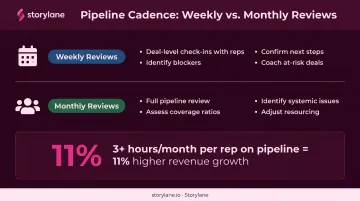
- Weekly — Deal-level check-ins with individual reps to identify blockers, confirm next steps, and coach on at-risk opportunities
- Monthly — Full-pipeline review with the broader team to assess coverage, identify systemic issues, and adjust resourcing
The difference between a useful review and a status update is the questions you ask. Forward-looking questions — "What's the specific next commitment from the buyer?" — generate action. Backward-looking questions — "Where does this deal stand?" — generate recaps.
The data supports investing the time: organizations that spend more than 3 hours per month per rep on pipeline management see 11% higher revenue growth, per Sales Management Association research.
Standardize the Sales Process Across the Team
When every rep runs their own playbook, you can't diagnose what's working or scale it. Standardization — defined stage entry/exit criteria, shared qualification templates, consistent demo assets — creates the foundation for accurate forecasting and effective coaching.
The performance gap is measurable, per CSO Insights research:
| Adoption Level | Win Rate | Quota Attainment |
|---|---|---|
| Above 90% | 57.8% | 72.4% |
| Below 25% | 40.4% | 49.4% |
Standardization doesn't mean rigidity. Reps should personalize within the framework.
Storylane supports this with duplicatable demo templates — reps start from a marketing-approved master demo, customize it with prospect-specific details, and send. Everyone delivers a consistent product story; no one builds from scratch.
Use Data and Automation to Keep the Pipeline Moving
Sales reps spend 60% of their time on non-selling tasks, according to Salesforce. Manual data entry is a major contributor — and it's also one of the biggest sources of pipeline inaccuracy.
Automated activity capture (logging calls, emails, and meetings to the CRM without rep effort) keeps opportunity data current and gives leaders real-time pipeline visibility without chasing updates.
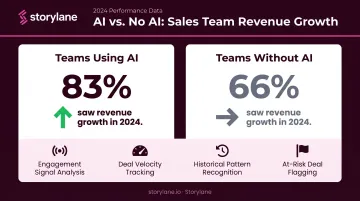
AI-powered tools go further: 83% of sales teams using AI saw revenue growth in 2024, compared with 66% of teams without AI, per Salesforce's State of Sales data. Platforms that analyze engagement signals, deal velocity, and historical patterns flag at-risk deals days before they slip the quarter — giving managers time to intervene rather than explain.
Storylane's analytics feed directly into this workflow. Demo engagement data — which steps prospects viewed, where they dropped off, how long they spent — syncs into Salesforce, HubSpot, and Marketo, giving reps behavioral intelligence before every follow-up conversation.
Common Pipeline Challenges and How to Fix Them
Stalled Deals
Deals most often stall at proposal and negotiation due to unresolved objections, internal approval delays, or competitive interference. Between 40% and 60% of B2B deals are lost to no decision rather than a competitor, per Challenger/JOLT research.
Three things move stalled deals forward:
- A formal escalation process that surfaces stuck deals before they go dark
- Proactive objection handling during discovery, not after the proposal lands
- A mutual action plan that aligns both sides on next steps and deadlines
For re-engagement, shareable demo links and buyer hubs give stalled prospects a low-friction way to revisit the product on their own terms — no new meeting required.
Inaccurate Forecasting
Pipeline forecasts go wrong when stage definitions are vague, data is outdated, or reps are optimistic rather than evidence-based. Forrester research cites that 79% of sales organizations miss forecasts by more than 10%.
Tie stage criteria to buyer commitments — what the prospect has done or agreed to — not just seller actions like what the rep has sent. CRM-enforced data hygiene and regular comparison of forecast to actual close outcomes tightens forecast accuracy progressively.
Sales and Marketing Misalignment
Misalignment creates duplicate effort, inconsistent lead quality, and fragmented buyer experiences. Notably, 82% of C-suite executives believe sales and marketing are aligned, while 65% of practitioners on those teams report a lack of alignment, according to Forrester.
Start with shared definitions of a qualified lead and joint KPIs that both teams are accountable to. Tools like Storylane close the execution gap further by letting marketing build demo templates that sales reps then customize and deploy — so leads don't go cold during the handoff.
How to Organize and Optimize Your Sales Pipeline
Start With the Right Foundation
Define clear entry and exit criteria for each pipeline stage — what a prospect must do or demonstrate to advance, not just what the rep has completed. Set estimated timelines per stage based on historical data, then right-size your pipeline by working backward from quota:
- Start with your revenue target
- Divide by average deal size to get the number of deals needed
- Divide by win rate to determine how many opportunities are needed at the top
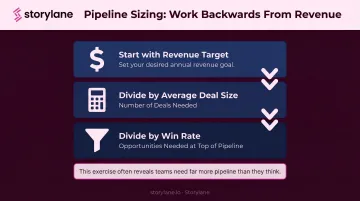
This exercise often reveals that teams need far more pipeline than they think.
Use CRM as the System of Record
Once your pipeline structure is defined, it needs a single home. All pipeline data — contacts, deal stages, activity history, notes, forecast values — should live in one centralized CRM. When data lives in spreadsheets, email threads, or individual reps' heads, you get forecast gaps and missed targets.
91% of companies with more than 10 employees use a CRM system, per HubSpot data, but usage and adoption are different things. The CRM only works as a system of record if every stakeholder — sales, marketing, finance, leadership — consistently works from it.
Continuously Refine Based on Data
Pipeline management is a living process. Build in quarterly reviews to:
- Analyze stage conversion data and identify recurring drop-off points
- A/B test outreach sequences and proposal formats
- Collect rep feedback on process friction
- Make structural adjustments before problems compound
A 5% lift in stage conversion or one week off average cycle length doesn't sound like much. Run those gains for four quarters and they reshape your revenue trajectory.
Frequently Asked Questions
What are the stages of a sales pipeline?
Most B2B pipelines run through five to seven stages: prospecting, lead qualification, meeting/demo, proposal, negotiation, close, and post-sale retention. The exact number varies based on product complexity and sales cycle length — simpler transactional sales may need only four stages, while enterprise deals often require more.
How do you organize a sales pipeline?
Organizing a pipeline means defining clear stage criteria, assigning deal ownership, setting follow-up timelines, and running regular reviews to keep data accurate. Place every active deal in the correct CRM stage based on buyer commitments — not just seller activities.
What makes a good sales pipeline?
A healthy pipeline has sufficient coverage (3–5x quota), clean and current deal data, stage criteria tied to buyer commitment, a balanced mix of deal sizes, and consistent velocity from stage to stage. Deal quality matters more than deal volume — a smaller, well-qualified pipeline outperforms a bloated one.
What is the ideal sales pipeline coverage ratio?
A 3–5x coverage ratio is the widely recommended range, with enterprise teams typically targeting 4–5x to account for longer, more complex cycles. The right target depends on your team's historical win rate and average deal size — higher win rates mean you need less coverage buffer.
How often should you review your sales pipeline?
Weekly deal-level reviews with individual reps address immediate blockers and confirm next steps. A broader monthly review assesses overall pipeline health, coverage ratios, and process effectiveness. Both cadences serve different purposes: weekly reviews drive execution; monthly reviews inform strategy.
What's the difference between a sales pipeline and a sales funnel?
A sales pipeline represents the seller's process — the specific stages and actions required to advance a deal to close. A sales funnel represents the buyer's journey from awareness through decision. Reps use the pipeline to manage active deals; leaders use the funnel to understand where and why conversion volume shifts.