Same product. Completely different conversations.
That gap — the difference between a prospect who arrived informed and one who was interrupted — is the essence of inbound sales. This article covers what inbound sales actually means, how it differs from outbound, the four-step process that drives it, and the practical strategies that make it work consistently.
Key Takeaways
- Inbound sales is a methodology where prospects initiate contact after discovering value through content or brand presence
- 67% of B2B buyers now prefer a rep-free buying experience, making self-serve touchpoints essential
- The four-step inbound process — Identify, Connect, Explore, Advise — maps directly to the buyer's journey
- A shared SLA between sales and marketing is what distinguishes high-performing inbound teams from those that plateau
- Interactive demos sent before closing conversations reduce late-stage friction by letting prospects self-educate first
What Is Inbound Sales?
Inbound sales is a methodology where prospects come to you — through content, brand presence, or word of mouth — instead of being targeted through unsolicited outreach. The rep's role shifts from persuader to trusted advisor: someone who meets the buyer where they already are and guides the conversation forward.
This matters because buyer behavior has fundamentally changed. A 2025 Gartner survey of 632 B2B buyers found that 61% preferred a rep-free buying experience — a figure that climbed to 67% in their 2026 follow-up survey. By the time a prospect reaches out, they've already done significant research independently. Reps who treat that first touchpoint as the starting line are already behind.
Inbound Sales vs. Inside Sales
One common point of confusion: inbound sales and inside sales aren't the same thing.
- Inbound sales is a methodology — it describes how you sell (responding to prospect-initiated interest)
- Inside sales is a format — it describes where you sell (remotely, via phone, video, or email rather than in person)
A rep can practice inbound sales from an office or remotely. What matters is whether the prospect initiated contact — not where the rep is sitting.
Inbound Sales vs. Outbound Sales
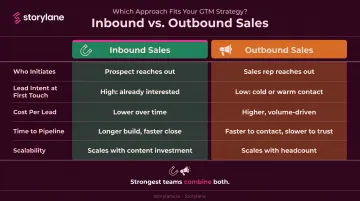
The core distinction comes down to who starts the conversation. In outbound, the seller initiates: cold calls, cold emails, paid ads pushed toward an audience that never asked for them. In inbound, the prospect initiates after finding value in your content or brand presence.
This is often framed as push vs. pull: outbound pushes messages toward people who haven't asked for them, while inbound pulls prospects in by making your content genuinely useful.
How They Compare
| Dimension | Inbound | Outbound |
|---|---|---|
| Who initiates | Prospect | Seller |
| Lead intent at first touch | High — prospect has context | Low — cold contact |
| Cost per lead | Lower (HubSpot cites 62% less than outbound) | Higher |
| Time to pipeline | Slower to build | Faster short-term results |
| Scalability | Compounds over time | Requires ongoing investment |
Neither approach alone is sufficient. Inbound generates warm pipeline with higher intent; outbound accelerates specific deals or opens market segments where your content hasn't reached. The strongest teams use inbound to build sustainable pipeline and outbound to move faster in accounts that need a direct push.
The 4-Step Inbound Sales Process
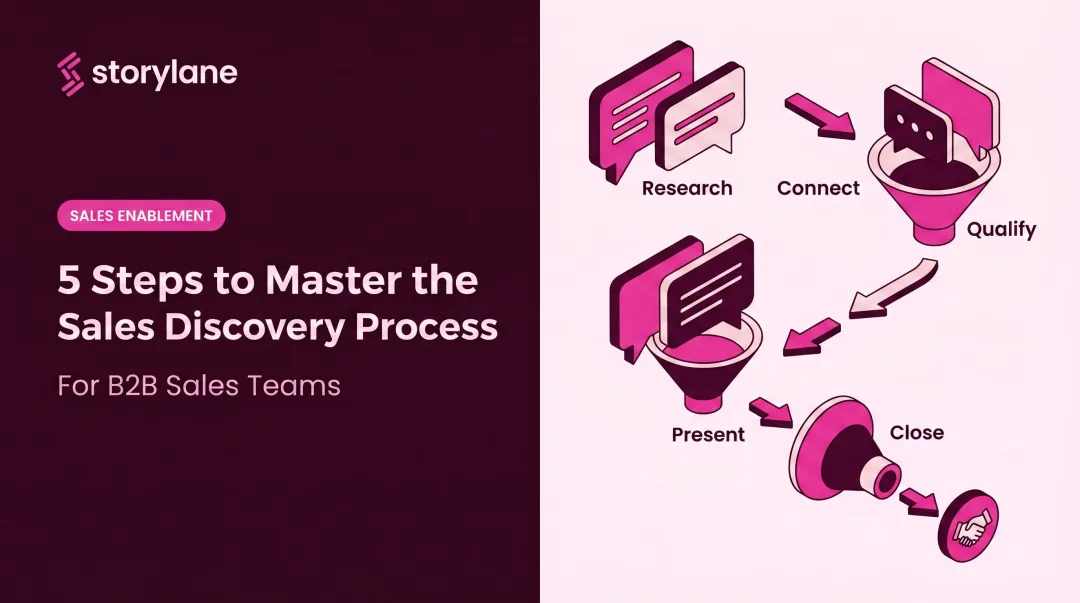
The inbound sales process maps cleanly to the buyer's journey. Four stages — Identify, Connect, Explore, Advise — correspond to Awareness, Consideration, and Decision. Each stage has a distinct job.
Identify
The identify stage is about finding two types of buyers:
- Active buyers: prospects already engaging with your content, pricing page, chatbot, or product
- Passive buyers: accounts that match your ICP but haven't yet shown intent
Behavioral signals matter here. A pricing page visit, a second site session within 48 hours, or a form fill all indicate different levels of readiness. Tools that support identification include:
- Ideal customer profile (ICP) definitions — establishing who you're actually looking for
- Lead scoring in your CRM — prioritizing outreach based on fit and behavior
- Intent data platforms — surfacing accounts showing in-market signals
- Account Reveal features — Storylane, for example, de-anonymizes demo visitors and surfaces company name and firmographic data, so reps know which accounts are actively exploring their product even before a form fill
Connect
The connect phase is about reaching out at the right moment, in the right way — not pitching, but opening a conversation tied to the prospect's specific context.
If someone just downloaded a security guide, your opening message shouldn't be about pricing. It should acknowledge what they were trying to learn. Salesloft's 2023 Revenue Benchmark Report found that personalizing just 20% of a sales email can double reply rates — a strong case for relevance over volume.
Channel selection matters too. Some buyers respond to email; others engage on LinkedIn or in live chat. Storylane supports the connect stage by letting reps generate personalized demo links — customized with smart variables like company name or use case — and attach them to outbound emails or LinkedIn messages. The format changes; the principle doesn't: context beats volume. When the prospect opens the link, engagement data flows back to the rep in real time.
Explore
The explore phase is where qualification actually happens. This is a structured discovery conversation covering:
- What pain points the prospect is experiencing
- Their business goals and success metrics
- Budget and buying authority
- Decision-making process and timeline
Three criteria determine whether a deal should advance: the product addresses a real need, the budget is viable, and the timeline aligns. If any of these is missing, exiting the deal here is better than nurturing a poor fit for months. A clean exit at this stage costs an hour — a bad fit dragged forward costs a quarter.
Reps can enter explore calls with a significant advantage when they've already sent a demo link. Storylane's analytics push engagement data — which steps the prospect viewed, where they spent time, where they dropped off — directly into Salesforce or HubSpot before the call. The rep walks in knowing what the prospect cared about.
Advise
The advise phase translates everything learned in explore into a tailored recommendation. The goal is a personalized case for how the product solves this specific prospect's problem — not a recycled pitch deck.
Interactive demos are well-suited to this stage. TrustRadius found that 94% of technology buyers say demos tailored to their specific use case are important for evaluation. Gartner separately ranks interactive demonstrations as the most useful website resource when evaluating SaaS vendors.
In practice, a Storylane workflow for the advise phase looks like this:
- Rep personalizes a demo using smart variables (company name, use case, industry)
- Generates a private, tracked link restricted to the prospect's email
- Sends the link ahead of the closing conversation
- Prospect self-navigates an interactive experience with AI voiceovers and guided flows
- Rep receives Slack alerts and intent scores as the prospect engages
- CRM is automatically updated with behavioral data before the next call
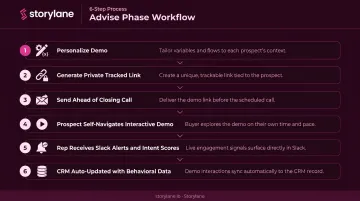
The prospect arrives at the closing conversation already informed. The rep arrives knowing exactly what they explored.
Top Inbound Sales Strategies
Build Detailed Buyer Personas and ICPs
Effective inbound starts with knowing exactly who you're targeting — job roles, pain points, buying behavior, and decision-making patterns. Without this foundation, content and outreach miss the mark for the people most likely to buy.
Your ICP defines the accounts most likely to succeed with your product. Buyer personas define the individuals within those accounts you need to reach and how they think.
Map Content to the Buyer's Journey
Content is the engine of inbound. CMI's 2025 B2B research found 74% of B2B marketers use content marketing to generate leads — and the reason it works is that the right content meets buyers where they are:
- Awareness stage: Blog posts, SEO articles, educational videos attract prospects researching their problem
- Consideration stage: Case studies, comparison guides, and webinars nurture leads evaluating solutions
- Decision stage: Demos, ROI calculators, and free trials convert leads into pipeline
Demand Gen Report research found 78% of buyers consume three or more pieces of content before engaging sales. The implication is clear: build for the full journey, not just the bottom of the funnel.
Align Sales and Marketing Around a Shared Pipeline Definition
Inbound only works when marketing and sales agree on what a qualified lead looks like. Without alignment, marketing hands over contacts that sales ignores, and neither team trusts the other's numbers.
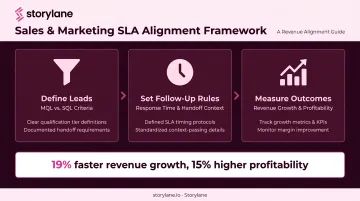
The fix is a service level agreement (SLA) between the two teams. This document defines:
- What constitutes a marketing-qualified lead (MQL) vs. a sales-qualified lead (SQL)
- How quickly sales follows up after a lead is passed
- What context marketing provides when handing off to sales
Organizations with aligned sales, marketing, and product teams achieve 19% faster revenue growth and 15% higher profitability, according to Forrester/SiriusDecisions research. That alignment compounds over time — faster revenue cycles, fewer dropped leads, and cleaner forecasting.
Segment and Personalize Outreach at Scale
Once your pipeline definition is locked, execution comes down to relevance. One-size-fits-all messaging dilutes inbound effectiveness — segmenting leads by persona, industry, or behavior lets reps deliver the right message at the right stage, which directly improves response rates and conversion.
This logic extends into the demo itself. Platforms like Storylane use dynamic variable tokens to swap in company names, use-case-specific content, and industry data, so each prospect sees a demo tailored to their context rather than a generic walkthrough built for no one in particular.
Inbound Sales Success Tips and Common Mistakes to Avoid
Guide, Don't Push
The biggest behavioral shift in inbound sales is resisting the urge to accelerate toward a close before the prospect is ready. Inbound buyers have context — they found you, they're evaluating you. Rushing them signals that you're more interested in the deal than the outcome.
Guide them with relevant information at each stage and let the decision emerge from genuine fit. The close happens faster when the prospect feels informed, not pressured.
Avoid Spending Time on Poorly Qualified Prospects
Sales reps already spend less than 30% of their time selling, according to Salesforce. Dedicating significant rep time to leads who lack budget, authority, or a real need makes that number worse — and distorts pipeline forecasts.
Proper qualification during the explore phase is the fix. If a lead doesn't meet the three criteria (real need, viable budget, aligned timeline), exit cleanly. It's not a lost deal; it's preserved capacity for deals that can actually close.
Identify the Economic Buyer Early
In B2B inbound sales, reps often nurture a champion who lacks purchasing authority. That champion influences the decision and builds internal support — but if they're not the economic buyer, your proposal gets handed to someone who hasn't been part of the conversation.
B2B buying decisions typically involve multiple stakeholders across business, technical, and financial functions. The earlier you identify and engage the economic buyer, the less likely your deal stalls at the finish line.
Define Clear Next Steps After Every Interaction
Inbound deals stall when prospects aren't given a specific, low-friction next step. End every call and every demo with a concrete follow-up action and a defined timeframe:
- Confirm the next meeting before the current one ends
- Specify what you'll send and exactly when ("demo recap by Thursday")
- Give the prospect one clear action to take before you reconnect
The more specific the next step, the less room for a deal to quietly go cold.
Frequently Asked Questions
What is inbound sales?
Inbound sales is a methodology where prospects initiate contact after discovering value through content, brand presence, or peer referrals. The rep's job is to guide that already-interested prospect toward the right solution — not to manufacture interest from scratch.
What is the difference between inbound and outbound sales?
The key difference is who starts the conversation: in inbound, the prospect reaches out after finding value; in outbound, the seller initiates cold contact. Inbound leads typically arrive with higher intent and existing context, while outbound can deliver faster short-term pipeline but requires more effort to establish relevance from scratch.
Is inbound sales difficult?
There's real upfront investment in content creation, ICP definition, and process-building. Once that engine is running, inbound leads are easier to close — they arrive with context, intent, and a clear sense of their problem. The heavy lifting happens early, not throughout the sales cycle.
What are the four steps of the inbound sales process?
The four steps are Identify (finding active and passive buyers), Connect (reaching out with personalized, context-driven outreach), Explore (structured discovery to qualify fit), and Advise (presenting a tailored recommendation). Each maps to a stage of the buyer's journey from Awareness through Decision.
What metrics should you track to measure inbound sales success?
Key metrics include lead-to-opportunity conversion rate, sales cycle length, customer acquisition cost (CAC), and content-influenced pipeline. Bessemer reports an average CAC payback of 15 months for cloud companies in the $1M–$10M ARR range, which makes efficiency metrics especially critical for early-stage teams watching burn.
How do inbound sales and marketing teams work together?
Alignment requires three things: a shared ICP definition, agreed-upon lead qualification criteria that distinguish MQLs from SQLs, and an SLA that governs how and when marketing hands leads to sales — including what context transfers with each lead. Without the SLA, handoffs become inconsistent and trust between teams erodes.