
.svg)

In this new product-led era, buyers are deciding quickly and want to feel the product to make those decisions. However as a growth marketer, one of the challenges is to get your prospects to engage with the product quickly enough. Each day you lose prospects because they didn’t get to see your product.
An interactive product demo or tour is a great way to build trust with your prospects. In this article, I will go over the series of steps you want to take to build an interactive product demo.
Let's get started.
How to create Interactive Product Demo?
Here are the 8 steps you need to take:
1. Questions to ask
Some questions to ask before creating your interactive product demo or tour.
(a) Guided product tour or Custom demo
Often, when buyers land on a new product, they don’t know what to do and get frustrated.
Guided tours like Storylane solve exactly this. It enables you to let your prospects go through a guard-railed experience of your product.
A custom demo is more useful at the later stages of the buyer's journey where they will invest even more time to explore the product. At that time, you can have them engage with a custom demo as an alternative to a pre-POC demo.
(b) Video or interactive demo
A well produced video of your product is a great way to showcase your product. But a good video will need to stitch together the product imagery and is hard to build. Moreover, it's not self guided and doesn’t gives that aha moment to the prospect which comes only out of self exploration. This is where a more interactive experience of the product demo helps.
Interactive demos generate 3-4x more engagement on landing pages. Prospects spend 4-5 minutes exploring demos versus 1-2 minutes watching videos.
Videos are okay for one-way communication. Interactive demos excel when prospects need to explore features themselves. Storylane enables you to create demos that support both formats.
2. Choose the right tool
Pick a platform that doesn't have an engineering dependency. The best demo tools are no-code and use simple browser extensions to capture your product. Marketing teams should be able to build and publish demos independently.
Look for these capabilities:
- No-code capture and editing: Browser extension captures your product interface. Inline editor lets you change text, images, and data without touching code.
- Multiple demo formats: HTML demos for interactive experiences. Screenshot demos for quick tours. Video demos for email campaigns. Don't limit yourself to one format.
- Self-serve setup: You can ship your first demo in minutes, not weeks waiting for dev resources.
Storylane supports HTML, screenshots, and video formats in one platform. It works for both sales teams (personalized demos) and marketing teams (website-embedded demos and lead capture).
"I like how easy it is to create screenshot demos just by clicking around the product" - Verche Karafiloska, Lead Product Marketing Manager (51-200 employees) | G2
3. Create a story that you want to tell
Story is what will draw your prospects to engage deeply and eventually make a buying decision. Your prospects want to evaluate quickly how your product is going to make their life simpler and be valuable over time. A good story is when you can articulate the “aha” moments when your customers use your product.

4. Capture your screens
Capture your product through the native screen capture tools available in your browser or your computer. Storylane offers you a Chrome extension through which you can capture your product. You have the option of capturing the entire HTML or only images of the product. Image captures result in a faster time to value since it’s extremely easy to build.
"Instead of spending hours building slide decks or recording long demos, I can spin up clean, interactive walkthroughs of new features in minutes. It's fast, intuitive, and lets me highlight exactly what I want prospects and customers to see." - Danielle Chaffin, Senior Solutions Engineer (51-200 employees) | G2
5. Add guided widgets
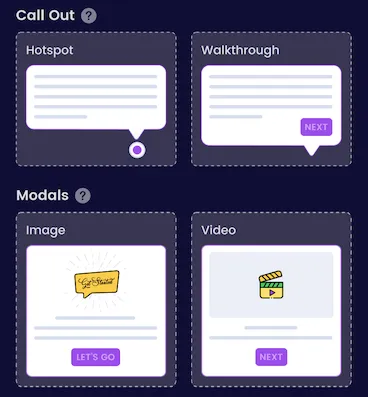
Guided widgets (or explainer bubbles) enable you to tell your story through a guided walkthrough for your prospects. It’s a very powerful tool to communicate the value of your product as they step through the screens. Intercom, Walkme and Pendo use it beautifully as an onboarding journey for users. You can use it for the product demos that you have built and improve the user experience with these explainer bubbles through guided widgets.
6. Gather information about your Leads
(a) Lead Form
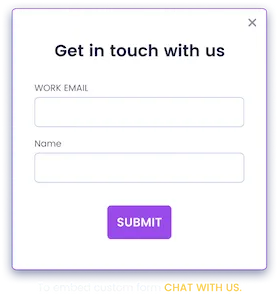
A well scripted interactive product tour when embedded on the website will generate more qualified leads. Your prospects on the website will want to experience it. So have your lead capture form at the start, end or middle of the product tour. You want to get the information from them at their highest point of excitement. Ask for quick info like - Name and Email
(b) Intelligent Lead Insights
Use services like Clearbit and Zoominfo to get lot of insight about your leads. Storylane integrates with these services to provide the info and you might not even need to collect through lead form
(c) Integrate chat
Another option in addition to the above ones, would be to add chat widget to interactive product tour like intercom or drift. Through Storylane you can simply add these widgets and have them connect with sales rep at appropriate time during their journey in product tour
7. Share and embed your demos
Another use case of your demos is to send it to buyers who are looking at your product and evaluating it. A way to stand out from competitors is to have them experience your product quickly enough. That way the champion in the buyers organization can create enough pull towards your product and you can close the sale quickly.
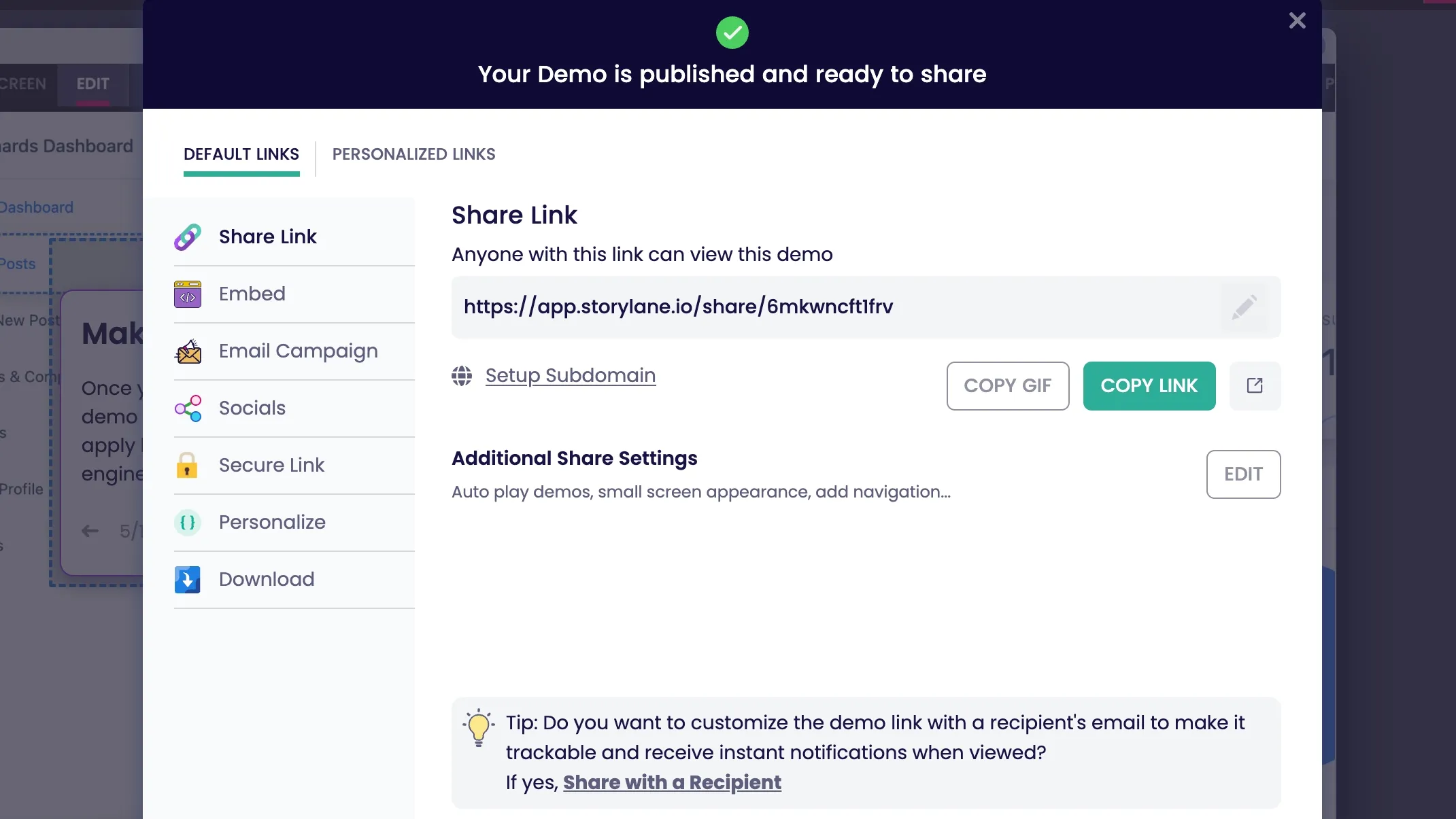
After you have the interactive demo, share it not just as an embedded product demo on the website, but personalize it and send it to the buyers.
The demo software you chose should be such that it’s easy to customize your demo and share it.
How to embed interactive demos on your website
Copy the embed code from your demo platform and paste it into your website's HTML in minutes.
- Common placements: homepage, product pages, pricing pages, dedicated "/demo" page.
- For Webflow, WordPress, or HubSpot: paste the code into a custom HTML block.
- Storylane embeds load in under 2 seconds and work on mobile. The platform generates the code automatically with optional lead forms.
Bonus: Download offline versions for trade shows and conferences. Storylane's offline mode runs demos on laptops without internet—critical during situations with unreliable connections.
8. Get analytics that works
Analytics is the cornerstone for evaluating the success of these interactive product demos and pushing your leads deeper into the funnel. You want to track a few metrics:
- Who has viewed your demo
- How many steps have they progressed in your entire self-guided product tour
- How much time have they spent on the product tour
- How many members of the same company have viewed it
And this analytics has to be available in your system of records like Marketo, Hubspot and Salesforce.
Now that you know how to make a killer interactive product demo, it's time to start using some awesome tools available in the market and winning the love of your buyers and driving your Product-led growth.
Interactive product demos - Frequently asked questions
Q. Do I need engineering resources to create interactive demos with Storylane?
No. Storylane's browser extension captures your product interface in minutes. Marketing teams can build and ship their first demo in 2-3 hours without touching code.
Q. How does Storylane compare to Navattic and Supademo for creating product demos?
Storylane supports HTML, screenshot, and video demos—Navattic only does HTML, Supademo focus is on screenshots. Storylane also includes AI-powered editing and works across marketing, sales, and customer success teams.
Q. What's the ROI of implementing interactive demos on my website?
Companies typically see 1.7x more sign-ups and 1.5x better activation rates. PQLs from interactive demos convert at 30% versus 6% for traditional MQLs, cutting sales cycles by roughly 30%.
Q. Is Storylane worth the cost compared to cheaper alternatives like Supademo?
Storylane starts at $40/month with full HTML editing, AI features, and analytics. Supademo is $27/month but limited to screenshots. If you need personalization and AI, Storylane delivers more features per dollar.
Q. Can marketing teams create demos without relying on sales engineers or product teams?
Yes. Storylane is built for marketing self-service. Teams can create, update, and organize demos independently—no handoffs to engineering when products change.
Q. What's the difference between HTML demos and screenshot demos, and which should I use?
HTML demos let you edit data and personalize at scale—ideal for sales. Screenshot demos are faster to build and better for simple top-of-funnel flows. Storylane supports both formats.
Q. Can I use interactive demos at trade shows without internet?
Yes. Platforms like Storylane offer offline demo modes that run without WiFi. Download an offline copy of your demo to a device before the event. The attendees can engage with the demo at your booth while you handle other conversations or scan badges. Add a simple email capture form to collect leads. After the event, send personalized demo links as a follow-up.
Related Reading
How to Prepare a Great Software Demo Presentation