
.svg)

Choosing between Consensus and Storylane? You're in the right place.
We tested both demo automation products, interviewed past users, and dug through 200+ customer reviews to uncover the actual user experience. Before you settle on a demo automation tool, let's break down what you're actually buying and which one fits your team.
We'll focus on how both demo automation platforms compare in terms of ease of building demos, demo sharing capabilities, pricing, and scalability. This comparison comes from Storylane, so yes, we're biased. But every claim here is backed by product testing, customer interviews, and verified G2 reviews. We'll show you where Consensus genuinely excels, then explain where we believe Storylane does better.
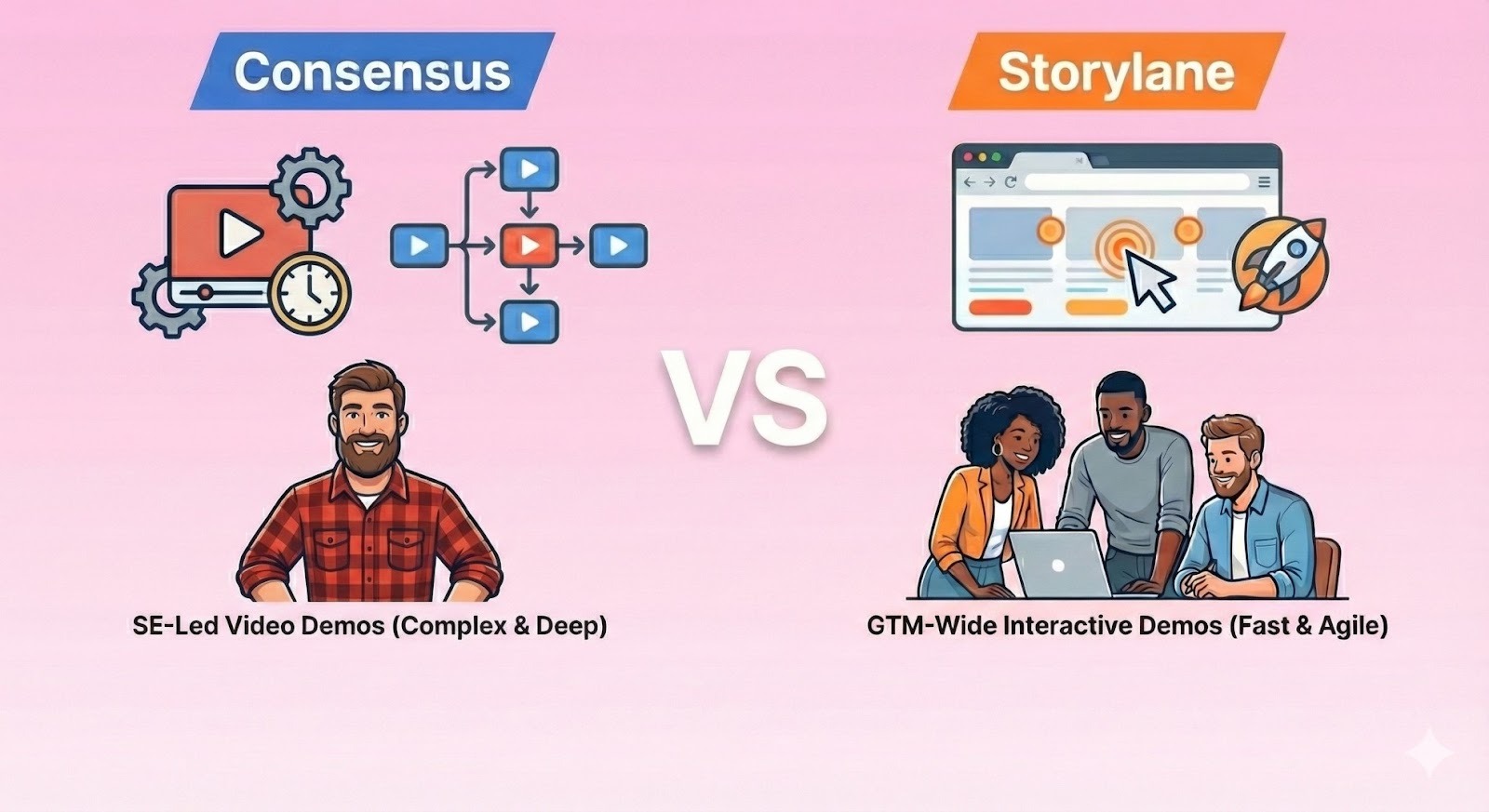
What we evaluated (and both platforms offer)
We judged both platforms on the workflows that actually impact your team:
- Demo creation: How fast can you build demos? What's the learning curve?
- Demo sharing: How easy is it to personalize and distribute demos to prospects?
- Prospect experience: Can buyers navigate demos without you? What friction exists?
- Maintenance: How do you keep demos current when your product changes?
- Getting started: Can you test before buying? How long until your team is productive?
- Platform architecture: Are you managing one system or two?
On paper, Consensus and Storylane overlap significantly.
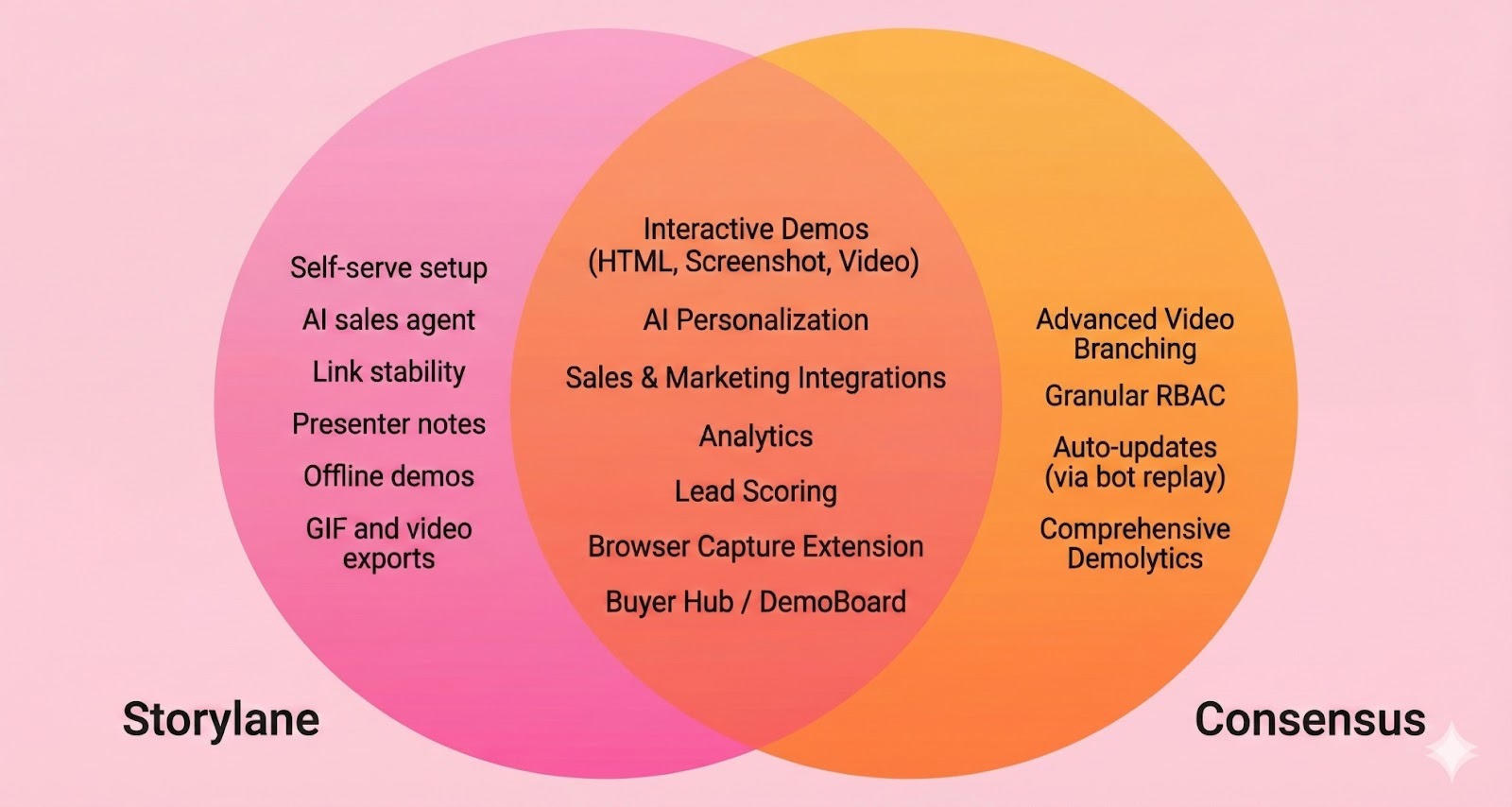
Both platforms check basic boxes. The real differences lie in how these features actually work irl.
Let's be honest about what Consensus does well
Consensus pioneered this category in 2013. They've been doing video demo automation longer than most alternatives have existed. Credit where it's due.
- Their branching video demos are legitimately good. Works well when deals require sophisticated flows that adapt based on buyer interests
- Comprehensive RBAC. Eight-plus standard roles, custom roles, and granular permissions. Managing complex enterprise org structures.
- Demolytics helps you show leadership what's working and help get internal buy-in
- ReachSuite acquisition (September 2024). They added interactive demos, which launched early 2025. This shows they recognized where the market was heading.

Now, let's break down how both platforms handle the core demo automation workflow stages.
1. Demo creation & maintenance - Ease of use and speed
Storylane gets you productive in minutes.
Storylane has the highest CSAT score in demo automation (99/100) across 1,129 reviews, ranking #1 with 9.5/10 for ease of use and setup.
This demo creation capability is Storylane's Demo Suite — a single platform covering HTML capture, screenshot demos, guided flows, demo hubs, and personalization, with native integrations into HubSpot, Salesforce, and Marketo. Paired with RepX, Storylane's AI website agent, Demo Suite becomes a full inbound pipeline tool: the demo attracts the buyer, RepX qualifies them and books the meeting.
- AI-native since July 2023 – AI generates demo script, guides, tooltips, and voiceovers automatically—you can actually create (killer) demos in 2 minutes.
- Intuitive, no-code experience: Anyone on your GTM team can start building demos without training sessions.
- Minutes to first demo—genuinely fast creation without technical skills
We proved this scale when I personally built 7,000 demos for our demo-led SEO growth experiment—only possible when a platform is genuinely easy to use. This strategy went viral enough to get featured on an episode of Exit5
This level of speed and scale wouldn't be possible with Consensus.
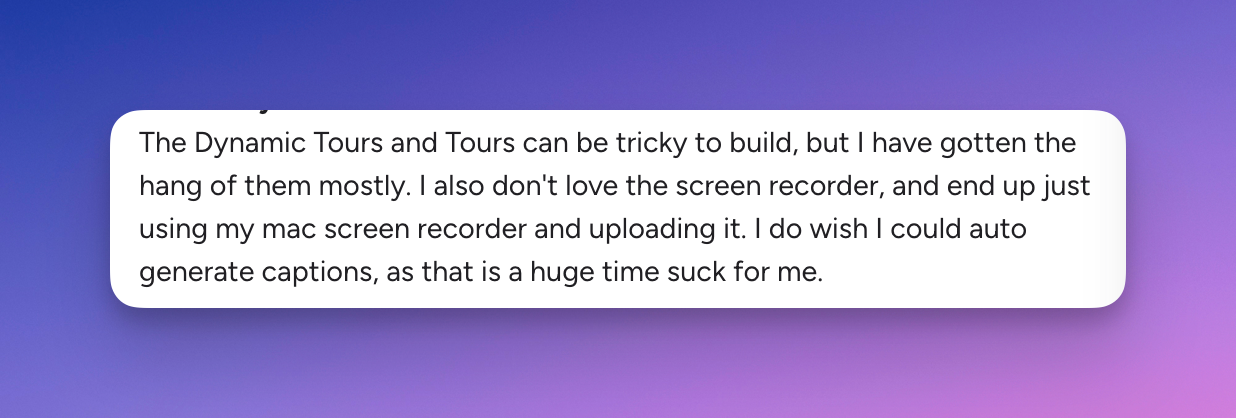
Consensus users often report a steep learning curve. As per the G2 reviews:
- Users appreciate the power once mastered, but the time to productivity is longer
- AI features launched October 2025 – newer to AI-powered workflows (18 months behind Storylane)
Verdict: Storylane wins on speed to value. If your team needs demos this week without training overhead, it delivers.
Turning videos into interactive demos
This is a nifty feature where you can upload existing product videos and add interactive layers—pause points with hotspots and annotations.
Even though the tour quality isn’t great (limitations due to the video source). It’s still a handy feature as it's helpful to enhance your existing demo libraries. This matters when you've already invested in video libraries and don't want to rebuild from scratch.
Storylane does this, and as of December 2025, Consensus does too—both platforms handle it well.
Maintaining and updating demos
This is where Consensus has a clear advantage: auto-update functionality.
When your product UI changes, Consensus can automatically refresh demos through bot-replay technology. It replays your original click sequence to recapture updated screens—a genuinely neat feature that saves significant maintenance time.
There are some caveats:
- It breaks if your product structure changes,
- Requires live product access (SEs only), and
- You can't touch your mouse during the process.
But it's still a strong capability.
Verdict: Consensus wins here. If your product structure stays stable and SEs manage demos, their auto-update saves real time.
Storylane doesn't have auto-update (as of now), but you can easily swap out screens that need updating—less automated but controlled.
2. Demo sharing & personalization
Both Storylane and Consensus offer AI-powered personalization now. You can customize demos with prompts, change text, swap images, and adjust data points for different industries using AI HTML editors.
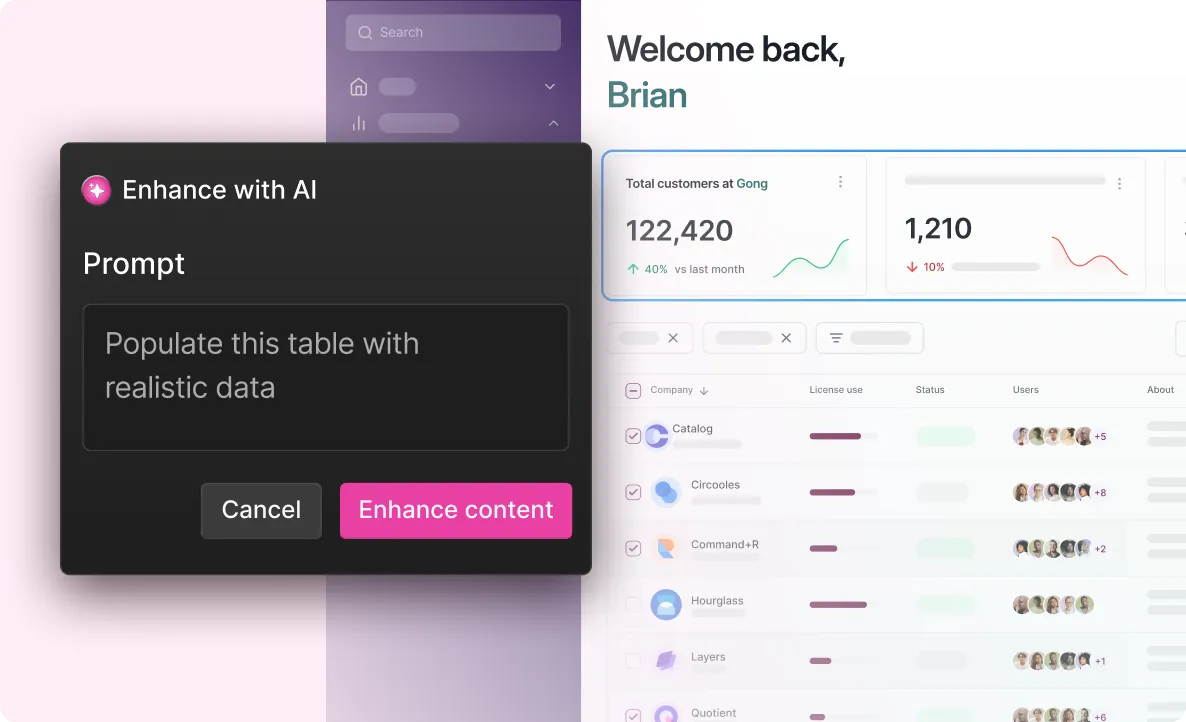
AI maturity
Storylane has been refining AI features since July 2023 thats 18+ months of production refinement. It been battle-tested across thousands of customer demos before Consensus even had interactive demos (launched early 2025)
Consensus launched their AI features 2025. The capabilities are functional, but they're still working through the learning curve we completed over a year ago.
Both platforms handle personalization through URL parameters—useful for swapping names, logos, and basic data variables.
Duplication bottleneck
But Consensus doesn't let you duplicate DemoBoards (their equivalent to Buyer Hub)
One G2 reviewer captured this pain point: "I think it'd be super helpful if I could just duplicate demo boards instead of having to create a new demo board over and over again every time I want to send it to a new client."
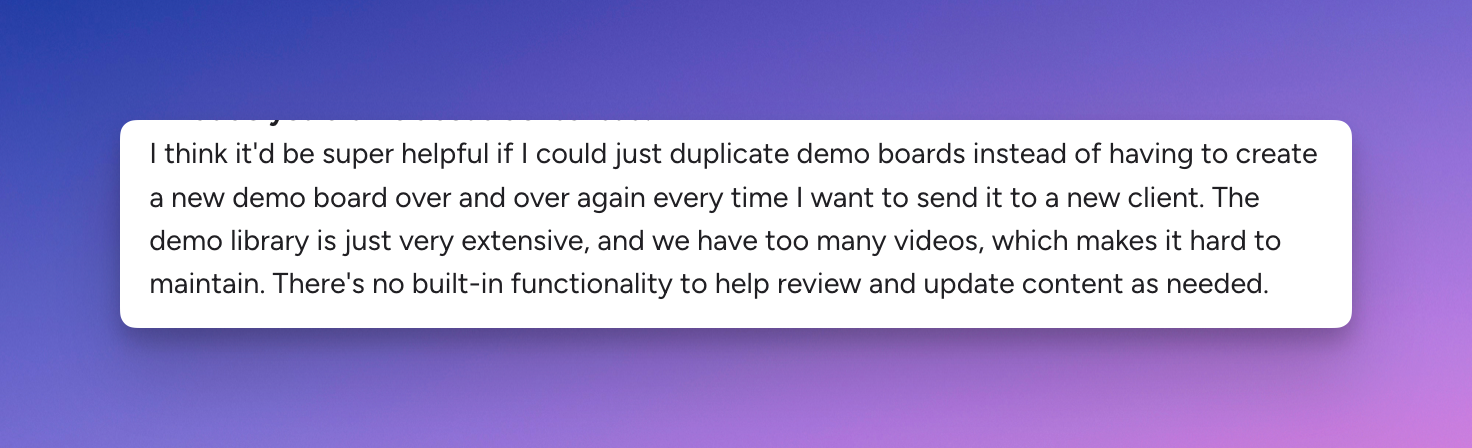
- If you need to create variations with different messaging, content flows, or structural changes—you're rebuilding from scratch
- Result: 5 personalized Demoboard versions = hours of repetitive setup
Storylane doesn't have this bottleneck: Duplicate any Buyer Hub → customize what needs to change → done.
Link stability and export options
You publish a demo, embed it on your website, add it to sales decks, and include it in email sequences. Then your product changes. Now what?
Storylane maintains the same link when you republish. Update your demo, hit republish, and every place you shared that link automatically shows the updated version. No broken links, no hunting down everywhere you embedded it. Plus, you can export demos as videos and GIFs for email campaigns or social platforms.
Consensus doesn't offer link stability—updates mean managing new links across all touchpoints. And they don't support video or GIF exports.
Verdict: Storylane wins on distribution flexibility.
3. Buyer experience versatility
A hiccup we found in consensus demos is the video segments within their interactive demos.
When you hit video sections in a Consensus demo, you can't skip ahead—even if the content isn't relevant to that viewer's role or use case.
This matters for champion enablement. When your internal champion presents your demo to their buying committee, they can't fast-forward through video segments that don't apply to specific stakeholders. They're stuck waiting through content that might not be relevant.
Storylane demos handles transitions smoothly and lets viewers control the experience. Use the progress bar to skip any section or navigate directly to what matters for their role.
AI sales agent for instant buyer enablement
Storylane launched Lily AI, an AI-sales agent, in March 2025. She handles product conversations with your inbound prospects like your best sales rep. Buyers can ask questions, navigate objections, and get instant answers—all without waiting for your team. If your SE team is evaluating AI-driven demo tools more broadly, this playbook on agentic AI demos for sales engineering teams is a useful next read.
- Provides self-guided discovery for buyers exploring your product
- Automatically qualifies prospects based on fit and engagement
- Recommends the right demo for specific use cases and personas
- Trained on your team's best playbooks, scripts, and documentation
Consensus doesn't offer an AI sales agent feature as of now. Though it’s been marked coming soon on their website for a while.
4. Analytics: Simple vs comprehensive dashboards
Consensus offers comprehensive analytics with granular engagement tracking. Demolytics is praised in G2 reviews for demonstrating ROI to leadership. The depth is valuable for executive reporting—the tradeoff is complexity when you need quick insights.
Storylane keeps it simple -Straightforward interface focused on actionable metrics: views, drop-offs, engagement, and Account Reveal (Deanonymize demo visitors). Get answers fast without navigating layers of dashboards.
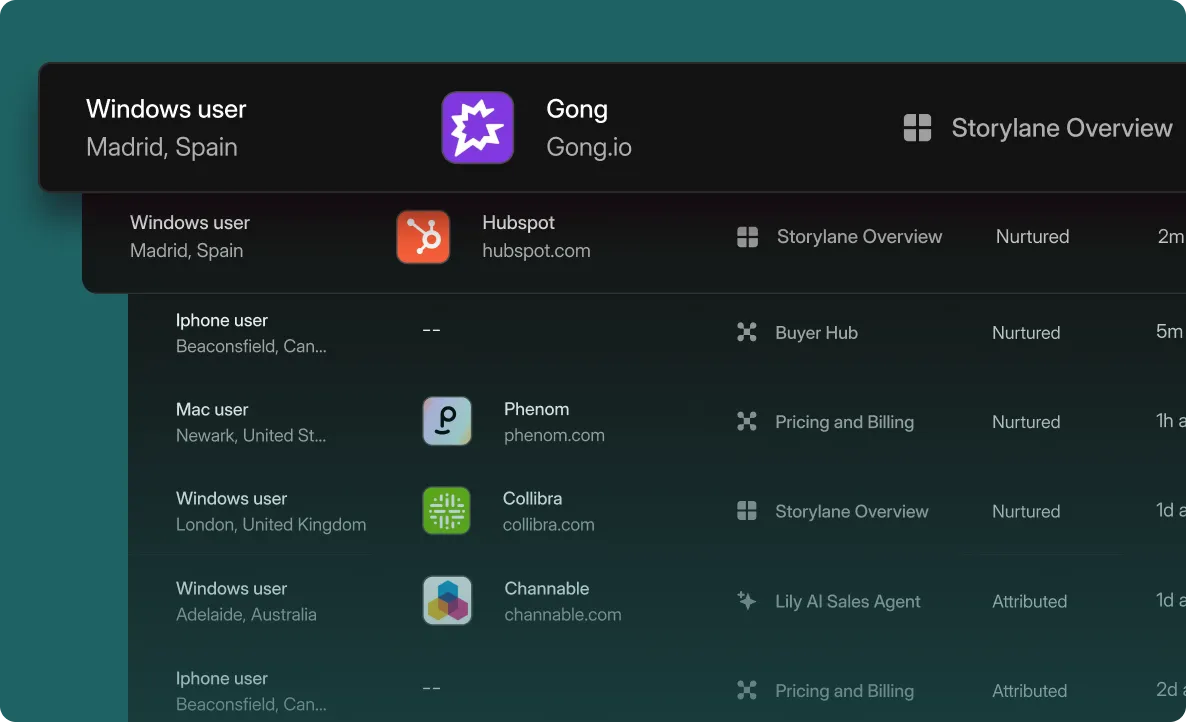
Verdict: Consensus for depth and stakeholder reporting. Storylane for simplicity and deanonymisation.
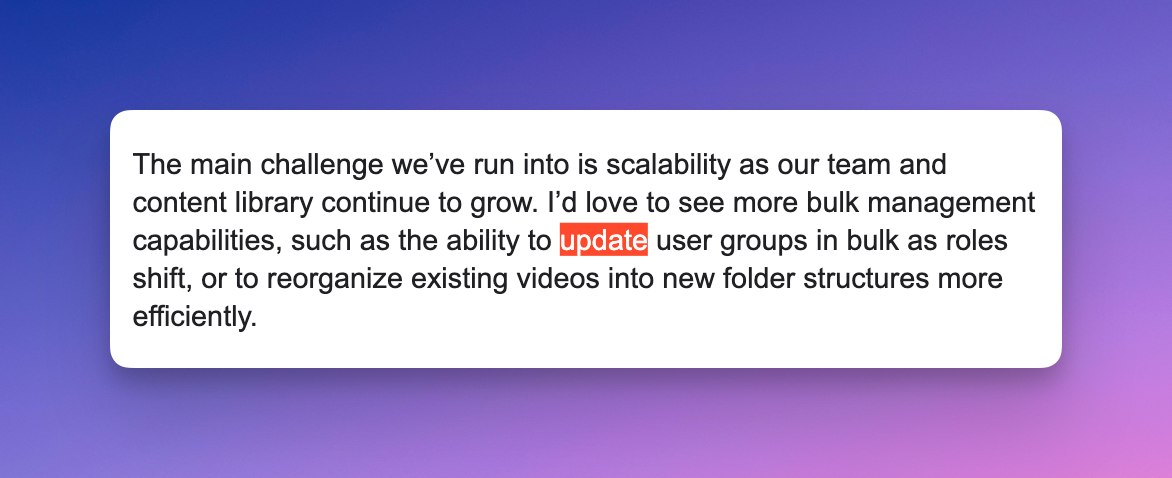
One note though: Despite all this granular permission management, neither platform offers bulk team management.
5. Time to value: How fast can you actually start making demos?
Consensus: Sales cycle, then learning curve
Consensus doesn’t allow you to just sign up and start. You need to go through their enterprise sales process to get access. That means discovery calls → demos → negotiations → onboarding.
Once you get the product, your team still needs training to tackle the initial learning curve most consensus users face.
G2 reviewers note: "The platform can feel a bit complex at first, especially when setting up advanced demo flows."
Between the sales cycle and learning curve, you're looking at a month or more before your first demo goes live.
Storylane: Minutes to your first demo
Storylane is self-serve from day one.
- Sign up for the free plan, start building immediately
- No sales calls required to access the product
- Intuitive interface—teams start creating without training sessions
G2 reviewers confirm this: "Took me no more than 15 min to get it set up and running." The highest ease of use rating in the category (9.5/10) means your team is productive immediately.
Verdict: Storylane wins on time to value. Self-serve access and intuitive design mean productivity today
6. Pricing: Access and flexibility
Consensus pricing starts at $600/mo (Starter, 5 users), Pro from $1,250/mo (10 users), and custom Enterprise. No free plan or self-serve trial.
Consensus pricing at a glance:
- Starter — from $600/mo (5 users, billed annually): video demos + product tours, AI Content Studio Lite, marketing analytics, Chrome extension, API.
- Pro — from $1,250/mo (10 users): adds sales analytics, personalized sales links, sales integrations (Salesforce, Gong, Outreach), AI video & avatars, MCP.
- Enterprise — custom: adds Simulations, enterprise analytics, SSO, global admin, dedicated CSM.
- No free plan, no monthly billing, no self-serve — every plan is "Talk to Sales."
How Consensus pricing compares to Storylane:
- Entry point: Consensus starts at $600/mo with a 5-user minimum. Storylane's Free, $40 Starter, and $500 Growth plans all sit at or below that, with self-serve signup.
- Advanced analytics: Storylane from $40 (Starter); Consensus sales analytics from $1,250 (Pro).
- A/B testing: native on Storylane (Growth); Consensus supports manual comparison only.
- Website visitor / account identification: built into Storylane (Starter+); not offered by Consensus.
- Demo-to-PDF/doc/SOP export: native on Storylane; on Consensus only via a third-party integration.
- Parity (not a Storylane edge): Consensus also has video-to-demo, buyer-facing conversational AI agents, and CSV export.
Consensus Pricing FAQ:
- How much does Consensus cost? Starter starts at $600/mo (5 users) and Pro at $1,250/mo (10 users), with custom Enterprise — all billed annually.
- Does Consensus have a free plan or trial? No. There's no free plan, no self-serve trial, and no monthly billing; every plan requires talking to sales.
- Consensus vs Storylane — which is more accessible? Storylane has a free plan and paid plans from $40/mo with self-serve signup. Consensus starts at $600/mo with a 5-user minimum and annual, sales-led contracts.
- What's the minimum commitment for Consensus? Starter starts at $600/mo for 5 users, billed annually (about $7,200/year) before add-ons or extra seats.
| Price band | Storylane | Consensus |
|---|---|---|
| 1$0Free | Free ($0) | No free plan |
| 2~$40per seat / mo | Starter ($40 / seat / mo) | No plan at this price |
| 3~$500 to $600per mo | Growth ($500 / mo, 5 seats) | Starter (from $600 / mo, 5 users, annual) |
| 4~$1,200 to $1,250per mo | Premium ($1,200 / mo, 10 seats) | Pro (from $1,250 / mo, 10 users, annual) |
| 5Customenterprise | Enterprise (custom) | Enterprise (custom) |
Consensus publishes "starts at" prices, all billed annually, with a 5 or 10 user minimum and no self-serve signup. Storylane's Free, $40 Starter, and $500 Growth plans all sit at or below Consensus's $600 entry point.
| Feature | Storylane | Consensus |
|---|---|---|
| Free plan | Yes ($0) | No |
| Entry paid plan | $40 / seat / mo (Starter) | From $600 / mo, 5 users (Starter) |
| Monthly billing | Yes | No (annual only) |
| Self-serve signup | Yes | No (Talk to Sales) |
| Interactive HTML demos | Growth ($500) | Starter (from $600) |
| Advanced analytics | Starter ($40) | Pro ($1,250) |
| A/B testing | Native (Growth) | Manual comparison only |
| Visitor / account identification | Starter and up | Not offered |
| Demo to PDF / doc / SOP export | Native (Starter) | Via third-party integration |
| SSO | Premium ($1,200) | Enterprise only |
| Dedicated CSM | Growth ($500) | Enterprise only |
| Video-to-demo (AI) | Yes | Yes |
| Buyer-facing conversational AI agent | Yes (RepX) | Yes (Talkables) |
Prices verified July 2026. Consensus prices are billed-annually "starts at" rates. Storylane plans: Free $0, Starter $40/seat/mo, Growth $500/mo, Premium $1,200/mo, Enterprise custom.
7. Enterprise readiness: RBAC and permissions
Consensus wins on depth
Consensus goes pretty deep here. Eight-plus standard roles, custom role creation, and granular permissions. If you're managing complex enterprise org structures with different access needs across departments, this is genuinely comprehensive.
Storylane offers a simple RBAC
Storylane offers a simple to use RBAC abut not at Consensus's depth. We cover the essential permission controls most teams need, but if you require highly granular, custom role definitions, Consensus wins here.
One note though: Despite all this granular permission management, Consensus doesn't offer bulk team management (we don't either, to be fair 😬). So when you're managing those complex permissions, updating team members one by one becomes a bigger hassle.
Still, if you need RBAC depth, Consensus delivers.
"Storylane is super powerful to apprehend, the builder is smooth and gets things done. And Having a free trial is a huge plus as compared to reprise, Walnut or Demostack. In addition, the team was super helpful and reactive giving me a personal tour of the product after I could build my first flows for free." - Salim Jernite, CEO (11-50 employees) | G2
The two-platform problem
Consensus + ReachSuite are two separate systems. Interactive demos live in ReachSuite, video demos in Consensus legacy. Different logins, separate workflows, duplicate permission management.
Storylane is one unified platform. HTML demos, screenshot tours, video demos—everything in the same system.
When you need to update access or onboard users, you're doing it twice with Consensus. Training covers two products. Support tickets go to different systems.
Verdict:
- Consensus wins on RBAC depth for complex enterprises.
- Storylane wins on operational simplicity with one unified platform.
Choose based on whether permission granularity or system consolidation matters more to your team.
Decision framework: Which platform fits your team?
Choosing between these two platforms comes down to one question: Do you value enterprise-grade complexity or GTM-wide agility?
Use the guide below to determine which tool aligns with your current team structure and goals.
| Feature | Consensus | Storylane |
|---|---|---|
| Primary strength | Sophisticated video branching & deep enterprise RBAC. | Easiest to use, AI-native |
| Ideal user | Sales Engineers (SEs) in large enterprise orgs. | The entire GTM team (Marketing, Sales, CS, & SEs). |
| Setup time | Weeks (Sales-led cycle + steep learning curve). | Minutes. Fastest time to value (Self-serve + intuitive UI) |
| Maintenance | Winner: Automated "Bot-replay" for UI updates. | Manual (but fast) screen swapping. |
| Link management | Requires manual updates across touchpoints. | Winner: Persistent links (republish without broken links). |
| Platform feel | Fragmented (Two separate systems for video/HTML). | Unified (One platform for all demo types). |
Some questions to ask yourself when deciding between Storylane vs Consensus
- Is my product UI stable? If yes, Consensus’s auto-update is a powerhouse. If no (rapidly evolving), Storylane’s screen-swapping and link stability are safer bets.
- Who is building the demos? If it’s just SEs, the Consensus learning curve is manageable. If you want Sales and Marketing to build, Storylane is the clear choice.
- Do I want to talk to a salesperson today? If you want to start building right now, Storylane is the only option that offers immediate self-serve access.
Choose Consensus if...
- Deep Hierarchy is Mandatory: You require more than 8 distinct user roles and highly granular custom permissions to manage a massive global organization.
- Video Branching is Your Core Strategy: Your sales cycle relies heavily on "choose-your-own-adventure" video paths rather than interactive HTML/browser-based tours.
- You Have Dedicated SE Resources: You have a team of Sales Engineers who have the time to master a complex tool and manage the "bot-replay" maintenance workflows.
- Reporting > Action: You need complex, stakeholder-ready data exports to justify budget at the executive level and don't mind a steeper learning curve to get them.
Choose Storylane if...
- Speed is a Competitive Advantage: You want to go from "idea" to "live demo" in minutes, using AI to generate scripts and guides automatically.
- You Want a Unified Buyer Experience: You prefer a modern, sleek interface where buyers can skip video segments and navigate intuitively without friction.
- You Operate a Lean GTM Team: You need a tool that Marketing and Sales can use effectively without waiting on a Sales Engineer to build every demo.
- Omnichannel Distribution is Key: You need to export demos as GIFs or videos for email sequences and social media, and you need live links to update automatically when you hit "republish."
Frequently asked questions - Consensus vs Storylane
Q. What is the best Consensus alternative that's easier to use?
Storylane is widely considered the top alternative to Consensus for teams prioritizing ease of use. Storylane allows users to sign up and build their first demo in minutes. Its AI-native interface automates script writing and guide creation, making it much more intuitive for non-technical users.
Q. How does Storylane compare to Consensus for presales?
While Consensus is a powerhouse for automated video branching and complex enterprise deal-tracking, Storylane is better for presales teams that need to scale quickly. Storylane offers an intuitive and unified platform for HTML, screenshots, and video demos. Perfect for sales reps who need to build and share "leave-behind" demos or personalized tours without SE bottlenecks.
Q. Between Storylane and Consensus, which one is best for scaling demos?
Storylane is built for scale from the ground up. The AI-native creation workflow means anyone on your GTM team can build demos without training—that's how we created 7,000 demos for our SEO experiment. Consensus requires more specialized knowledge and dedicated SE resources, which becomes a bottleneck as demo needs grow across sales, marketing, and CS teams.
Q. Can I try Storylane before committing to a paid plan?
Yes. Storylane offers a free plan where you can sign up and start building immediately—no sales calls required. You get hands-on experience with the platform before deciding if it's right for your team. Consensus requires going through their sales process before you can access the product.
Q. How does pricing compare between Consensus and Storylane?
Both platforms now show pricing on their websites. The key difference is access: Storylane offers self-serve plans you can start using today, while Consensus requires a sales conversation even with transparent pricing. Your actual costs will depend on team size and feature needs—we'd recommend getting quotes from both based on your specific requirements.
Q. Which platform has better integrations?
Both platforms integrate with major CRMs like HubSpot and Salesforce. The integration quality is comparable. Your choice should be based on the other factors we've covered—demo creation speed, user experience, and platform complexity—rather than integration capabilities alone.
Q. What if my product changes frequently?
If your UI changes often, Storylane's link stability is crucial—republish updates to the same link everywhere without breaking embeds. Consensus's auto-update is powerful but breaks when the product structure changes significantly. For rapidly evolving products, Storylane's approach is more reliable.
Q. Do I need a dedicated demo team to use these platforms?
Consensus typically requires a sales engineer or a presales team due to its learning curve and complexity. Storylane is designed for distributed creation—marketing, sales, and CS can all build demos independently, freeing up solution engineers for the deals that actually need them.. If you want demos managed by specialists, Consensus works. If you want GTM-wide enablement, Storylane fits better.