
.svg)
.svg)


Your sales team needs better demos. You've narrowed it down to Reprise and Storylane.
Both platforms create interactive demos. Both handle personalization. Both speed up your sales cycle.
While Reprise delivers strong sandbox environments, the budget requirements, implementation timeline, and technical complexity make it difficult for small and mid-sized teams to adopt.
If you're deciding between the two platforms, this article will walk you through the differences, tell you where Reprise excels, where it falls short, and how Storylane addresses those gaps.
Yes, this comes from Storylane, so we're biased. But the differences highlighted are backed by product testing, customer interviews, and verified G2 reviews. We’ll be evaluating both platforms across:
- User experience - Ease of demo creation and who can build them
- Platform capabilities - AI maturity and multi-channel distribution
- Pricing and product access - Self-serve vs sales-gated, pricing transparency
Let's break it down.
TL;DR: Reprise vs Storylane comparison
What Reprise does well
Both Reprise and Storylane handle the core demo automation features:
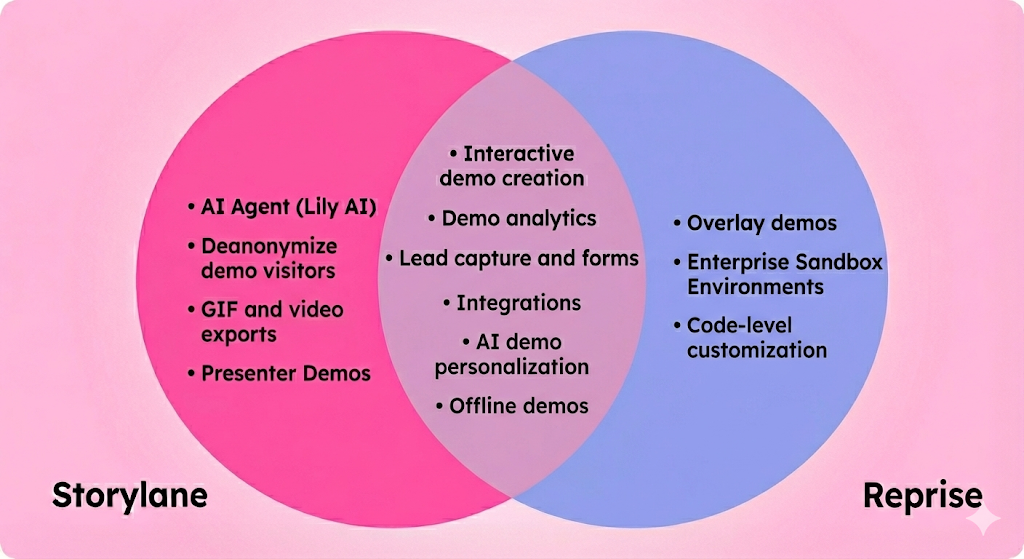
Credit where it's due. Reprise has genuine strengths:
- Great for deep technical validation - Reprise Replicate offers enterprise sandbox environments with backend functionality, meaning it creates actual application clones of your product, not a front-end replica.
- Code-level customization for Solution Engineers - Modify JavaScript, CSS, and HTML directly. Show features that don't exist yet in your product. Solution Engineers get complete control.
For pre-sales teams with complex technical requirements and a dedicated budget, these strengths matter.
The differences show up in how easy it is to build demos, how fast you can start, who it is built for, and what you'll pay.
Where Reprise falls short
- No self-serve access, and implementation takes months. Contact sales, sit through demos, wait for custom quotes. No free tier. No trial. No public pricing. Reported costs: $30,000-$50,000+ annually, with some deployments exceeding $130,000. 4-8 weeks minimum to configure your first demo environment. Some customers report 3 months.
- Pre-sales-first architecture. Built for technical validation. Nobody buys Reprise for interactive demo features—that's not their core offering. Marketing and sales offerings become an afterthought.
- Three products to learn and manage. Choose between Replay, Replicate, or Reveal before starting. Each has different technical requirements. Replicate requires "high proficiency in web development." Auth tokens expire. Product changes break demos.
- Limited AI capabilities. One feature launched late 2024: HTML editing. No AI agent, no voiceovers, no avatars, no automatic script generation.
- Limited export options. Offline HTML only. No video export, no GIF creation.
- No account deanonymization. Can't identify which companies viewed demos unless they fill out forms.
Here's where Storylane wins
1. Ease of use: build demos without technical dependency
Storylane is built for anyone on your GTM team to create demos—no technical expertise, no SE dependency, no coding required.
How it works:
- Launch Storylane's Chrome extension and click through your product screens
- Each click automatically captures a step in your demo
- AI generates tooltips and annotations based on what's on screen
G2 reviewers rate Storylane 9.5/10 for ease of use across 1,132 reviews, with feedback like "incredibly easy and fast to produce high-quality interactive demos without needing support from engineering or design" and "Storylane is very intuitive and easy to use."
Reprise is built presales-first
While Reprise offers tools for broader teams, its strength lies in technical validation for presales. Reprise Replicate—their core product that creates full application clones—offers deep technical capabilities like JavaScript, CSS, and HTML customization. The result? Demo creation falls to solution engineers instead of being accessible across your GTM teams.
Why this matters: PMMs build website tours. Demand gen creates campaigns. AEs personalize for prospects. No SE bottleneck.
2. Mature AI capabilities across your entire workflow
Storylane launched AI in July 2023 and has refined it across 1,132 G2 reviews and 5,000+ paying customers.
G2 reviewers praise the innovation: "The company is always striving to make the product better" and "Storylane's interactive demos have truly transformed the way our team works."
What Storylane's AI does:
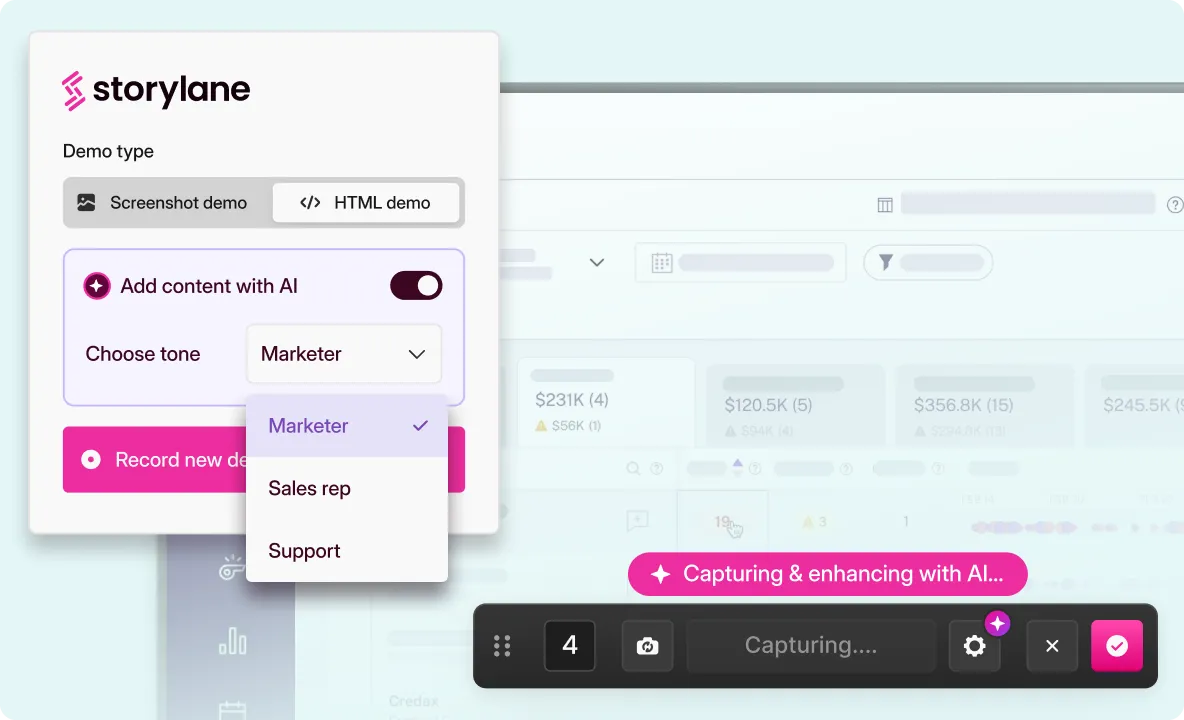
- Create with AI: Auto-generates demo scripts during capture, reads product screens to create relevant annotations, and customizes by persona and demo type
- Lily AI: Conversational agent that qualifies visitors and surfaces appropriate demos and assets
- AI Tones - Storylane's AI adapts to your use case. Pick a tone (technical, conversational, executive-focused) and the AI generates contextual guides based on your clicks. Marketing teams use conversational tones for website tours. SEs use technical tones for deep-dive evaluations. AEs use executive tones for C-suite demos.
- AI voiceovers and avatars: Generate voiceovers or AI faces that speak your script
- AI HTML editor - Edit demo elements with natural language prompts. Change text, swap images, or modify layouts without touching code. Type what you want, AI makes the changes.
Reprise's AI is limited
Reprise launched their AI features late in 2024 with an AI HTML editor for prompt-based editing. Videos must be captured separately and manually embedded. There's no AI agent, no voiceovers, no avatars, and no automatic script generation.
Why this matters: Mature AI means proven ROI and fewer bugs. Auto-capture saves hours. One demo powers email, social, and live calls through multi-channel exports (video, GIF, offline demos). Storylane also includes presenter notes for live demos—hidden show notes visible only to you during screen share.

3. One unified platform vs. three separate products
Storylane gives you one login, one workflow. Create HTML demos, screenshot demos, video demos, and sandbox demos without switching systems.
G2 reviewers highlight the simplicity: "The learning curve is extremely low, the editor is intuitive, and the final result feels polished and professional," and "Simply put, it's the precise tool that I needed."
What you get:
- All demo types in one interface
- Buyer Hub to bundle demos, PDFs, and resources into one shareable link
- No decision paralysis about which product to use
Reprise has three separate products to manage
Reprise markets itself as an "integrated platform," but Reveal, Replay, and Replicate function as separate modules that you can bundle or buy individually. Each has different technical requirements and learning curves. Replay handles HTML capture, Replicate creates app clones, and Reveal provides live overlays. Teams must decide which tool to use before starting each project.
Why this matters: One platform means faster onboarding, simpler team management, and no time wasted choosing which tool fits your use case.
4. Built for cross-functional GTM teams
Storylane is designed for your entire GTM organization. PMMs build website tours. Demand gen creates campaign variations. AEs personalize demos for deals. SEs handle complex technical evaluations.
Reprise is built presales-first
While Reprise can serve broader teams, its core strength is technical validation for presales. The product is optimized for creating sandbox environments and live overlays—capabilities that presales teams need but marketing and sales teams rarely use. This means demo creation in practice stays with solution engineers.
Why this matters: PMMs build website demos independently. Demand gen creates nurture sequences without SE support. AEs personalize for deals. Sales contacts high-intent accounts before competitors. Marketing measures ABM effectiveness beyond form fills.
5. A/B testing built for conversion optimization
Storylane lets you test two demo versions side-by-side and measure which performs better based on real user behavior. Instead of guessing which demo narrative works, you run controlled experiments and optimize for:
- Higher completion rates
- More CTA clicks
- More leads captured
- Stronger buyer intent
This feature is designed specifically for marketing and growth teams using demos as conversion assets. Demand gen teams test variations in nurture campaigns. Product marketing tests messaging angles on website tours.
Reprise doesn't offer native A/B testing capabilities. You'd need external tools and manual tracking to compare demo performance.
Why this matters: Marketing teams can optimize demos like landing pages. Test, measure, improve—without technical dependencies.
6. Presenter demos for live calls
Storylane includes presenter mode specifically designed for live demos and screen shares. While you walk prospects through the demo, hidden presenter notes are visible only to you—not your audience. This gives reps:
- Call scripts and talk tracks for each step
- Technical details or objection handling tips
- Timing cues and transition prompts
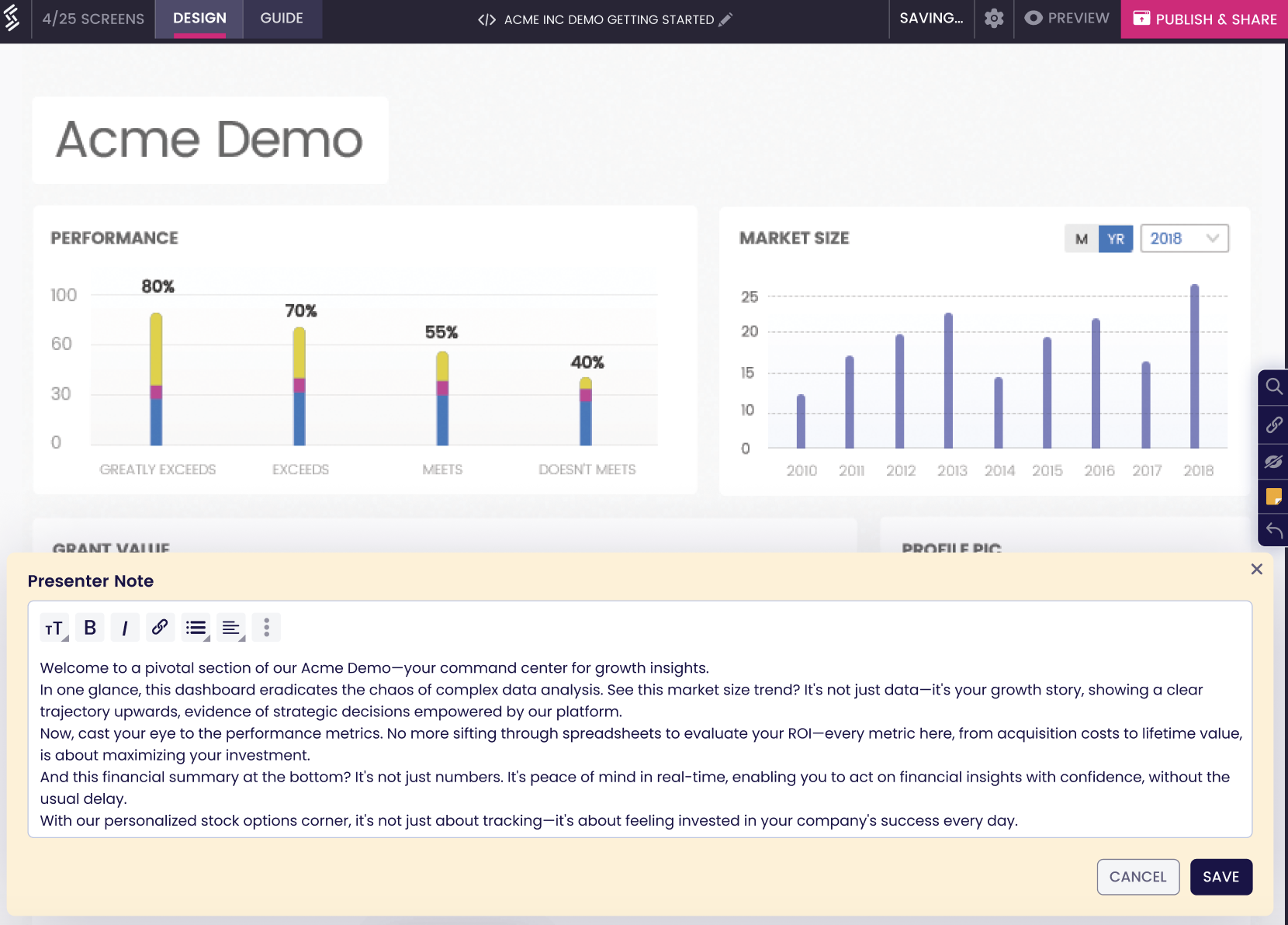
AEs and SEs use presenter mode to deliver consistent, confident demos without memorizing every detail. Sales managers use it to standardize messaging across the team.
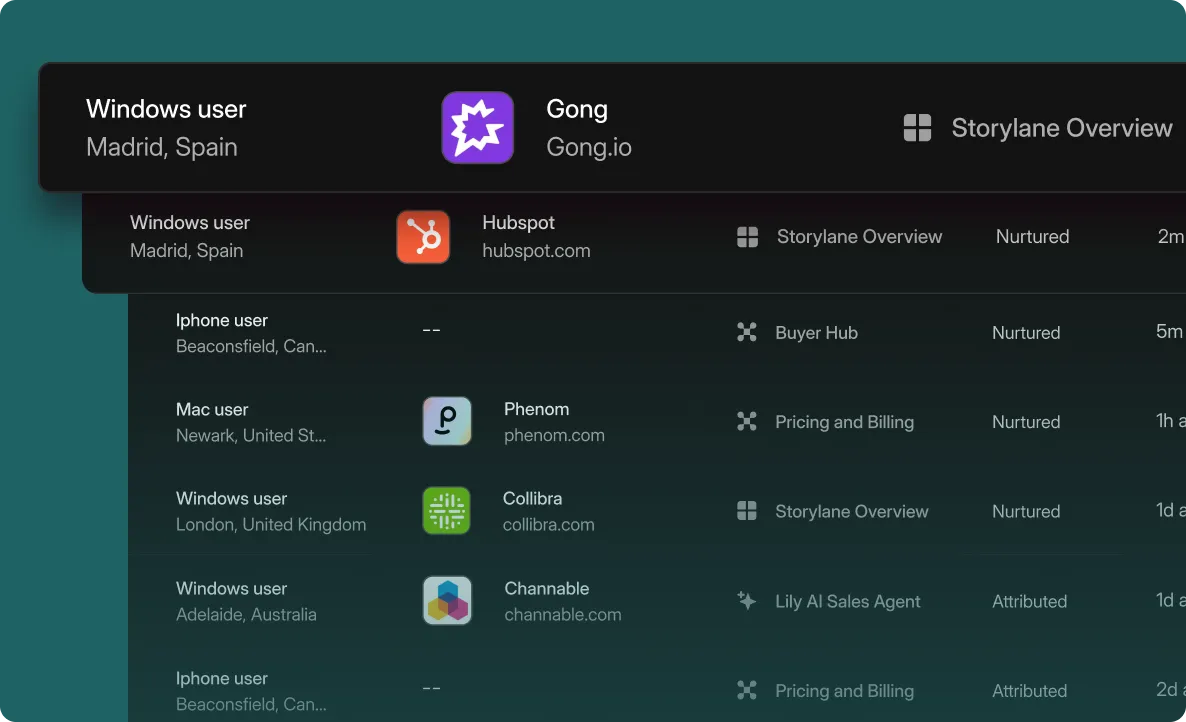
7. Account Reveal identifies companies viewing your demos
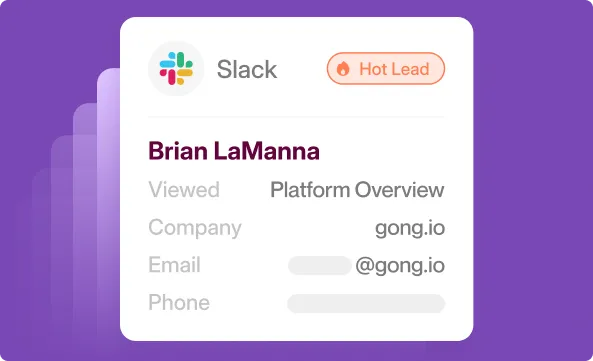
Storylane deanonymizes demo viewers without an additional integration. With Account Reveal, you can:
- Identify which companies are viewing your demos before they fill out forms
- See firmographic data and engagement patterns
- Route high-intent accounts to sales immediately
This is useful because it helps you learn which companies are researching your product. You get pretty solid intent data.
Reprise has basic demo analytics
Their analytics show aggregate traffic but can't identify companies viewing demos unless visitors fill out forms—limiting your ability to act on buyer intent signals.
Why this matters: Sales contacts high-intent accounts before competitors. Marketing measures ABM effectiveness beyond form fills. PMMs and demand gen aren't bottlenecked waiting for SE capacity.
8. Time to value - Minutes vs Months
Storylane is self-serve. Sign up and start building—no sales calls, no procurement, no implementation project.
G2 reviewers confirm the speed: "It only took me five minutes to get onboarded and record my first demo," and "Storylane was easy to start using, I managed to create a demo quite fast."
What you get immediately:
- Free account with no credit card required
- First demo published within minutes
Reprise requires enterprise sales and implementation. Their G2 page and past user report 3 month implementation
9. Transparent pricing at a fraction of the cost
Storylane has transparent pricing. With a flexible monthly billing option, no long-term contracts. You can see all the costs on the website:
- Free plan with 1 published demo with unlimited views and sharing.
- Starter: $40/month, unlimited demos
- Growth: $500/month, HTML editing, 5 seats
- Premium: $1200/month (with Buyer Hub), 10 seats
You can sign up for free right now and start building.
Reprise doesn't publish pricing. Vendr shows their median price to be ~$28,000. Past users reported costs ranging from $15,000 - $50,000, with some deployments exceeding $100,000. Annual contracts are mandatory with a 90-day cancellation notice.
Decision framework: Which platform fits your team?
Choose Storylane if:
- You value speed for demo creation (demos in minutes)
- You value cross-team enablement and want your entire GTM team to create demos
- You want mature AI features, including an AI agent to aid buyer enablement
- You want advanced analytics with A/B testing and account deanonymization features to identify demo viewers
- You value transparent pricing and want to try the tool before you buy
Choose Reprise if:
- You need enterprise sandbox environments with backend functionality for technical validation
- You need code-level control to show unreleased features
- You need live overlays for late-stage demos
Conclusion
If you need sandbox environments for technical validation and have the budget and implementation timeline, Reprise delivers. However, for most teams, these capabilities can be overkill and don't justify the budget.
For everyone else, Storylane gets you started faster, costs less, and works for your entire team.
Frequently asked questions - Reprise V Storylane
Q. Which demo platform is easier to use: Reprise or Storylane?
Storylane wins here. It has a 9.5/10 ease of use rating and lets anyone on your GTM team create demos in minutes without technical skills.
Q. Can I try Storylane before committing to a paid plan?
Yes. Storylane offers a free plan with one published demo and unlimited views. Sign up and start building without a sales call or credit card.
Q. Does Reprise or Storylane have better AI features?
Storylane launched AI in July 2023 and offers Create with AI, Lily AI agent, AI voiceovers, avatars, and HTML editing. Reprise launched one AI feature (HTML editor) in late 2024.
Q. How much does Reprise cost compared to Storylane?
Reprise doesn't publish pricing but reported costs range from $30,000-$50,000+ annually. Storylane's transparent pricing starts at $40/month with a free plan available.
Q. Who should choose Reprise over Storylane?
Choose Reprise if you need enterprise sandbox environments with backend functionality, require code-level control to show unreleased features, or need live overlays for technical validation.
Q. Can I export Storylane demos as videos or GIFs?
Yes. Storylane lets you export demos as MP4 videos and GIFs for email campaigns, social posts, and presentations. Reprise only offers offline HTML exports.
Q. How long does it take to start using each platform?
Storylane is self-serve—sign up and create your first demo within minutes. Reprise requires a 4-8 week sales cycle plus implementation, with some deployments taking 3 months.
Q. Which platform is better for cross-team collaboration?
Storylane is designed for entire GTM teams—marketing, sales, CS, and pre-sales can all build demos independently. Reprise is presales-first, optimized for solution engineers.
Q. What is Account Reveal and which platform offers it?
Account Reveal deanonymizes demo viewers, showing which companies viewed your demos before they fill forms. Storylane includes this feature; Reprise requires form submissions for identification.
Q. Can I test different demo versions to see which performs better?
Yes with Storylane. The platform includes A/B testing to measure completion rates, CTA clicks, and lead capture. Reprise doesn't offer native A/B testing capabilities.
Try Storylane free today.



.png)




.svg)

.webp)