
.svg)

Four reps, twenty eight countries: a demo playbook for lean sales teams
Last quarter a sales ops leader at a mid-market software company walked us through her territory map. Four AEs. Twenty-eight countries. Average deal size in the high six figures. No SE bench, no pre-sales team, no regional specialists.
She wasn't complaining. She was telling us why she'd just doubled down on interactive demos.
The math she ran was simple. If every prospect needed a custom-walked demo, her reps would be cooked by mid-week. So the demos had to walk themselves, or at least walk most of the way, leaving the rep to show up for the part that actually moves a deal forward.
That same shape of problem is showing up across small sales teams covering big territories. The teams getting the most out of demo automation are running a specific play, and the play is copyable.
The work that used to eat the day
Talk to a small sales team covering a big map and you'll hear the same shape of problem. The work isn't the selling; it's everything around the selling.
Before a disco call: read the ICP page, skim the LinkedIn, figure out whether this is a finance buyer or an ops buyer, decide whether to go in cold or send something first. The "send something first" decision used to take days because building the something took days.
During the call: hope the product clicked, hope the buyer brought the right stakeholder, hope the demo URL you shared three days ago actually got opened.
After the call: build or find a demo for whichever of the seven buying committee members care about the thing you didn't cover, write the email that frames it, track whether anyone opened it, chase the ones who didn't.
Stack that against four reps covering 28 countries and something gives. For a long time, what gave was the demo itself. Reps would pitch the slide deck, narrate a screenshot, promise to "set up a proper walkthrough next week," and by next week the deal was colder than it needed to be.
One central build, many personalizations
The teams getting demo automation right aren't building more demos. They're building fewer, better demos and personalizing them aggressively per prospect.
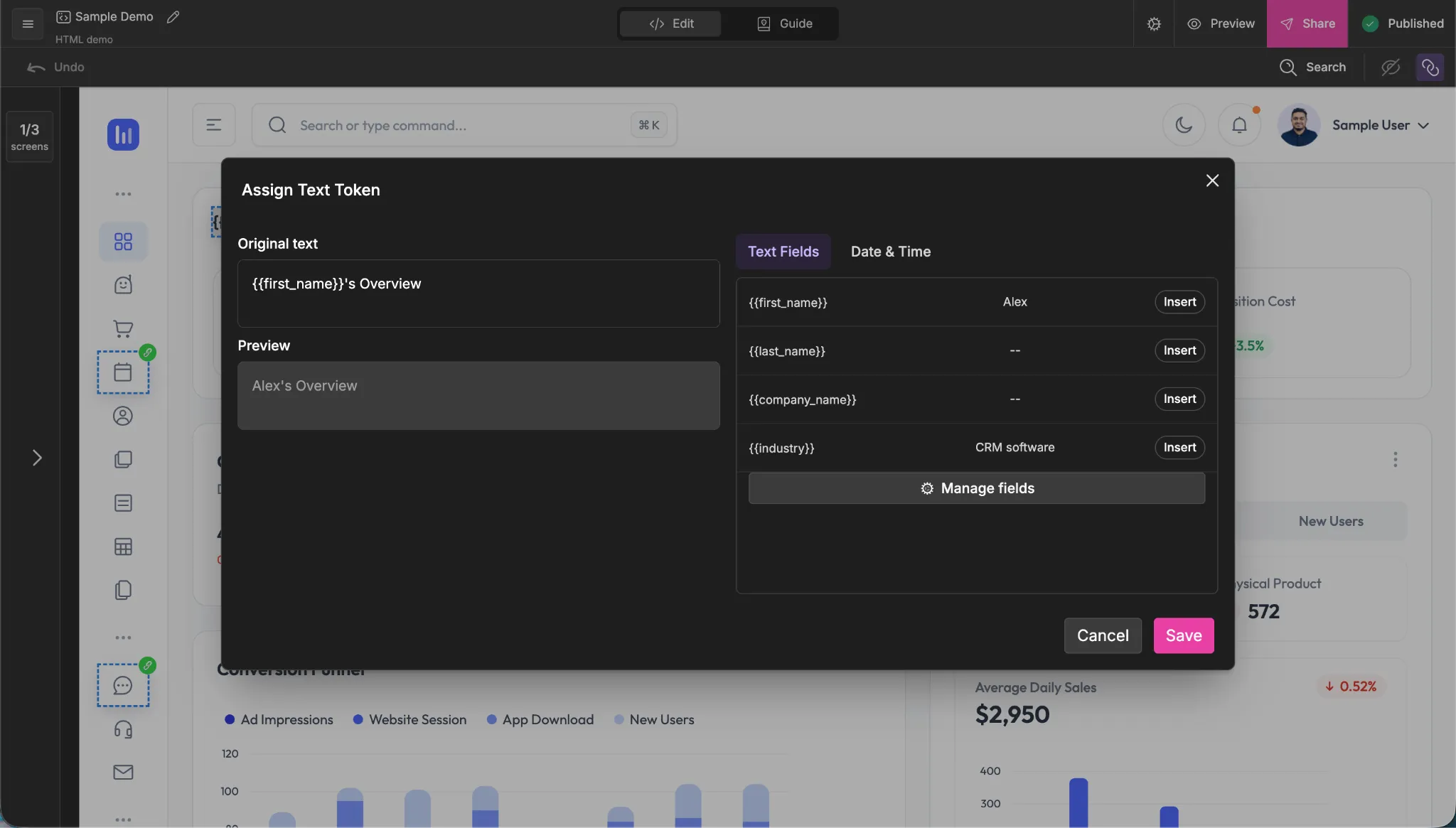
The shape of the play:
- One central build. A marketer or SE builds the golden version of each demo: the one that reflects the latest UI, the latest messaging, the right narrative. It lives in a team workspace, clearly labeled, folder-organized, tagged by use case.
- Many personalized sends. Each rep takes that golden demo, drops in the prospect's name, logo, industry data, currency, and (where it makes sense) a customer logo wall sized to that buyer's peer set. Then they generate personalized links (straight from Storylane’s extension) and send. No rebuild, no dev ticket, no two-day delay.
One day of build work from a marketer or SE turns into 50 personalized sends from sellers across the following month. That kind of leverage is what makes a small team feel bigger than its headcount to the buyer.

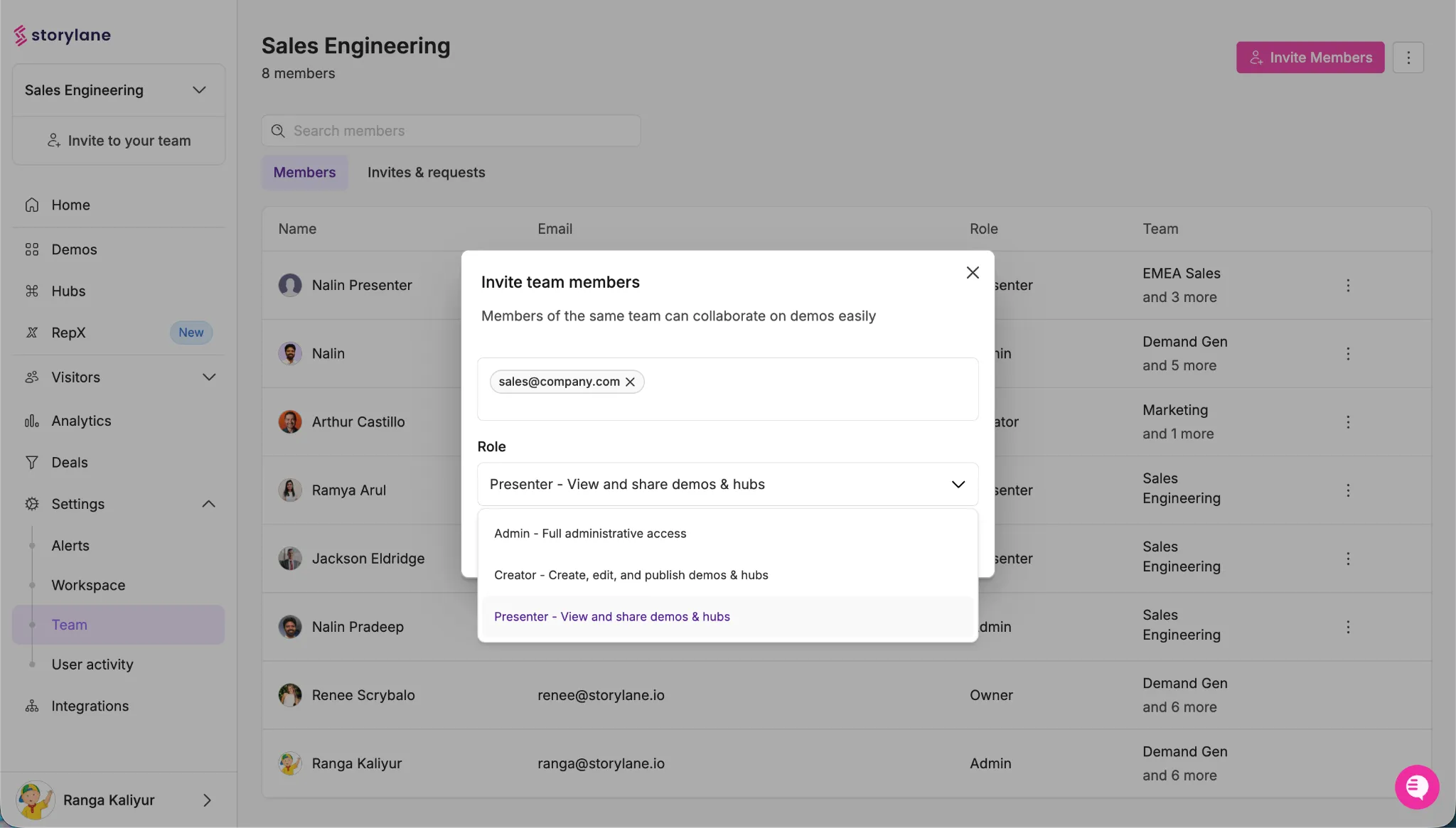
The Creator and Presenter split
The model only works when the roles are clear.
The Creator role belongs to whoever knows the product narrative cold, usually the marketer or SE. They think about the story arc, the feature-benefit pairings, the proof points to thread through. They're slow, careful, and deliberate.
The Presenter role belongs to the sellers. They're fast and reactive. They adapt to the prospect on the other end. They shouldn't be touching the underlying demo structure; they should be layering personalization on top and sending.
For small teams, the role split is structural, not optional. With four reps and one marketer, nobody has time to be both. The separation that bigger teams have to fight for, smaller teams get for free.
Three patterns that work
Pattern 1: The pre-meeting demo
Most small teams default to sending an interactive demo before the first disco call now, not after. The hypothesis is simple. If the prospect watches even half of a well-built demo beforehand, the call becomes a qualification-and-questions session instead of a tell-me-what-you-do session. Reps running this mode report disco calls running 30 to 40 percent shorter, with better buying signals at the end. For a four-rep team, that's a lot of reclaimed calendar.
Pattern 2: Region-personalized demos
When your territory spans 28 countries, a generic demo feels wrong on landing. Teams doing this well keep a small number of base demos and use tokens to make the demo feel local without rebuilding. A buyer in Singapore sees SGD. A buyer in Dublin sees EUR. A buyer in Mexico City sees Spanish UI copy and a peer logo wall relevant to LATAM. Same underlying demo, different last-mile personalization.
Pattern 3: The post-call Hub as leave-behind
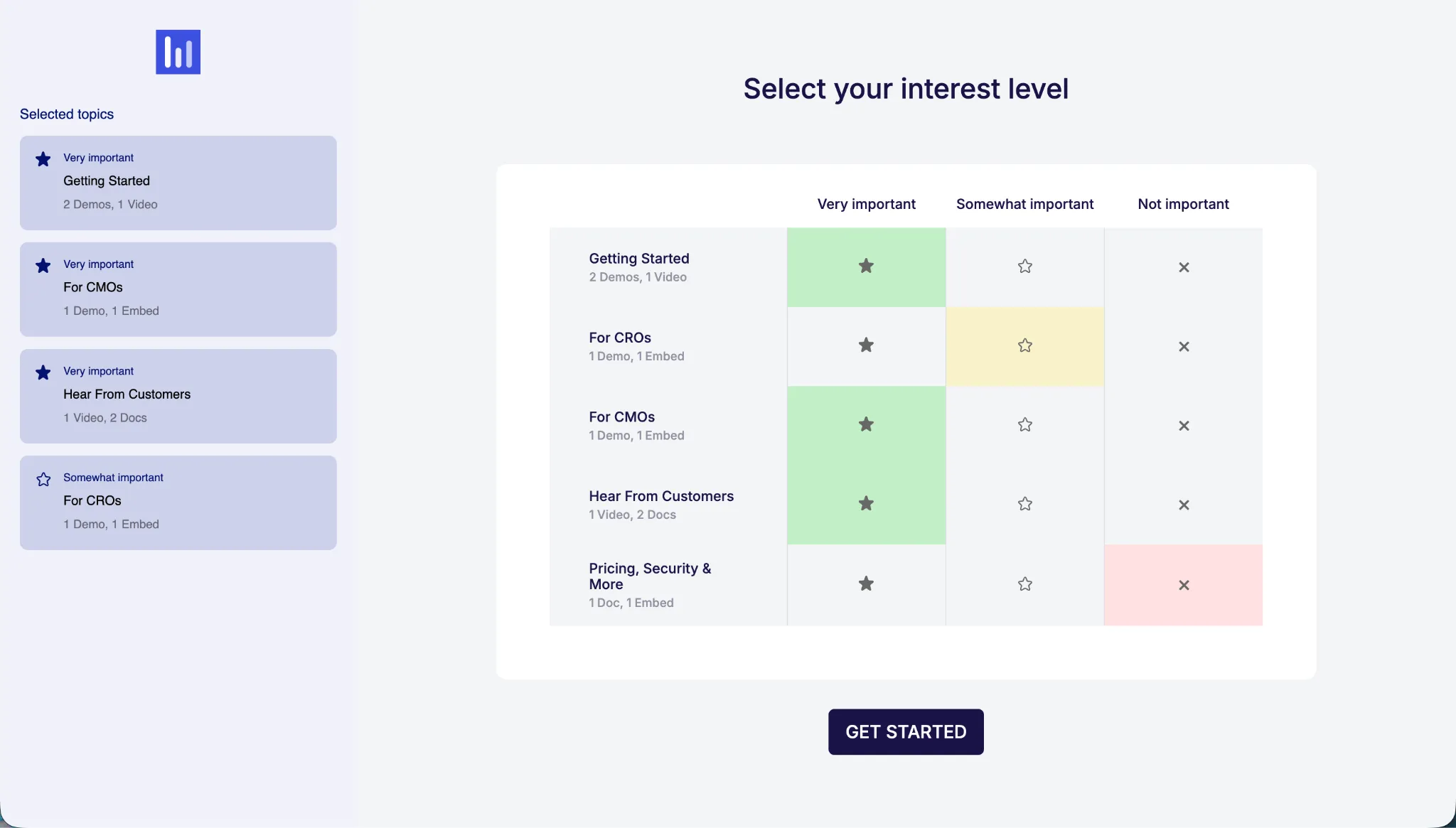
Instead of emailing a list of links after the call, teams are dropping everything into a single Hub: the demo, the case study, the pricing calculator, the security one-pager. They send one URL. When the champion forwards the URL to the buying committee, each new person lands in the same well-organized place. The time saved on handoff work is material when a small team is running multiple deals at once.
How to tell it's working
Three signals worth tracking when every hour counts:
- Demo-before-call rate. What percentage of disco calls have the prospect watch at least 50% of a pre-sent demo beforehand? Under 30% means the email delivering the demo needs work. Over 60% and your reps should be running tighter, sharper disco calls.
- Personalization coverage. Of demos sent in the last 30 days, what percentage had prospect-specific tokens applied? This is the read on whether the Creator and Presenter split is actually happening. If reps are sending raw golden demos, value is leaking.
- Hub forward rate. How often does a Hub link get opened by multiple unique viewers from the same company domain? This tells you whether your champion is multi-threading the deal for you, which is one of the biggest leverage points a small team has over a stretched territory.
What the leader actually said
The sales ops leader put it like this, almost as an aside: "We're not trying to scale the team. We're trying to make the team feel like it's twice as big to the buyer."
That sentence is the whole pitch for what these teams are doing.
Demo automation makes good reps go further. Four reps cover ground that used to take eight, without the quality drop that usually shows up when small teams stretch.
If you're leading a small sales team into a big territory this year, the real question is whether your team is set up to extract that leverage. That means one central build, a clear split between who builds and who sends, and the discipline to put the prospect's name on the demo every time.
The four-rep team hits numbers. The 28 countries stay covered. The reps don't burn out trying to cover both at once.