


Most lists of product marketing examples are a pile of ads with the word "iconic" attached. That is not much use if you run product marketing at a B2B company, because your job is not to make a memorable ad. Your job is to make the market understand why your product wins, and then prove it in the numbers: more of the right visitors engage, sign up, and book meetings.
So here is the position this post defends: the best product marketing examples are repeatable systems, not one-off campaigns. A learning platform, a research engine, a release cadence, a report that ships every year. Each of the 12 examples below is something a real company actually did, checked against public sources in September 2026, with what they did, why we think it worked (clearly our analysis, not their reported results), and what a B2B PMM can copy this quarter.
If you want the fundamentals first, start with our guide to product marketing for SaaS. If you want examples, keep reading.
12 Product Marketing Examples
Here is the roundup at a glance. Every company below is linked to a public source in the Sources section at the end. Where an older version of this post named a campaign we could not verify, we rewrote the example around what is publicly documented, and we removed quotes we could not trace to a real source.
| Company | Product marketing play | Type of strategy | What to copy |
|---|---|---|---|
| Salesforce | Trailhead, a free gamified learning platform | Education as acquisition | Teach the job your product supports, not just the product |
| Gong | Gong Labs research from its own product data | Proprietary data content | Publish what only your product can see |
| Zoom | K-12 time-limit removal (2020), Zoom Workplace repositioning (2024) | Product-led response, category expansion | Change the offer, not just the message, when the market shifts |
| Lever | Candidate Experience Survey built into the product | Feature as positioning proof | Ship a feature that makes your positioning measurable |
| Slack | 2018 "collaboration hub" campaign with real people | Category education | Do not assume the market knows what you are |
| Shopify | Shopify Editions, a twice-yearly release showcase | Launch cadence | Bundle releases into one story on a schedule |
| Google Ads | Outcome-first landing page with setup help | Conversion-focused messaging | Lead with the buyer's outcome, remove the first-step fear |
| Nutanix | Enterprise Cloud Index, an annual research report | Annual benchmark report | Own a recurring number your category quotes |
| Adobe | Move from Creative Suite to Creative Cloud (2013) | Business model repositioning | Reposition around the value of continuous updates |
| "Jobs You May Be Interested In" sold to recruiters | Two-sided product marketing | Market a user-side feature to the buyer side | |
| Toplyne | "Bottoms Up" webinar series (company shut down in 2024) | Community education (cautionary) | Content builds reach, it does not replace product-market fit |
| Gladly | Annual Customer Expectations Report | Point-of-view research | Use research to frame the problem your product solves |
Salesforce
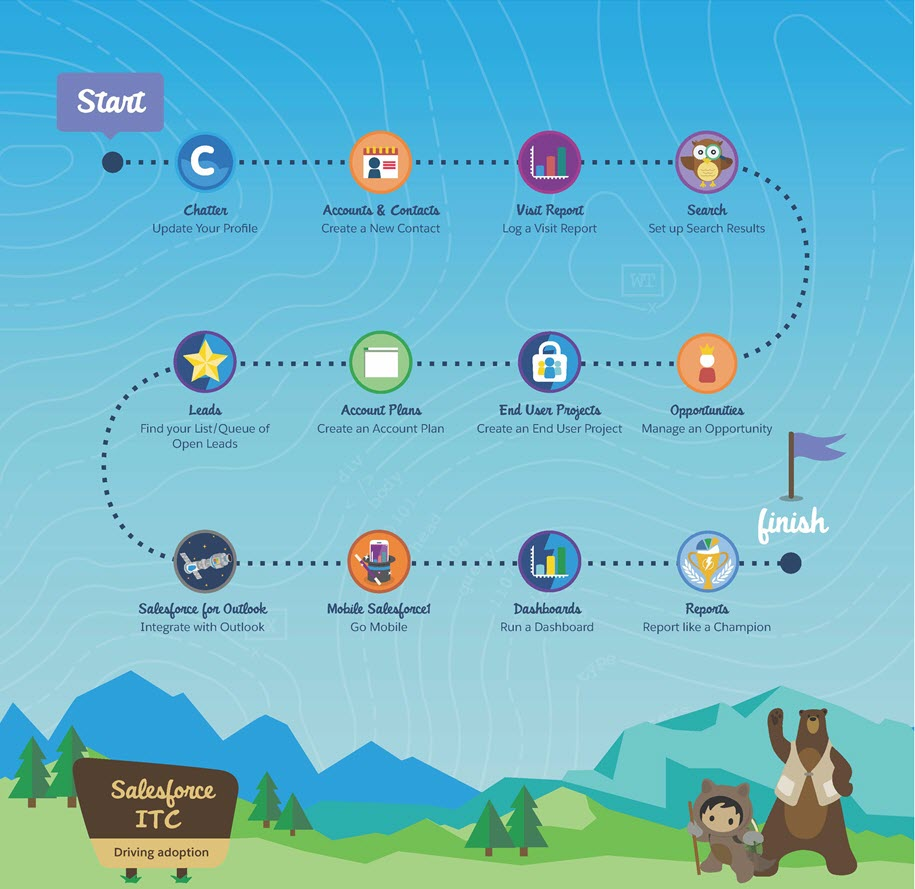
What they did: Salesforce runs Trailhead, which it describes as its free online learning platform. Learners earn points and badges for completing modules and climb Trailblazer Ranks. More recently Salesforce added Agentblazer Status, a set of prescriptive learning paths for its Agentforce AI agents, where each level unlocks the next. In other words, the same platform that taught people CRM is now being used to teach the market Salesforce's AI agent story.
What worked (our analysis):
- It removes the biggest objection to a complex product, which is "we will never learn to use this." Free, self-paced product education answers that objection before a sales rep has to.
- Badges and ranks turn learning into a public credential, so learners have a personal career reason to go deeper into the ecosystem.
- The platform is reusable. When Salesforce needed to educate the market on AI agents, it did not need a new channel: it added a new learning path to one people already use.
What a B2B PMM can copy: You do not need Trailhead's scale. Pick the one skill your buyers need to succeed with your category (not your product), and build a short, free, credentialed path for it. Then, every major launch becomes a new module rather than a new campaign.
Gong
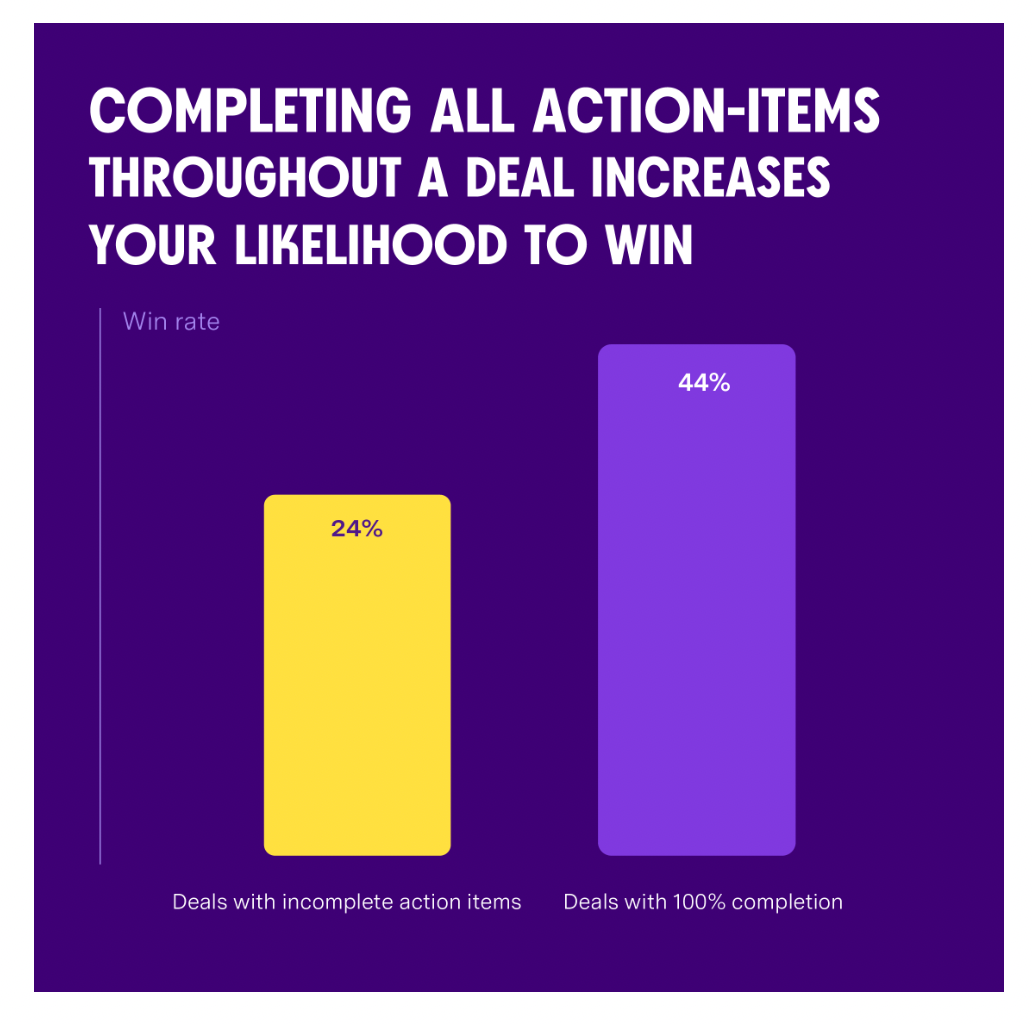
What they did: Gong Labs is Gong's research program. Gong describes it as research drawn from billions of sales conversations, deals, and workflows, grounded in "real-world data. Not opinions, anecdotes, or theory." The output is a steady stream of articles and reports on what top sellers do differently, published on Gong's blog and in press releases.
What worked (our analysis):
- It is content only Gong could publish. The data comes from the product itself, so competitors cannot copy the asset without copying the product.
- Every finding is a quiet product demo: if you want to see this about your own team, you need the tool that produced the insight.
- It gives sales, social, and PR a constant supply of specific, shareable claims instead of generic thought leadership.
What a B2B PMM can copy: Ask what your product sees in aggregate that no one else does (anonymized and with the right permissions). Even a modest dataset, published quarterly with a clear methodology, can become the reason people cite you. Pair each finding with the feature that surfaces it for a single customer.
Zoom
What they did: In March 2020, as schools closed, Zoom lifted the 40-minute meeting limit on free Basic accounts for K-12 schools, first in a few countries and then more widely, with teachers registering to have the limit removed (reported by Silicon Republic and announced on Zoom's own channels). Four years later, in March 2024, Zoom repositioned itself from a meetings app to Zoom Workplace, which it announced as an "AI-powered collaboration platform" bundling meetings, chat, phone, whiteboard, and its AI Companion.

What worked (our analysis):
- The 2020 move was product marketing through the offer itself. Instead of an ad about staying connected, Zoom removed the single limit that stopped a huge new audience from using it.
- The 2024 repositioning addressed a different problem: once "Zoom" became a verb for a video call, the brand risked being boxed into one feature. Zoom Workplace reframes the product as a platform.
- Together, the two moves show the lifecycle of positioning: win the moment, then widen the category before the moment fades.
What a B2B PMM can copy: When your market shifts, look at packaging and limits before you look at copy. And if your product name has become shorthand for one feature, plan the platform story early, and make sure your website, pricing page, and demo all tell it the same way.
Lever
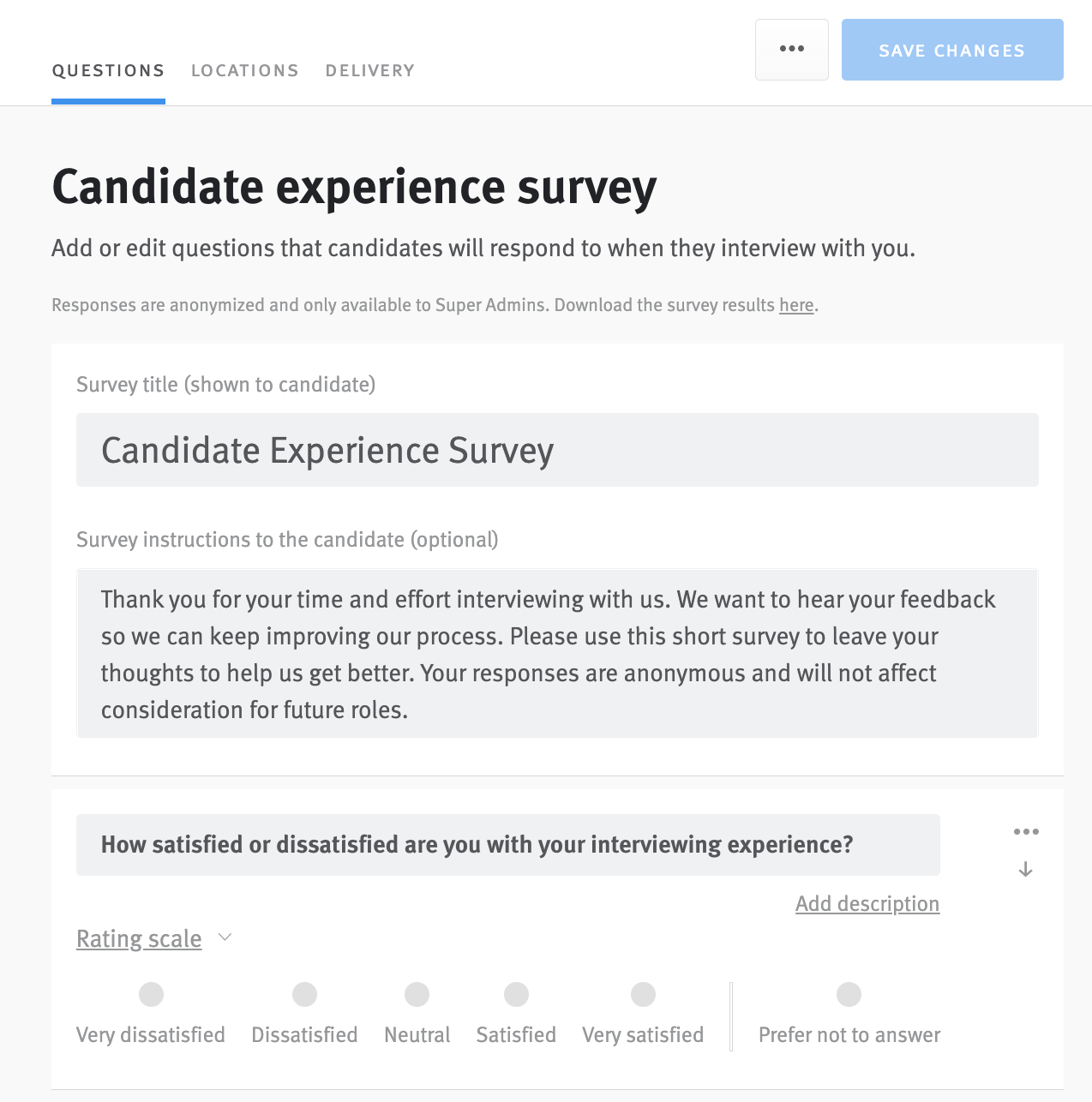
What they did: An earlier version of this post credited this example to Candidately, but the screenshot is actually from Lever, the applicant tracking system, and we could not verify the Candidately survey claims, so we corrected it. Lever ships a Candidate Experience Survey inside its product (LeverTRM): teams configure questions, set which candidates receive it based on pipeline stage and archive reason, and review results in a Visual Insights dashboard (per Lever's Help Center).
What worked (our analysis):
- "Better candidate experience" is a claim every recruiting tool makes. A built-in survey turns that claim into something a customer can measure in their own data.
- It gives the buyer (the head of talent) a metric to take to their own leadership, which makes the product easier to defend at renewal.
- It helps sell the solution rather than the feature list, because the conversation moves to outcomes.
What a B2B PMM can copy: Find the adjective in your positioning ("faster," "easier," "better experience") and work with product to ship the report or metric that proves it inside the customer's account. Positioning that customers can measure themselves is much harder to argue with.
Slack
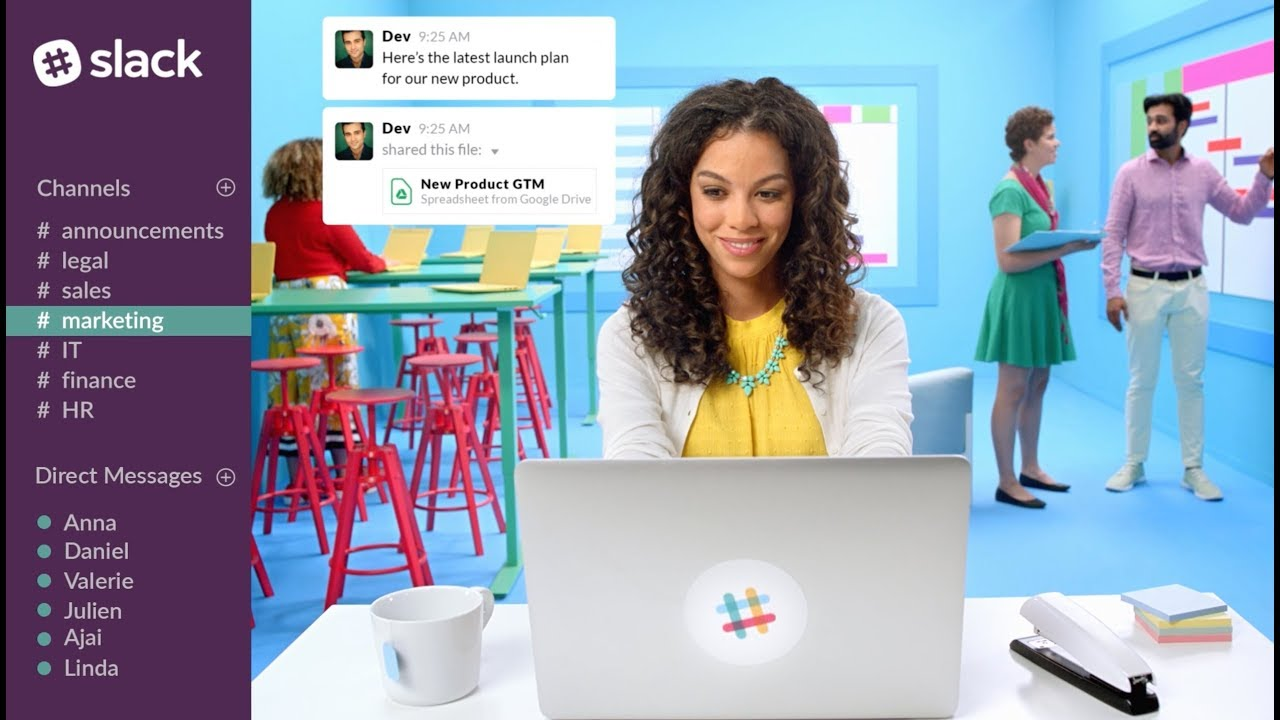
What they did: In mid-2018, Slack ran a campaign built with the agency Redpepper that showed real people doing ordinary work in an office (getting budget approved, launching a campaign) with Slack on screen. It ran as TV spots, short role-specific videos for finance, marketing, and sales, audio, podcast sponsorships, and paid social (reported by Digiday). Slack's brand lead explained that it would be closed-minded to assume everyone already knew what Slack was. Today Slack's homepage positions it around "all your people and AI agents working together."
What worked (our analysis):
- It was category education, not brand vanity. The ads showed what work looks like in Slack for specific functions, which is what a new buyer needs to picture.
- Role-specific cuts (finance, marketing, sales) meant each audience saw its own job, not a generic productivity promise.
- The current AI-agent positioning shows the same instinct: explain the new way of working in plain terms before assuming the market gets it.
What a B2B PMM can copy: Audit your homepage for assumed knowledge. If a first-time visitor cannot picture a specific person's day in your product within a few seconds, you have a category education problem, and role-based pages or walkthroughs usually fix it faster than a rebrand.
Shopify
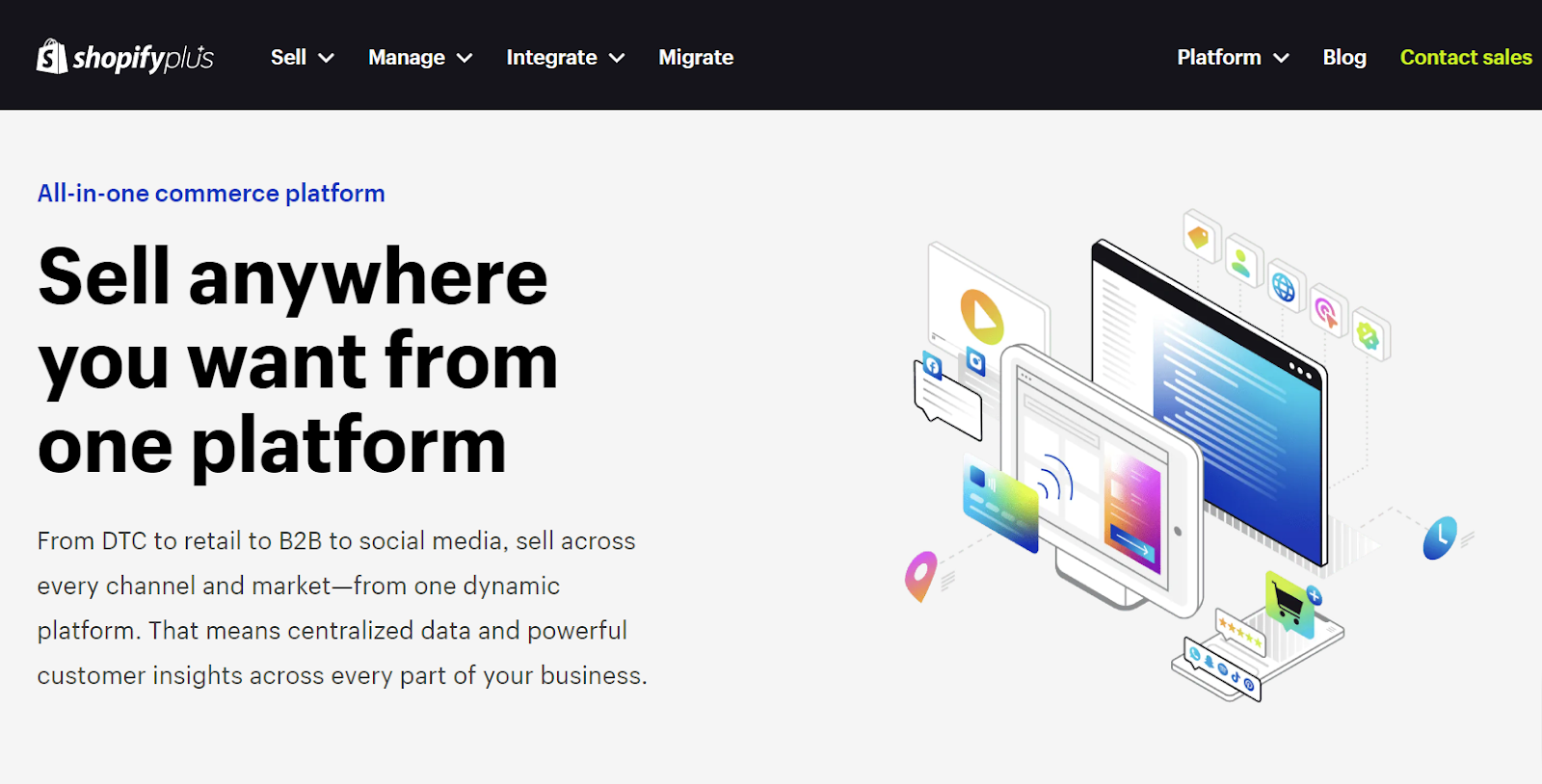
What they did: Shopify's enterprise product, Shopify Plus, has long been positioned as an all-in-one commerce platform (the screenshot below shows an earlier version of the page: "Sell anywhere you want from one platform"). Its bigger product marketing system is Shopify Editions, introduced in June 2022 as a "semi-annual product showcase." The Summer '22 Edition bundled over 100 product updates, and recent Editions have each packaged 150+ updates into one interactive release.
What worked (our analysis):
- A predictable cadence turns dozens of small releases, which individually get no attention, into one event that press, partners, and customers plan around.
- It proves the platform claim. Shipping across storefront, checkout, and AI in one showcase shows breadth in a way a feature page cannot.
- Each Edition gives sales and customer success a fresh, dated reason to reach out.
What a B2B PMM can copy: If your team ships weekly but launches feel random, move to a twice-yearly or quarterly release showcase with a theme, a single landing page, and interactive walkthroughs of the headline features. Our roundup of product launch examples has more patterns for this.
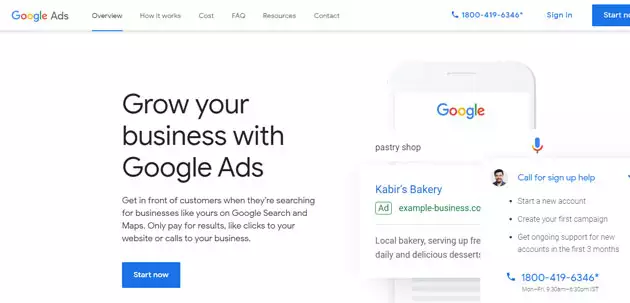
What they did: The Google Ads landing page has for years led with the advertiser's outcome, not the ad product. The screenshot below shows an earlier version: "Grow your business with Google Ads," a line about only paying for results like clicks and calls, and a prominent offer of sign-up help. The current page (September 2026) leads with "Reach Customers Across YouTube & Search" and "Win customers from discovery to decision," and still offers to help with first steps.
What worked (our analysis):
- The headline is about the small business owner's goal (more customers), not about auctions, bidding, or ad formats.
- "Only pay for results" and setup help directly address the two fears of a first-time advertiser: wasting money and getting it wrong.
- The newer headline reflects a positioning update (our read): the promise widened from search ads alone to YouTube and Search together, covering the path from discovery to decision.
What a B2B PMM can copy: Rewrite your hero around the outcome your buyer is measured on, then name and remove the biggest first-step fear right next to the CTA. This is one of the cheapest B2B conversion rate optimization tests you can run.
Nutanix
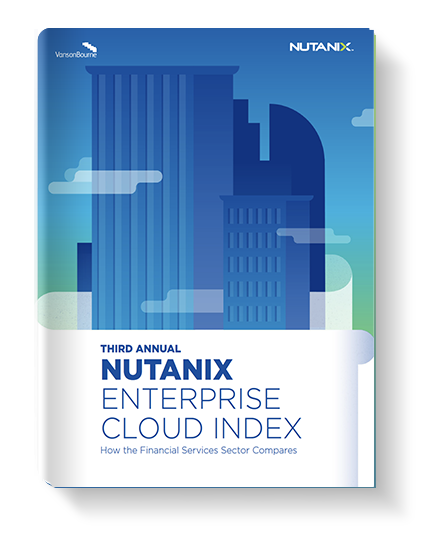
What they did: Nutanix commissions an annual Enterprise Cloud Index. The 2025 edition is the seventh: UK research firm Vanson Bourne surveyed 1,500 IT, DevOps, and platform engineering decision-makers across the Americas, EMEA, and APJ in fall 2024, focusing on infrastructure modernization and GenAI adoption. Nutanix also publishes industry cuts (public sector, financial services, healthcare).
What worked (our analysis):
- Seven years of the same study builds a trend line, and trend lines get cited far more than one-off surveys.
- Using an independent research firm makes the numbers easier for journalists and analysts to quote.
- Industry cuts let field marketing and sales reuse one study for several verticals without new research.
What a B2B PMM can copy: Pick one question your category argues about, run the same survey every year, and publish vertical cuts. The second and third editions are where the asset starts to compound.
Adobe
What they did: On May 6, 2013, at its MAX conference, Adobe announced it would stop developing new versions of Creative Suite and move to a subscription-only Creative Cloud (reported by TechCrunch). The move drew real backlash from some customers at the time, and Adobe offered discounted subscriptions to existing users to ease the switch.
What worked (our analysis):
- Adobe repositioned the product from "a box you buy every few years" to "a service that keeps getting better," which is the only story that makes a subscription feel fair.
- It paired the change with a transition offer for existing customers, acknowledging the switching cost instead of ignoring it.
- It is also a warning: business model changes are product marketing problems as much as pricing problems, and the backlash shows what happens when customers feel the change is done to them.
What a B2B PMM can copy: If you are changing packaging or pricing, write the customer-facing value story before the pricing page, and plan the migration offer for existing customers as part of the launch, not as a reaction to complaints.
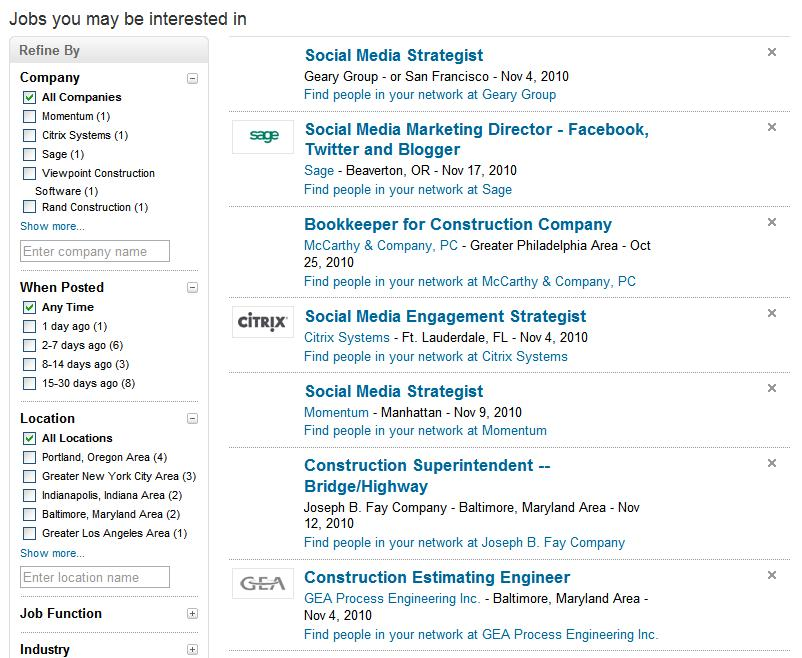
What they did: "Jobs You May Be Interested In" recommends roles to members based on their profile. What makes it a product marketing example is how LinkedIn sold it to the other side of the marketplace: a 2011 post on LinkedIn's Talent Blog pitched the feature to recruiters as a way to reach high-quality passive candidates, who are not actively looking but see relevant roles matched to their skills.
What worked (our analysis):
- A member-side feature became a buyer-side value proposition. Recruiters pay, and the feature gives them access to candidates they could not reach through job boards.
- "Passive candidates" named a pain every recruiter already felt, so the message needed no education.
- It is a textbook example of marketing a product's network effect as a benefit to the paying customer.
What a B2B PMM can copy: If your product has two audiences (users and buyers, or admins and end users), list the features the user side loves and ask what each one is worth to the person who signs the contract. That translation is often your strongest message.
Toplyne
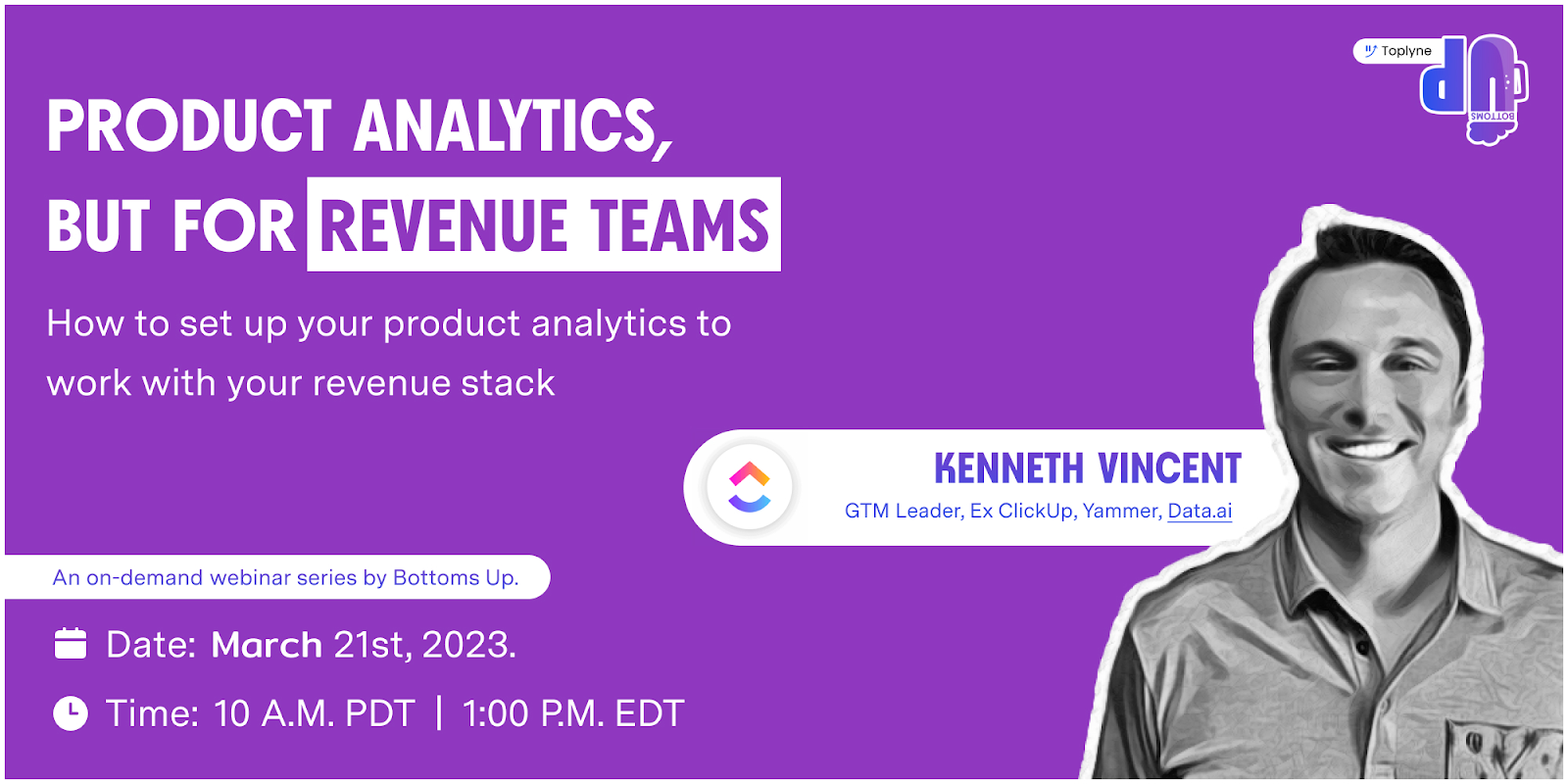
What they did: Toplyne, which helped product-led companies find sales-ready users in their product data, ran an on-demand webinar series called "Bottoms Up" with go-to-market operators, on topics like setting up product analytics for revenue teams (the March 2023 session is shown below). The honest update: Toplyne shut down in October 2024. Its CEO said the company could not reach the scale or product-market fit it aimed for (reported by Entrackr).
What worked (our analysis):
- The series was well aimed: practitioner guests, a specific audience (product-led go-to-market teams), and topics close to the product's use case in sales engagement for product-led teams.
- Community education built awareness among exactly the buyers the product needed.
- The lesson for PMMs is the shutdown itself: good content can build reach, but it cannot manufacture product-market fit. We kept this example because it is the most useful caution on the list.
What a B2B PMM can copy: Run the webinar series, but measure it on pipeline from the right accounts, not registrations. If content engagement is high and sales conversations stay thin, treat that as a product or positioning signal, not a content problem.
Gladly
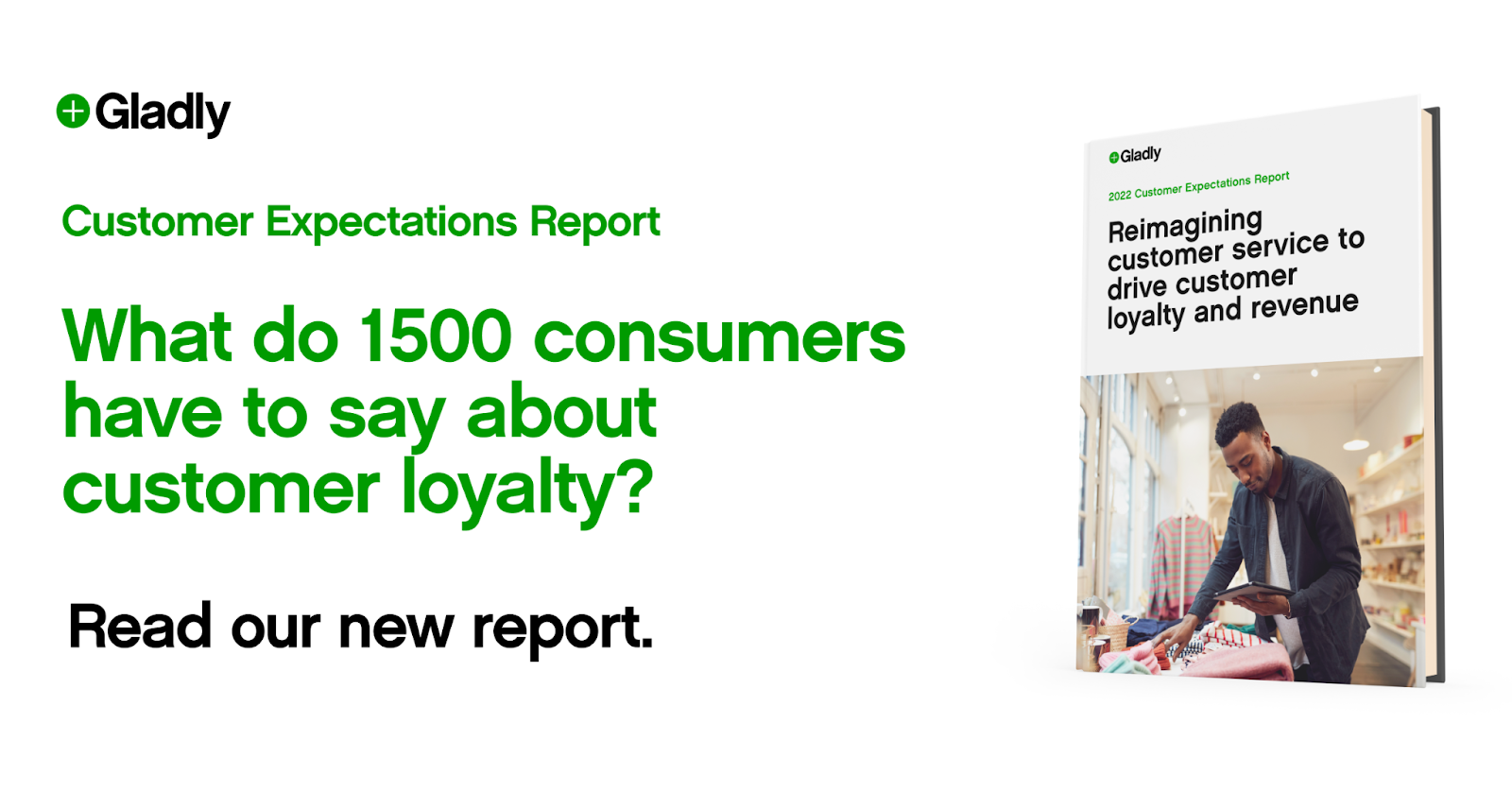
What they did: Gladly, a customer service platform, publishes an annual Customer Expectations Report based on a survey of consumers. The 2022 edition is the one pictured below. The 2026 edition is a national study of 1,000 US consumers on AI in customer service, framed around a sharp point of view: AI can resolve an issue and still lose the customer's loyalty.
What worked (our analysis):
- The report frames the problem the way Gladly's product is built to solve it (service that feels personal, not just fast), so reading the research primes the buyer for the pitch.
- A strong headline finding gives the report a point of view, which is what gets it shared.
- Updating the theme each year (from channels and personalization to AI) keeps the asset current with what buyers are debating.
What a B2B PMM can copy: Do not publish neutral research. Decide the belief you want the market to hold, design the survey to test it honestly, and lead with the tension your product resolves.
Product Marketing Strategy Examples, Grouped by What They Do
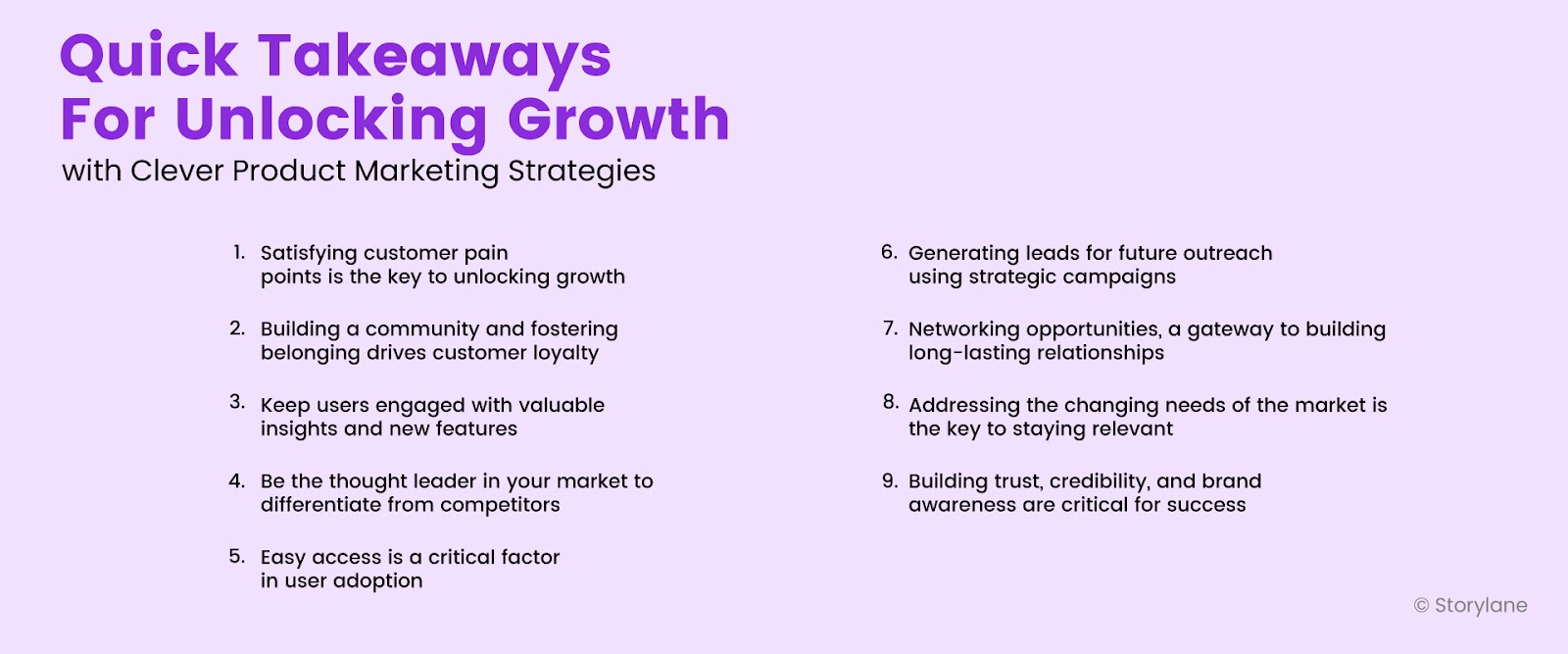
Stepping back, the 12 examples fall into five repeatable product marketing strategies. Most B2B teams can run two or three of these well at the same time.
| Strategy | Examples above | Best when | Main risk |
|---|---|---|---|
| Education platform or program | Salesforce, Toplyne | Your product is complex or the category is new | Reach without pipeline |
| Proprietary or recurring research | Gong, Nutanix, Gladly | You have data or a clear point of view | Neutral findings nobody quotes |
| Positioning and category moves | Zoom, Slack, Adobe | The market or your business model shifts | Customers feel the change is done to them |
| Launch cadence | Shopify | You ship often but launches feel random | Showcase becomes a feature dump |
| Proof inside the product or page | Lever, Google Ads, LinkedIn | Your claims sound like everyone else's | Metrics that do not map to the buyer's goals |
From Positioning to Website Conversion: The PMM Scorecard
Every example above eventually shows up in one place: your website. That is where a new buyer first meets your positioning, usually before they talk to anyone. So if you lead product marketing, the website funnel is the most honest scorecard you have for whether the message is landing.
Here is a simple way to connect positioning work to metrics you can actually move. The ranges are yours to set from your own baseline; the point is to know which number each piece of work should change.
| Funnel step | Metric to watch | What it tells a PMM |
|---|---|---|
| Visit to engaged session | Engaged-session rate on the homepage and key product pages | Whether the headline and first screen make sense to the right visitor |
| Engaged to product experience | Demo starts and completion rate | Whether the product story holds up when buyers see it (see our demo completion benchmarks) |
| Product experience to action | Signup rate and CTA click-through | Whether the value is clear enough to act on |
| Action to meeting | Demo-request and meeting-booked rate | Whether the positioning attracts buyers, not just browsers |
| Meeting to win | Win rate by segment and by competitor | Whether the differentiation you claim survives a real evaluation |
Two habits make this scorecard useful. First, change one message at a time and test it (an A/B test on the hero or pricing page), so you know which change moved the number. Second, read by segment: a new message can lift signups from small companies while quietly lowering meetings from the enterprise accounts you actually want.
Where RepX Fits
Full disclosure: this is our product. RepX is an AI agent that sits on your website, answers visitors' questions in real time, qualifies them against your criteria, shows relevant interactive demos, and books meetings, with conversations piped to your CRM and Slack.
For a PMM, the useful part is the second-order effect. Every conversation is a record of how buyers describe their problem, which competitors they mention, and which objections come up before they will book. That is positioning research you would otherwise have to pull from call recordings, and it maps directly onto the meeting-booked step of the scorecard above. It will not fix weak positioning, but it will show you, in buyers' own words, where the message is not landing.
How Storylane Can Aid in Your Product Marketing
Several examples above (Trailhead, Shopify Editions, Slack's role-based spots) share one idea: let buyers see the product doing their job. Interactive demos are the lightest way to do that on a B2B website. If you are new to the format, here is what an interactive product demo is and why it matters.
Some practical ways PMMs use Storylane:
- Showcase your product across channels. Embed interactive walkthroughs on your website, in launch pages, on social, and at events so buyers can explore before they talk to sales.
- Use demo engagement data to test positioning. See which steps buyers finish and where they drop, and use that to sharpen the story you lead with.
- Tailor demos to personas. Build versions of the same walkthrough for different roles, the way Slack cut its ads by function.
- Educate and onboard new users. Reuse the same walkthroughs as guided onboarding and help content.
For a real example of how quickly a team can get started, see how Candidately created an interactive demo. If you want to see how interactive demos and RepX work together on your own site, book a demo with our team.
FAQ
What is an example of product marketing?
Salesforce Trailhead is a clear example. It is a free, gamified learning platform that teaches people to use Salesforce and, more recently, its AI agents. It markets the product by removing the "too hard to learn" objection and turning learners into credentialed advocates.
What are some product marketing strategy examples?
Five common strategies are education programs (Salesforce Trailhead), proprietary or annual research (Gong Labs, Nutanix Enterprise Cloud Index), positioning and category moves (Zoom Workplace, Adobe Creative Cloud), a predictable launch cadence (Shopify Editions), and building proof into the product or page (Lever's candidate survey, the Google Ads landing page).
What is an example of a marketing strategy for a new product?
Shopify Editions is a good model: bundle many releases into one themed showcase on a fixed schedule, with a single landing page and a walkthrough of the headline features. For a single new product, the same idea applies at a smaller scale: one story, one page, and a way for buyers to see the product working.
How do you measure product marketing success?
Tie each piece of work to a funnel step: engaged-session rate for messaging, demo completion for the product story, signup and CTA rates for value clarity, meeting-booked rate for buyer fit, and win rate by competitor for differentiation. Test one change at a time and read results by segment.
What is the difference between product marketing and marketing?
Product marketing owns how a product is positioned, messaged, launched, and enabled for sales. Broader marketing owns reaching and converting audiences across channels. For a longer comparison, see product marketing vs growth marketing.
Sources
- Salesforce, What is Trailhead? and Trailblazer Ranks
- Gong, Gong Labs
- Silicon Republic, Zoom lifts its meeting time limit on free accounts for schools (March 2020)
- Zoom, Zoom unveils AI-powered collaboration platform, Zoom Workplace (March 2024)
- Lever, LeverTRM and Lever Help Center articles on the Candidate Experience Survey
- Digiday, Slack's new ads tap the traditional office (2018)
- Shopify, Introducing Shopify Editions (June 2022) and Winter '26 Edition
- Google, Google Ads
- Nutanix, 2025 Enterprise Cloud Index
- TechCrunch, Adobe goes all in with subscription-based Creative Cloud (May 2013)
- LinkedIn Talent Blog, "Jobs You May Be Interested In"? You Bet. (2011)
- Entrackr, Tiger Global-backed Toplyne shuts down operations (October 2024)
- Gladly, 2026 Customer Expectations Report
Related Reading
Product Marketing vs Growth Marketing: What's the Key Difference?