Quick summary
This demo walks you through connecting Power BI Desktop to SQL Server using the built-in SQL Server connector. In just four steps, you can import live database data into your Power BI reports without writing any code.
Steps
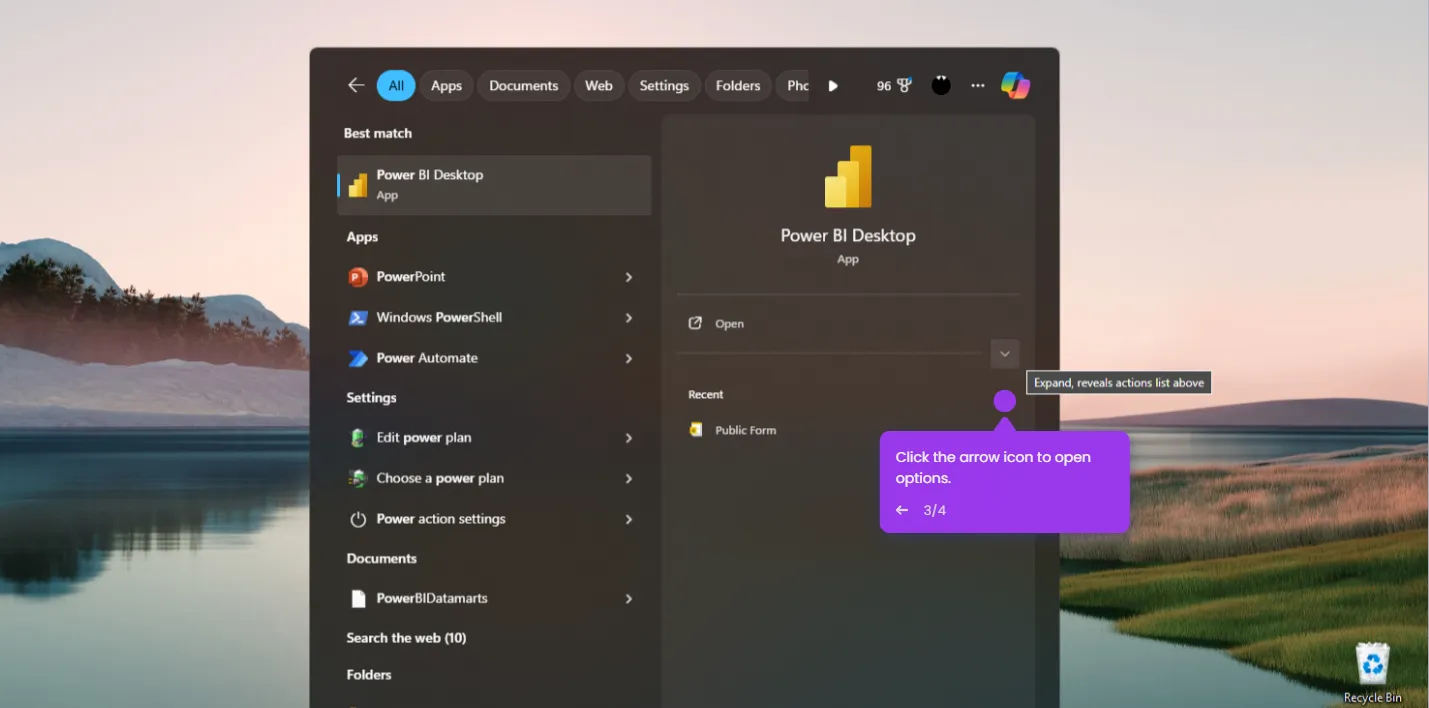
- Open Power BI Desktop and navigate to your report.
- Go to the Home tab and select SQL Server from the data source options.
- Enter the server and database connection information in the dialog box.
- Click OK to complete the connection to SQL Server.