.svg)
How ContactMonkey generated $1.3M in pipeline with Storylane



.svg)
ContactMonkey sells internal communications software to HR, community, and comms teams — not a technical audience, and not one that typically wants to sit through a lengthy sales process before seeing the product. So Tara Robertson (Director of Marketing) and Peter Wong (Sr. Website Growth Lead) built a Storylane demo strategy that has achived:
- $1.3M in influenced pipeline — all inbound, directly attributed through the interactive demo
- 28% of demo leads become opportunities — roughly double the rate of other inbound sources
- 15% form conversion rate — up from 11% after shortening the form to three fields
- 50-60% demo completion rate — well above the 40% benchmark the team targets
- New feature demos turned around in 2 hours — vs. weeks of coordination for video production
Here's exactly how they did it.
.svg)
What ContactMonkey tried before interactive demos
Like most SaaS companies, the primary CTA on their website was "Book a Demo." The problem: a lot of people hitting their site weren't ready to commit to a calendar invite. They wanted to see the inside of the app first. Before landing on interactive demos, Tara and Peter ran a couple of experiments:
- First: a weekly live demo webinar that started strong at around 10 signups per week but eventually dropped to one or two due to demo fatigue and inconsistent lead volume.
- Second: a gated on-demand video walkthrough — around 30 minutes long — that generated a few leads per week but required constant updates every time the product changed. High maintenance, not sustainable.

Interactive demos solved both problems: self-serve, always-on, and fast to update when the product evolves.
"All prospects really wanted to do was see the inside of the app, poke around, just to know if the UI, the UX is a good fit. It was really just about looking under the hood."
The decision to gate — and why it works
Here's where Tara and Peter took a position most marketers are nervous to take: their interactive demo is fully gated. You can't see anything without filling out a form first.
Conventional wisdom pushes against gating demos — more friction means fewer eyeballs. Tara's counterargument is simple: attribution.

"Almost 30% of the leads that come through our gated form end up becoming an opportunity. It's scary to change that."
28% lead-to-opportunity rate from a mid-funnel asset is hard to argue with. Because the demo is gated, every piece of pipeline it influences is directly traceable. No guesswork, no model-based attribution — just a clean line from form fill to revenue.
To reduce friction without removing the gate, Peter shortened the form from six fields to three. The result: form conversion jumped from 11% to 15%.

The follow-up process: where the $1.3M actually comes from
More than the demo itself, the system built around it is what generated millions in pipeline.
When someone fills out the ContactMonkey demo form, they don't just get added to a generic nurture sequence. What happens next is where most teams leave money on the table — and where ContactMonkey gets specific.
Step 1: Auto-qualification
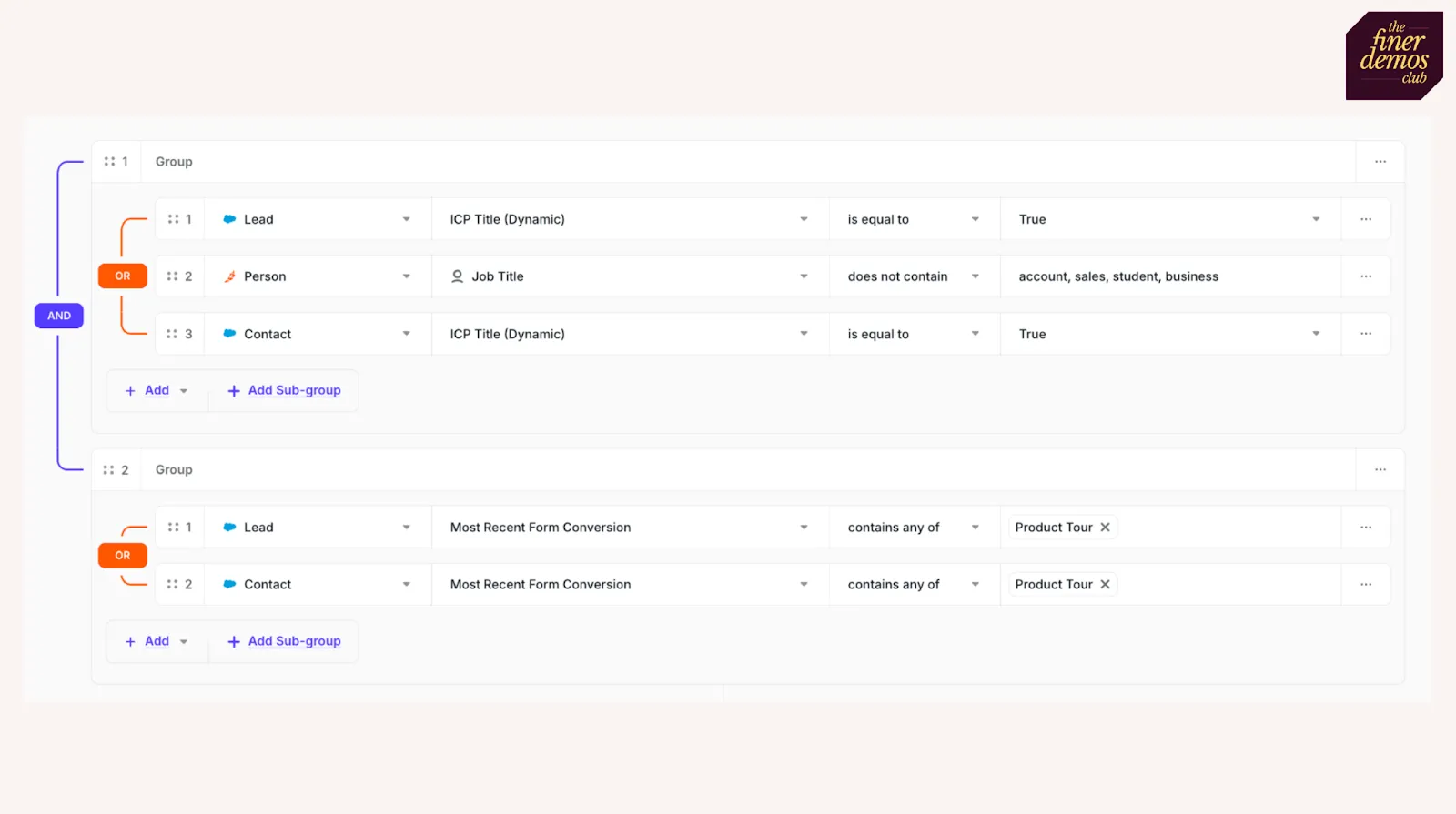
Using Chili Piper's Distro tool, every lead from the interactive demo form is automatically qualified against ContactMonkey’s ICP criteria. Internal comms and HR titles get routed directly to a BDR. Titles that fall outside ICP — sales, account executives, students — get funneled to an automated marketing follow-up sequence instead. No manual triage, no leads sitting in a queue.
Step 2: Immediate BDR assignment and notification
Qualified leads are assigned to a BDR instantly via round robin. The BDR gets both a Slack notification and an email alert the moment the lead comes in — so no one is missed while a rep is away from their desk. The lead is updated in Salesforce automatically, with full context on where they came from.

Step 3: A cadence curated specifically for demo leads
This is the part most teams skip. ContactMonkey doesn't put demo leads into the same cadence as every other inbound lead. They built a separate Salesloft sequence written specifically for someone who just went through the product tour — and the tone is entirely different.
The distinction Tara draws is important: a "Book a Demo" form submission signals high intent. Someone who just explored the demo is still in research mode. Treating them the same way kills the opportunity.

The cadence also includes phone calls, not just email — a deliberate choice to cut through the noise for leads that have already shown product intent.
The interactive demo is one piece of the puzzle
One insight from Peter that's easy to miss: 95% of people don't go directly from the homepage to the demo. They visit feature pages, check pricing, and navigate multiple touchpoints before converting.
ContactMonkey treats the demo as one part of a website ecosystem, not a standalone asset. Every key page is optimized toward eventually getting someone to the demo or a booking — the homepage sets up the problem, feature pages build intent, and the pricing page (their second most visited page before demo bookings) does the pre-qualifying work.
"The different pages on your site have to work together as an ecosystem. Looking at the interactive demo by itself may not cut it."
.webp)