19 Sales Blogs You Must Read Everyday to Get Better

Payal Gusain
June 29, 2026
Table Of Contents

The world’s top 1% salespeople have a lot in common with you. They’re equally embroiled in trying to meet sales quotas and knee-deep in prospecting woes. So how do they manage to close accounts like it is child’s play?

Easy Peasy Lemon Squeezy GIF - Easy Peasy Lemon Squeezy - Discover & Share  GIFs

No, they’re not a rare breed. They just have a better content diet than most. Salespeople who are always closing are also people who are always learning.

And if you’d like to join the top 1%, reading sales blogs is a step in the right direction. They will not only keep you abreast of industry trends, but also help you borrow a leaf from other sales winners.

Here are 19 sales blogs so good, you’d want to gatekeep them all.

Top 19 Sales Blogs to Add to Your TBR List

1. Andy Raskin’s Medium Blog
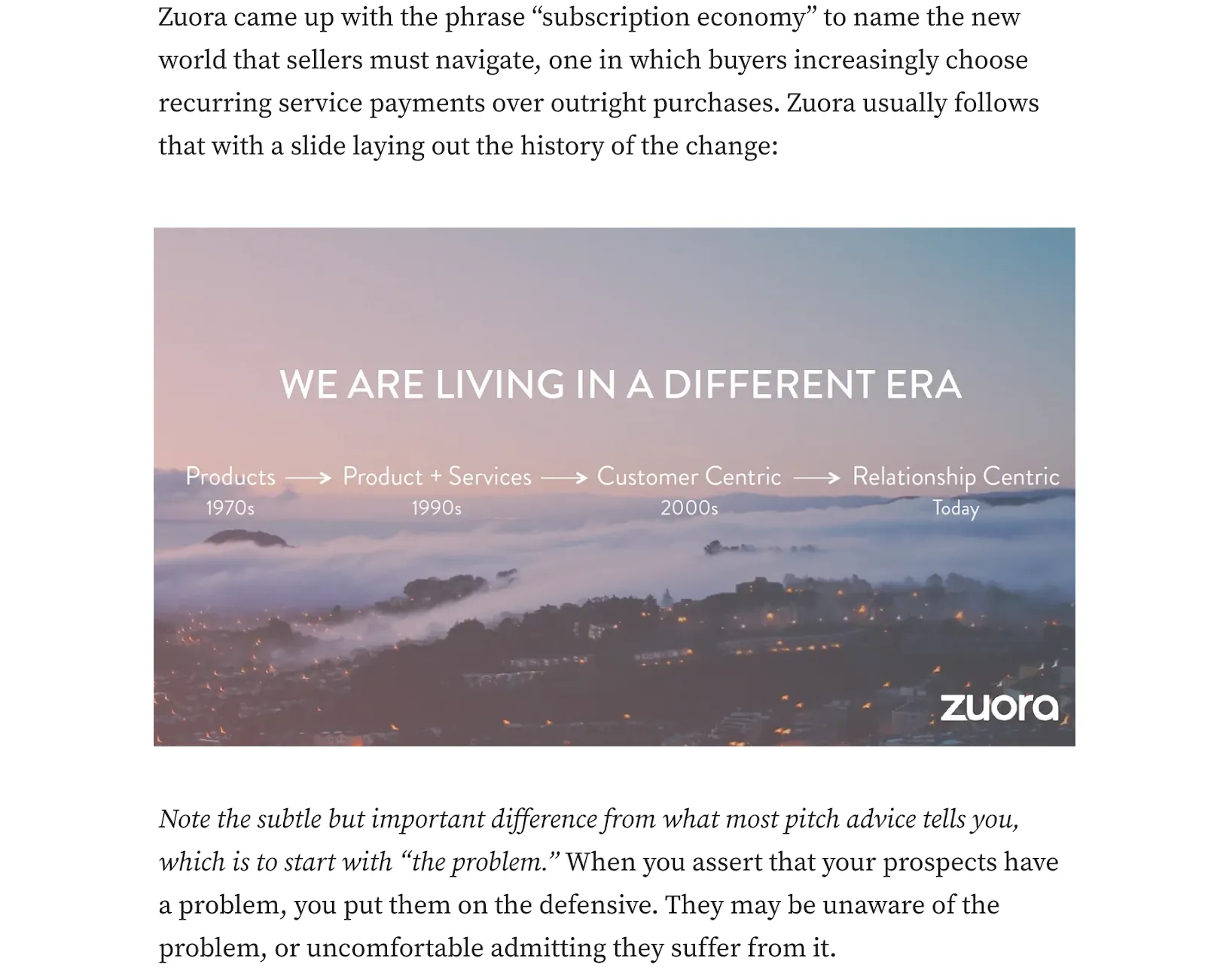
A screenshot of an excerpt from Andy Raskin’s blog.

Topics Covered: sales pitching and copywriting

Our Favorite Post: The Greatest Sales Deck I’ve Ever Seen

A master storyteller and product marketing veteran, Andy Raskin is a force in building strategic narratives and brand storytelling. In his sales blog, he draws from lived experiences to share proven frameworks around sales, product, and fundraising.

Follow for tactical tips to improve positioning and messaging for sales pitches.

2. NASP Sales Blog
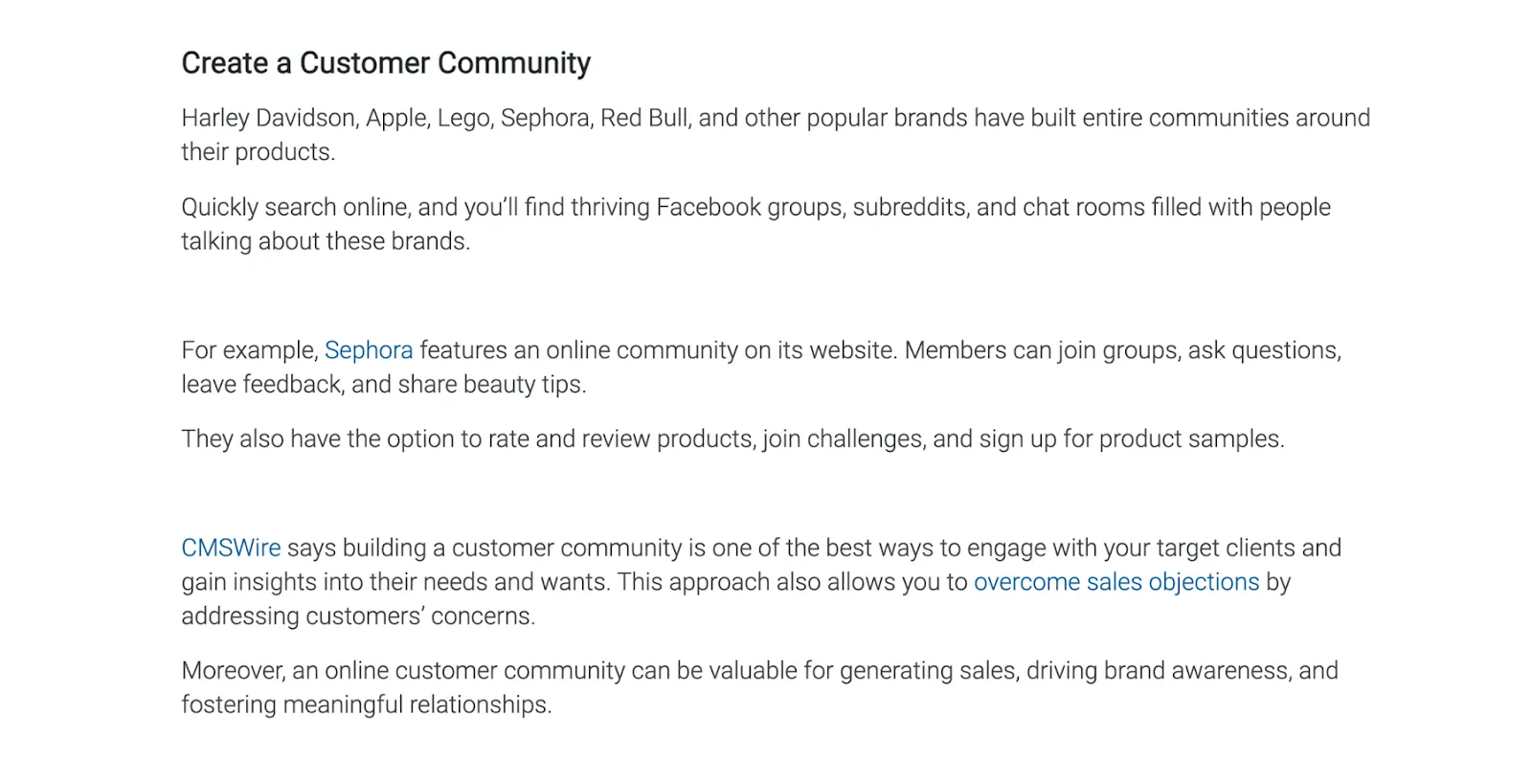
A screenshot of an excerpt from NASP Sales’ blog

Topics Covered: B2B sales, leadership, sales training, management

Our Favorite Post: Out-of-the-Box Sales Strategies for Identifying Your Ideal Customers in 2026

This sales training blog from the National Association of Sales Professionals is a repository of thought-provoking articles, and covers a wide variety of sales processes across the buying cycle. It’s also exclusively written by industry influencers, so you’re in for some one-of-a-kind sales techniques and insights for leading sales teams.

Follow for the diversity of voices and views across sales topics, from pipeline management to culture building.

3. Storylane Blog

A screenshot of an excerpt from Storylane’s blog.

Topics Covered: SaaS sales, pre-sales, PLG, marketing, demo tours

Our Favorite Post: 3 best discovery call scripts & how to prepare one (with discovery call questions)

How do you make your product the hero of your growth story? You start with positioning and end by nailing the product demo. Since talk is cheap, we show you how it’s done.

How to organize remote demos? Check. Best ways to deliver sales demos? Check. Product-driven growth strategy? Check. Funniest memes about sales demo blues? Double check. From tools to tactics, we comprehensively cover the art of closing on the Storylane blog.

Follow for practical advice about creating and delivering awesome sales demos that you can implement right away.

Talk to Storylane experts if you want to streamline your sales process - Book a free demo

4. The Closer Blog
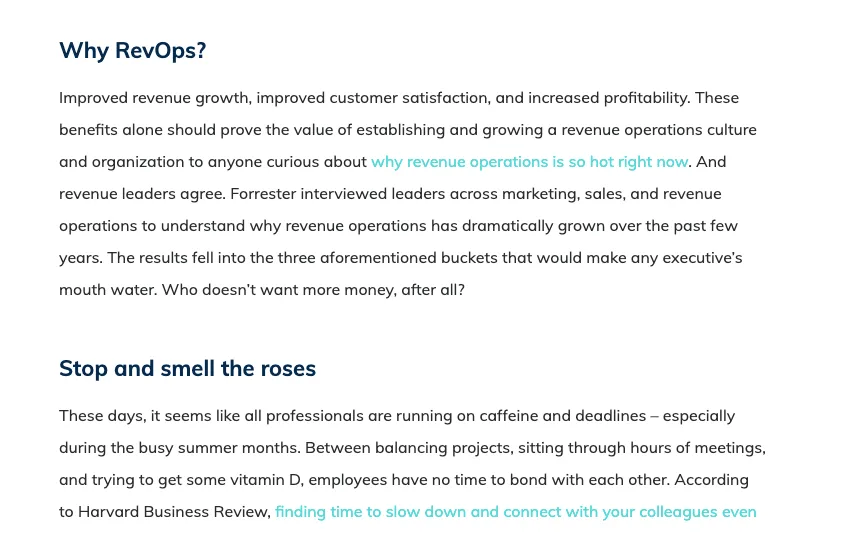
A screenshot of an excerpt from The Closer’s blog.

Topics Covered: sales news and culture

Our Favorite Post: When one gen-AI door closes, another one opens

Subscribe to The Closer by Groove, a sales engagement platform, to get the latest scoop on B2B sales trends with interesting, weekly roundups. With carefully curated resources and pop culture references strewn around, this blog will appeal to professionals beginning their sales careers.

Follow for a weekly dose of exciting, curated content “from the frontlines of the sales industry,” as Groove puts it. 

5. The Center for Sales Strategy Blog
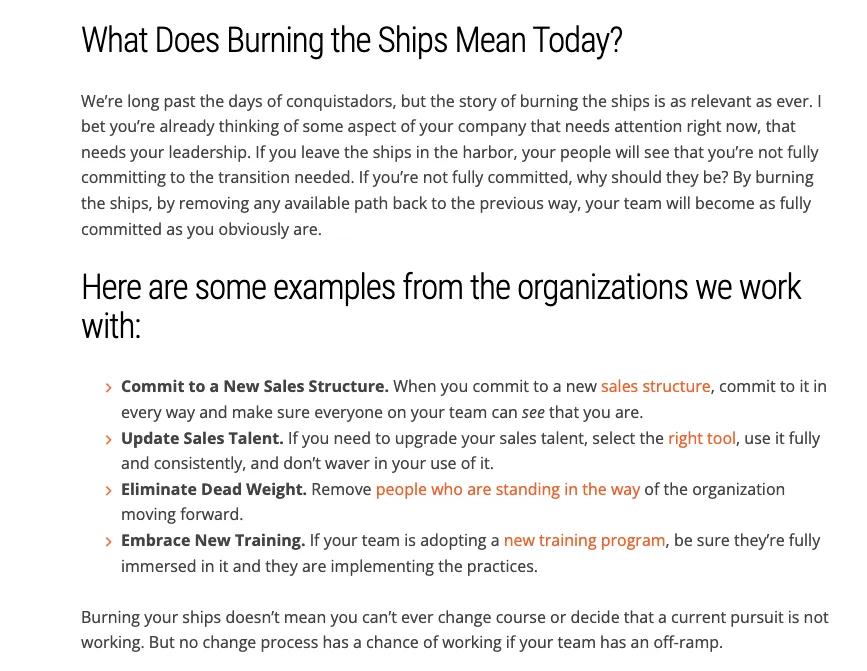
A screenshot of an excerpt from The Center of Sales Strategy’s blog.

Topics Covered: sales performance, sales pipeline management, sales forecasting

Our Favorite Post: Burn Your Ships: A History Lesson About How to Be a Great Leader

This sales performance consulting company has been in the business since 1983. On the blog, you can enjoy nuggets of timeless wisdom about improving sales operations through strategic hiring processes and training.

Follow for fresh perspectives on how to hire and coach a sales team to drive better outcomes.

6. Gartner’s Sales Blog
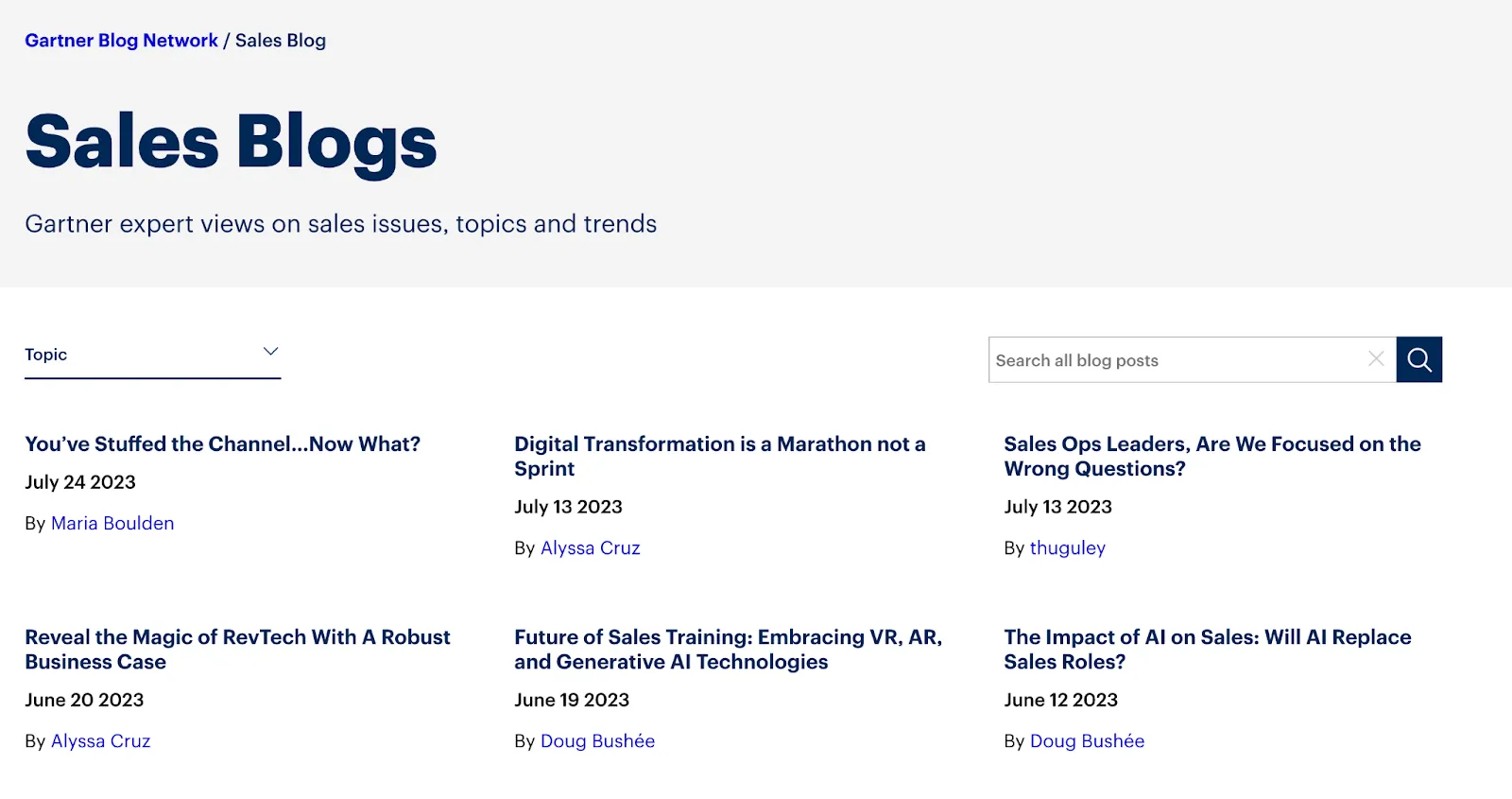
A screenshot of an excerpt from Gartner’s Sales blog.

Topics Covered: Sales leadership, enablement, analytics

Our Favorite Post: Sales Force Sizing – Speaking the CFO’s Dialect

This blog is a repository of opinions by Gartner analysts. Yes, the same analysts who work with top executives across TSPs and the like, so you’re sure to get interesting food for thought and reframing existing knowledge.

Follow for analytical insights and fresh viewpoints you won’t find anywhere else.

7. Sales Solutions Blog by LinkedIn

A screenshot of an excerpt from LinkedIn’s Sales Solutions blog.

Topics Covered: sales strategy, modern selling, B2B sales

Our Favorite Post: 5 Lessons From a 1960s Textbook That’ll Make You a Best Seller Today

As the name suggests, this blog is a resourceful collection of “sales strategy and modern selling tips” from some of the top voices on LinkedIn. You can deep dive into personal narratives, expert interviews, real-life growth examples, and a variety of other actionable content to enrich your learning.

Follow for suggestions on the social selling process and practical use cases of LinkedIn Sales Navigator.

8. Salesflare Blog
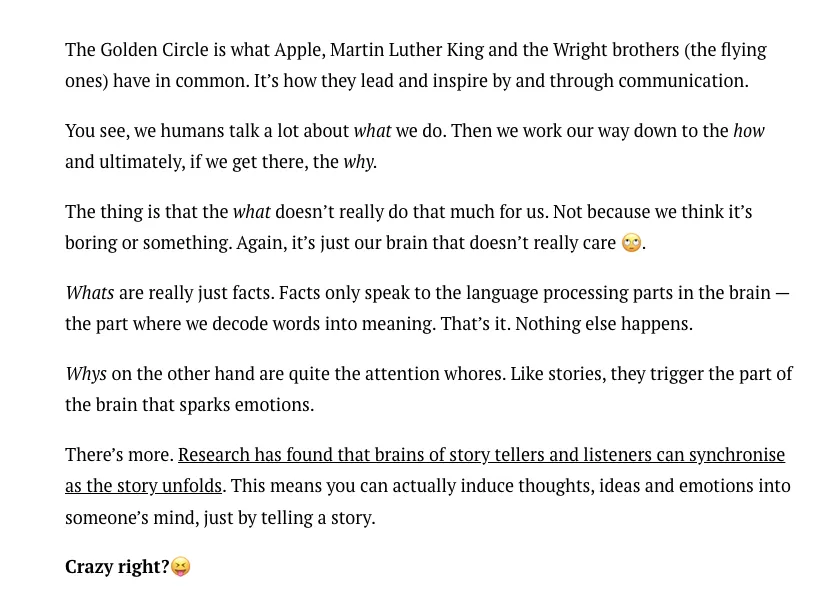
A screenshot of an excerpt from Salesflare’s blog.

Topics Covered: Lead generation, cold emailing, CRM, automation

Our Favorite Post: The Great Guide to Crafting a Sales Deck that Sells

If you like your sales tips and techniques with a side of humor and crazy GIFs, you’ll love the Salesflare blog. The deeply researched email templates and sequences along with insightful reviews of sales tools make for exciting reads.

Follow for comprehensive suggestions on how to build effective email workflows and generate leads.

9. First Round Review Blog
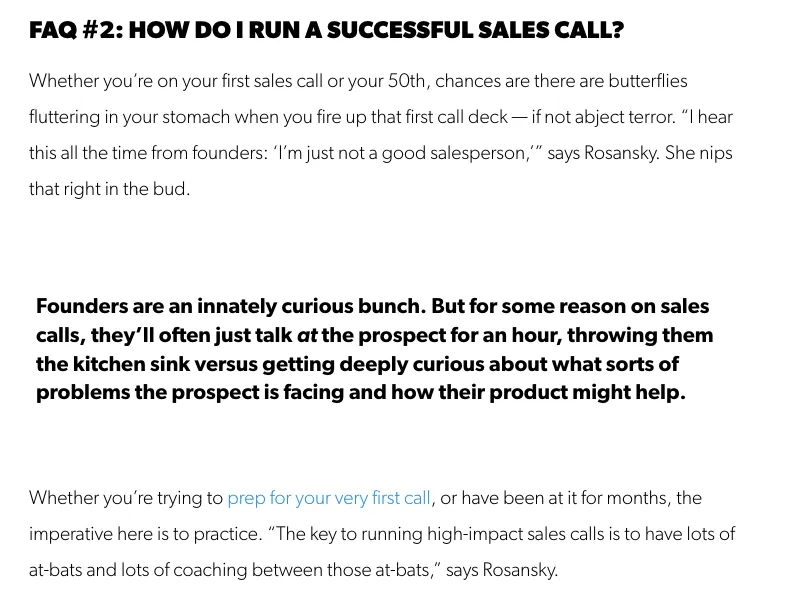
A screenshot of an excerpt from First Round Review’s blog.

Topics Covered: technology startups and growth strategy

Our Favorite Post: The Most Common Go-to-Market Questions This Expert Gets from Early Founders

While there is no handbook to succeeding in sales, gleaning insights from the trials and triumphs of sales winners isn’t a bad idea. The sales section of Review is a space for uninhibited knowledge about technology, product, and growth, that are great for both personal and professional growth.

Follow to tune into how founders take their businesses from ground zero to one. 

10. The Intercom Blog - Sales

A screenshot of an excerpt from Intercom’s Sales blog.

Topics Covered: sales strategy and team management

Our Favorite Post: A Playbook for the Impatient SDR: 4 Key Tips to Grow Your Sales Career

Intercom’s sales category blog is THE hub for modern-day sales intelligence. Its data-rich exploration of the post-sales motions and services are a breath of fresh air. And the highly engaging deep dives into relationship building and customer engagement are instant hits. 

But if you’d rather listen than read, tune in to Intercom’s Inside Intercom to hear straight from the present day’s hottest sales and customer service leaders.

Follow for strategic advice and tactical recommendations to modern-day sales challenges.

11. BombBomb Blog

A screenshot of an excerpt from BombBomb’s blog.

Topics Covered: selling on video and video messaging

Our Favorite Post: How to Send Video in LinkedIn Messages to Better Connect With Your Prospects

Still figuring out the art of selling on video? This blog by BombBomb, a video messaging platform, has got you covered with detailed how-to articles and a podcast, The Customer Experience, offering practical advice and tips straight from revenue leaders.

You can learn to effectively use video messages and email to communicate value to prospects and deepen relationships. And if you work in real estate, mortgage, or insurance, you can access specific use cases to use right away.

Follow for creative takes on how to use video messaging for different business outcomes.

12. The Pipeline Blog by ZoomInfo
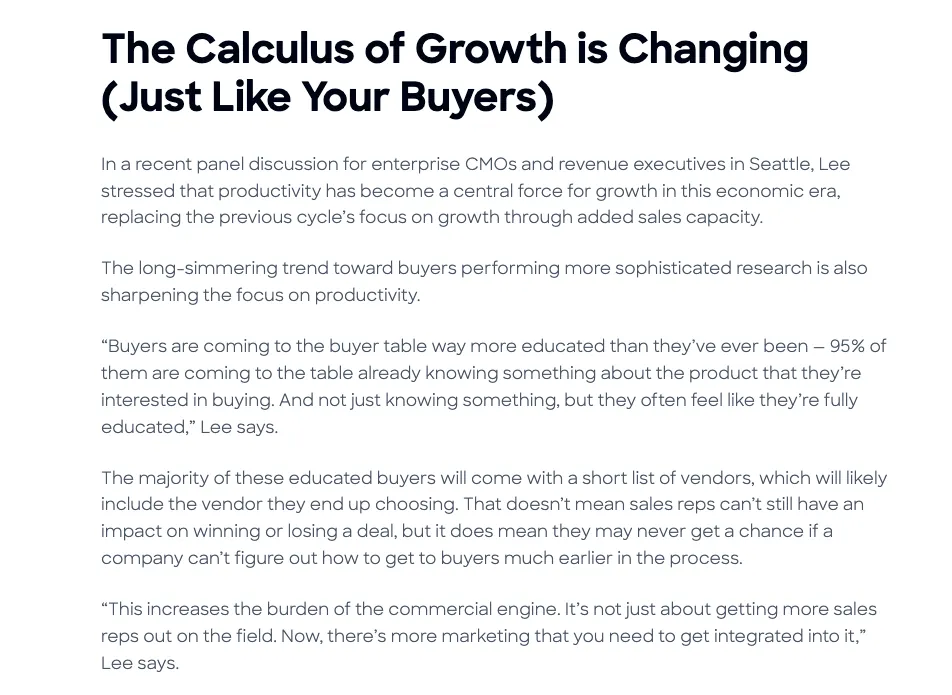
A screenshot of an excerpt from ZoomInfo’s The Pipeline blog.

Topics Covered: GTM, sales intelligence, sales strategy, rep development

Our Favorite Post: GTM Plays: How to Win the Race for Sales Productivity

Zoominfo’s sales category blog is a masterclass on how to think and implement data-led sales motions. You’re going to love the deep dives and the big-picture scenarios shared by sales experts. As well as the tactical advice and data-driven practices to scale your revenue funnel.

Follow for data-informed and rep-tested sales plays and strategies for GTM success.

Side note: Zoominfo also has a weekly podcast Pretty Big Deal, where sales professionals share career-defining tales of their big wins and heartbreaking losses. These are the stories you’ll want to rewind again and again!

13. Cerebral Selling
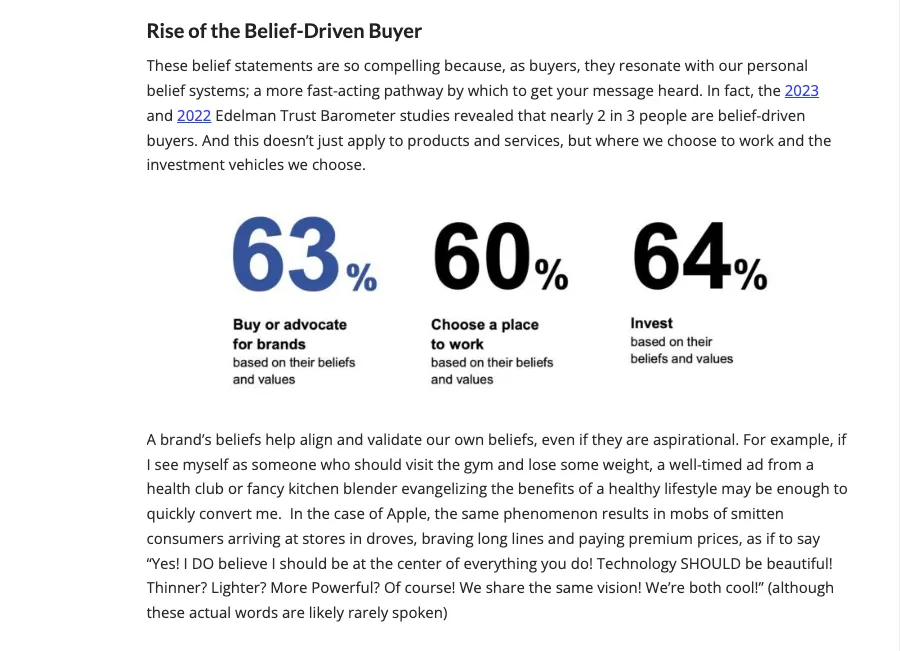
A screenshot of an excerpt from Cerebral Selling’s blog.

Topics Covered: leadership, objection handling, negotiation

Our Favorite Post: Sell More by Leading with What You Believe

Who knew blending science and empathy was the way to become successful sales professionals? But David Priemer, former VP of Commercial Sales at Salesforce, is a sales trainer who’s ingenious in his use of science principles to solve common sales challenges.

From building excellent team cultures to hosting fruitful discovery calls, this “Sales Professor” shares high-value content in simple language on the Cerebral Selling blog and his YouTube channel.

Follow to get science-backed, first-hand tips from the founder of one of the biggest sales companies in the world.

14. Revenue Intelligence Blog by Gong

A screenshot of an excerpt from Gong’s Revenue Intelligence blog.

Topics Covered: sales management, revenue intelligence, sales enablement, customer relationships, sales automation

Our Favorite Post: How to Write a Sales Email: What the Data Really Says

Gong, a sales conversation intelligence software, is a name you cannot miss when listing the best sales blogs. 

If you’re someone who loves the sound of data crunching, you’re going to dig the jaw-dropping insights — derived from first-party, primary data, sourced from real-life customer conversations.

You also get clear, actionable articles covering a variety of sales plays. And if you’re a sales leader looking for proven advice on building a sales team, don’t miss out on Gong’s data-driven newsletter The Edge.

Follow for data-backed, actionable advice on how to manage and win your sales pipeline goals.

15. Jill Konrath’s Blog

A screenshot of an excerpt from Jill Konrath’s blog.

Topics Covered: modern selling, sales productivity, leadership, selling tools, sales prospecting

Our Favorite Post: 2 Elevator Speech Examples - One Works, the Other Doesn't

Jill Konrath’s blog will make you feel invincible with her encouraging tone and crisp insights on how to close challenging business deals and improve revenue. She brings unparalleled wisdom from her decades-spanning career to help you tackle today’s dynamic sales environment as a sales manager and leader. 

Follow to learn fresh strategies to get rid of sales bottlenecks, whether selling to startups or enterprises.

16. Tomasz Tunguz Blog

A screenshot of an excerpt from Tomasz Tunguz’s blog.

Topics Covered: startup growth, Product-led Growth, SaaS sales, GTM, hiring process

Our Favorite Post: The Smallest ACV to Justify an Inside Sales Team at a SaaS Startup

Head straight to venture capitalist Tomasz Tunguz’s blog if you’re searching for reflective, thought-shaping content. He often challenges classic sales motions with statistical reasonings and unpacks data to share keen observations.

Follow for analytical breakdowns of modern selling practices and roadblocks.

17. The Revenue Lab by Dock
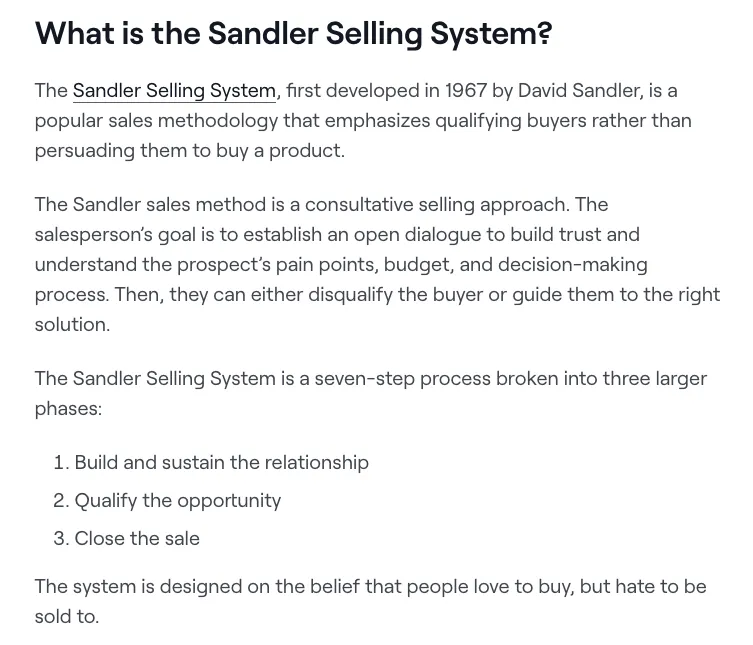
A screenshot of an excerpt from Dock’s The Revenue Lab blog.

Topics Covered: SMB sales, B2B sales, sales enablement, customer success, pricing

Our Favorite Post: The Sandler Selling System: How to Lead the Sales Dance

Dock’s Revenue Lab is a hub of best practices, tips, comprehensive guides, templates, and tools for sales talent of all stature. Unlike many corporate blogs, most of its topics touch upon niche selling practices that are simply unmissable. 

Plus, its deep dives into time-tested selling systems and sales methodologies are must-reads for all B2B sales reps.

Follow for well-researched guides on building relationships and winning customers.

18. PreSales Collective Blog
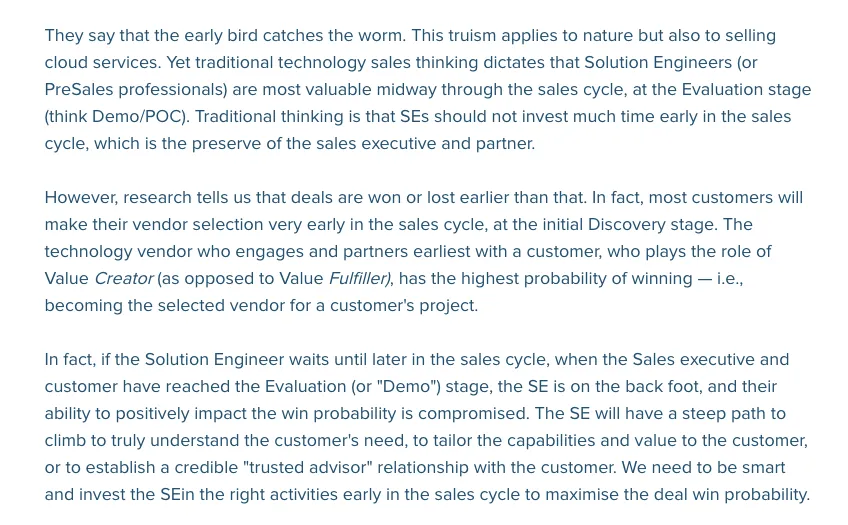
A screenshot of an excerpt from PreSales Collective’s blog.

Topics Covered: pre-sales, sales skills, career development, sales productivity

Our Favorite Post: Winning Early: The Role of the Solution Engineer Early in the Sales Cycle

One of the largest communities with 20,000+ pre-sales professionals, PSC is the go-to resource for learning the tricks of the trade with contributions from experienced pre-sales professionals. 

The focus of PSC gears slightly more toward career development and coaching for sales teams, so if you’re starting out in pre-sales, you shouldn’t miss out on this one.

Follow to read standout opinion pieces and diverse viewpoints about building a career in pre-sales.

19. Sales Hacker Blog

A screenshot of an excerpt from Sales Hacker’s blog.

Topics Covered: salespeople management, lead generation, outreach, sales life, sales skill development

Our Favorite Post: Creating a Sales Culture: What It Is & How It’s Done

At last, one of the best sales blogs of all time: Sales Hacker. Dubbed the “next generation of sales”, it’s an unmissable hub of thought-leading sales content mixed with career advice. If personal narratives are your jam, SH is the place to be.

Follow for unique takes from seasoned professionals and aspiring salespeople alike.

Check out: How to make your sales more engaging

How to Start a Sales Blog?

All the best sales blogs have three things in common. They are deeply engaging, conceptualized with a particular audience in mind, and informed by subject matter expertise.

Step 1: Conceptual Framing

A sales blog loved by thousands is built with intention. Before you get down to the writing business, sketch out the topics you’d like to cover and the goals you’d like to achieve. This will shape the way you ideate, engage, connect, and provide value to your readers.

So, ask yourself:

  • Who is my audience?
  • Do I want to write for beginners or experienced professionals?
  • What would my audience like to learn?
  • How do I want to scale and grow my blog?

To test the waters, you can also float a survey on channels like LinkedIn, Reddit, and even Product Hunt (like we did with our Buying Bottlenecks newsletter). 

Step 2: Technical Setup

Once the blog concept is locked, it’s time to get technical. From CMS and hosting platforms to hiring a web developer and selecting a blog design, there’s a lot of ground to cover.

  • Which blogging platform or CMS will be best for my needs? For example, WordPress or Wix.
  • What will be the domain name and where should I host it?
  • How many pages will the blog have?
  • How do I want my blog to look and feel?

Or, if you don’t want to jump through the hoops, you can just start a blog on Medium with a single sign up. 

The idea is to choose the right platform depending on the goals you want to accomplish. For example, if you want to build thought leadership, Medium works fine. But if you’re a startup trying to build an audience, hosting your own blog would pay off in the longer run.

Step 3: Practical Execution

Finally, build a content cadence to determine the frequency, length, and style of content you should publish and when. Doing so will also help you stay consistent while delivering content aligned with audience needs and likes.

  • How will you build editorial calendars?
  • Will you need a second pair of eyes to review and edit your blogs?
  • What will be the publishing frequency?
  • Would you like to invite guest blog posts?

Once done, document the entire process to create a system you can fall back onto. 

Who’s Reading the Sales Blogs Anyway?

Now, who even has the time or the inclination to read sales blogs? This is a valid question to ask. But at the end of a list of the best sales blogs? Probably not, but we’ll answer it anyway.

Today’s B2B buying behavior and environment has become increasingly dynamic, with most consumers preferring a self-service approach. This makes your job even more challenging and demands continuous learning. 

Reading sales blogs actively will not only keep you updated on the latest industry juice, but also help you identify opportunities for growth and make connections to build a successful sales career. You can also opt for sales-focused newsletters like Buying Bottlenecks to get valuable insights delivered straight into your inbox.

And if you’re still on the fence, here’s a quick reminder from Charles Darwin on why it’s worth the effort.

  ”It is not the most intellectual of the species that survives; it is not the strongest that survives; but the species that survives is the one that is able best to adapt and adjust to the changing environment in which it finds itself.”

Killer demos for every stage

Build demos and agents that turn curious buyers to closed won
Book a demo

Related Articles

Read All Articles
Guides
June 29, 2026
6 min read

Five ways B2B teams are using interactive demos that nobody talks about

What a conference booth in London, an EHR rollout for a differently-abled community, and a fintech triage system have in common — and what it tells us about where demo automation is actually going.
Ranga Kaliyur

What a conference booth in London, an EHR rollout for a differently-abled community, and a fintech triage system have in common — and what it tells us about where demo automation is actually going.

The standard demo automation playbook is predictable: marketing website tour, sales leave-behind, email nurture embed. That is what most companies start with.

But spend time in actual customer conversations and you see something different: teams using demos to solve problems the standard playbook never imagined.

This week, we reviewed a working session with an engineer at a large cloud computing company preparing for a technology summit in London. Her problem: she needed a product demo to play on a loop at her conference booth (no clicks, no one to navigate it, just a screen running in the background while conversations happened around it.)

Nobody markets demo automation as a conference booth tool. But that's exactly what she needed it for. And it wasn't the only unexpected use case this week.

1. Trade show and conference booth displays

The conference loop use case has specific requirements: autoplay enabled, 4-6 second transitions on title cards and pause slides, video clips set to 1.5-2x playback speed for longer recordings, and the entire thing downloaded onto the device. Conference WiFi is unreliable. You need the offline version ready before you walk in the door.

The structural formula that worked: technology stack slide (static) -> 4-second pause slide (blank) -> demo 1 with title card framing the problem ("Can I detect performance issues before they cause outages?") -> demo 2 -> repeat on loop. The problem-framing title cards are what make this work at a booth — a passerby reads a question they recognize and stops.

2. Staff onboarding for organizations with diverse accessibility requirements

A director of organizational performance at a nonprofit came to us mid-EHR transition. Her organization (200-plus staff, statewide) was moving to a new electronic health records platform and needed tutorials for everyone from clinicians to program administrators. Complicating factor: their staff includes a deaf and hard-of-hearing community.

Her requirements were specific: self-paced clicking rather than auto-advancing video, AI voiceover as an optional layer, and demos organized by function and embedded in SharePoint so staff could browse by department and role.

The training-center use case of interactive demos replacing annotated PDFs  is not new. The accessibility angle is. When a demo is self-paced, the viewer controls the speed versus video. That's a meaningful accommodation for populations that need more time, and it requires zero additional effort from the team building the content.

3. Multi-system integration demos

"We get asked all the time: what do these integrations actually look like?" said a co-founder at an early-stage health tech company. They had been answering that question in live demos, switching between systems in real-time and hoping nothing broke.

What they discovered: you can capture from multiple platforms in a single demo session. Finish recording in system one, click "add to existing demo," then capture from system two. The viewer moves between platforms seamlessly — without any live switching, without any risk of a broken environment. 

Live integration demos are high-risk, tedious (from a data management pov) and unrepeatable. Captured integration demos are neither. For a company whose primary sales objection is "show me exactly how the integration works," this is not a minor workflow change; it's a competitive differentiator.

4.Inside sales automation for long-tail accounts

An inside sales leader at a fintech company described a problem his team lives with daily: they manage accounts "where we're seeing very less revenue and more effort going from an account manager's point of view." His team's solution was a self-serve portal paired with interactive demos that replace human demos entirely for lower-priority accounts. Reps focus on the accounts with revenue potential; the demo handles the education and qualification for everyone else.

He had used this approach at a previous company and was replicating it here. The key insight: he was not evaluating demo automation as a way to improve existing demos; He was using it as a triage mechanism for a coverage problem. Interactive demos let you maintain a presence in accounts that don't justify a rep's time. That's a fundamentally different value proposition than "make your demos better," and it's one that VP of Sales audiences will understand immediately.

5. Localized demos for non-English-speaking markets

An inside sales team at a fintech company with a large India-based sales operation had one specific question: how many languages does the AI voiceover support? The answer, over 30, prompted an immediate workflow: build the demo once in English, then translate and duplicate into regional languages.

In markets where English-language demos create friction in the sales process, this is not a nice-to-have. It is a conversion rate issue. Prospects engage more deeply with content in their first language. The ability to generate a localized demo without re-recording or hiring a voice actor changes the economics of localization for inside sales teams that are already stretched thin.

Research
June 29, 2026
6 min read

Interactive demos vs. product videos: why revenue teams are switching over

Should you use interactive demos or product videos for sales? Compare creation time, maintenance, personalization, and analytics to decide.
Ranga Kaliyur

When sharing async product demos, sales teams have traditionally reached for a couple of options: quick and dirty screen recordings (think Loom, Vidyard, etc.) and high-end video productions (think Camtasia, Consensus, etc.). While there’s a time and place for both; AEs, SEs, and PMMs are increasingly adopting a third format — interactive demos — as a “better than both worlds” alternative. Here's why:

Interactive Demos vs Video: Feature Comparison
Compare Interactive demos
(Storylane)
Screen recordings
(Loom, Vidyard)
Video productions
(Camtasia, Consensus)
Time to create ✅ Fast, capture and creation often completed in minutes ✅ Fast but requires narration, timing, retakes, etc. ❌ Slow, can take weeks to script, shoot, and edit
Editing ✅ Self-serve, easy: replace screens, tweak text, reorder steps; no re-recording ❌ Limited scope: re-recording, trimming, stitching clips, fixing audio ❌ Technical dependency: needs expertise in pro editing software
Polish and branding ✅ Professional, consistent themes built-in; no editing software needed ❌ Low production value. Harder to maintain consistency; requires design/video tools ✅ Cinematic quality but requires video editing expertise
Publishing ✅ One-click publish; instantly updates everywhere ❌ Requires re-uploading and re-sharing new versions ❌ Requires re-uploading and re-sharing new versions
Maintenance & Updates ✅ Replace screens and content in minutes, auto-update instantly ❌ Requires re-recording entire sections/full-video ❌ Requires re-producing entire sections/full-video
Personalization ✅ Personalize at scale with dynamic tokens ❌ Hard to scale: Requires re-recording ❌ Impossible to scale: Requires re-production
Analytics ✅ Granular: Track views, interests, completion, and time-spent per step ❌ Limited to views, no actionable analytics or Opinions ❌ Limited to views, no actionable analytics or Opinions
Buyer experience ✅ Interactive, two-way experience ❌ Passive, one-way experience ❌ Passive, one-way experience
Ideal for… Across the board Ad-hoc touches, quick Q&A Top-of-funnel brand awareness campaigns

Why revenue teams are adopting interactive demos

Since our inception, we've noticed revenue teams of all sizes, from early-stage startups to Fortune 500 enterprises, switch over from videos to interactive demos. Here are the most common reasons we hear from customers.

Reason #1 - Speed without sacrificing quality

Screen recordings are quick and easy to produce but lack the polish and quality needed for high-value deals. On the other hand, producing polished video demos means days of planning, hours of environment prep, multiple recording attempts, and extensive editing. Interactive demos eliminate this friction entirely, especially now with AI, to instantly generate product-specific content (Guides, voiceovers, etc) from captured screens — no need for multiple takes. 

"Video is really strong at capturing people's attention and welcoming them into your story. But the thing that video can't do is provide a “click-through experience” allowing users to actually get their hands on the product — to feel it, to see it, to understand what the actual day in and day out of working with your tool is going to be like. Especially with its AI and automation, Storylane allowed us to build demos in such a quick amount of time."
- Michael DeMarco, PMM, Phenom

Reason #2 - Asset maintenance and scalability

Traditional videos are like baked cakes — once ingredients (product screens, click path, narrative) are combined into a video, it’s difficult to swap individual components. When your product UI changes six months from now, you face full reproduction from scratch.

Interactive demos keep these elements separate. Update a screen in minutes without touching the narrative. Adjust messaging without re-recording. Reorder workflows without starting over. This durability enables demos to stay current as your product evolves.

Further, creating persona-specific, industry-tailored, or localized video content means producing multiple versions of each asset — a multiplication problem that quickly becomes unmanageable. Storylane's AI editor recontextualizes entire demos for different personas or industries in seconds. Dynamic tokens automatically swap prospect information without creating separate versions. One base demo adapts to dozens of scenarios without manual overhead.

Reason #3 - Modern buying preferences 

Interactive demos respect buyer time by letting them jump to relevant sections, skip familiar concepts, and control their pace. Video forces a fixed timeline — even if viewers only care about one feature, they must scrub through the entire recording to find it. This level of control and self-serve flexibility reflects the preference of modern buyers, who'd rather click around a product tour for themselves than rely on a passive, one-way video.

"Nobody wants to watch a 5-minute video anymore. So my team sends a Storylane demo and the prospect sees the demo in 5 clicks."
- Jon Dolan, Sales Director, Cognism

The difference in analytics is equally striking. Video platforms show watch time and opens. Interactive demos reveal which features prospects explored, where they spent time, which stakeholders engaged, and where they dropped off. These step-level Opinions enable targeted follow-up conversations that video simply can't support.

Guides
June 29, 2026
6 min read

5 best practices for conference-ready interactive demos

Use interactive demos at events capture attention, boost booth engagement, and qualify leads in real time.
Ranga Kaliyur

Conference season is here! If your company is hosting an event or a booth, you've probably noticed that standing out in a crowded in-person environment is easier said than done.

Our customers are increasingly adopting Storylane to address this challenge; so we thought it might be helpful to share this quick checklist on how to attract, engage and convert conference attendees with interactive demos.

Key takeaways

  1. Set your in-booth demos on autoplay
  2. Download your demos for offline use
  3. Include forms to streamline lead gen
  4. Use QR codes to improve accessibility
  5. Service a broader audience with Demo Hub

Why use interactive demos at events, booths, and conferences?

There are several reasons why interactive demos work so well at in-person events.

  • For one, they stand out from the usual product decks, brochures, and videos.
  • More importantly, they let conference goers experience the product’s value on their own accord — with minimal sales intervention.
  • Also, as compared to live demos, interactive demos provide a safe and flexible product environment for smooth, guided discovery.

5-point checklist for interactive demos at events, booths, and conferences

1. Improve foot traffic with autoplay demos

Conference attendees don’t want another branded water bottle or pad of paper — they want to see innovative products like yours in action. Set your in-booth demos on autoplay to attract attention, improve foot traffic, and give attendees a relevant, hands-on product experience.

How it works: To set up Autoplay, toggle the Auto play demos option under the CONFIG menu of your demo settings.

2. Secure your product experience with offline demos

Remember that one time Steve Jobs ran into an unexpected internet issue during his keynote presentation for the iPhone? Well, if spotty Wi-Fi can affect the largest technology company in the world, there’s a good chance it can affect your product walkthroughs and presentations as well. 

Also, can we take a minute to talk about the Wi-Fi prices at these events and conferences? Especially given their unreliability, conference Wi-Fi can be absurdly expensive; as much as $2,000 per day! Yeesh!

This is where Storylane’s offline demos help. Offline demos support interactive demos even without an active internet connection. This is an effective way to avoid tedious ops works, awkward product crashes, and exorbitant Wi-Fi charges  — all in a single click.

How it works: Select “Download offline” to create a demo link. Once downloaded, you needn't worry about refreshing the page or losing progress during outages.

It’s also worth noting that Storylane doesn't require any additional software to work offline. These demos are built to run directly on your browser via a shareable URL — anytime, anywhere. 

3. Convert prospects on the spot with lead gen forms

Interactive demos can encourage attendees to convert on the spot during events and conferences. Prospects are usually happy to share their contact details in exchange for relevant product demos.

If your booth receives a lot of foot traffic, make sure to include a lead gen form in your demos. This is a good way to capture leads, even when your on-ground sales team is occupied with other prospects. Alternatively, offer to share a guided demo to high-intent prospects via email, LinkedIn, etc. to initiate  personalized nurturing efforts.

How it works: Head over to “Guide” on Storylane’s demo editor, add a step, select the screen of your choice, and pick “lead form” as your guide of choice. You can either use Storylane’s lead gen form or embed your own custom form. 

4. Empower better buyer enablement with QR codes

Furnish your booth, swag, presentations, and other marketing efforts with QR codes linked to interactive demos. This is a low-lift, non-invasive approach for prospects to take your product back home with them.

For one, this helps prospects review your product in their own time, rather than rushing through a demo at a busy booth. For another, this helps prospects share your demo with the rest of their team async.

How it works: Once you publish your demo, simply copy and enter the link into a QR code generator of your choice. Distribute this QR code across your marketing efforts to improve visibility and engagement.

5. Address multiple buyer personas and use-cases with Demo Hub

A single demo is rarely enough to convert multiple buyer personas. Accordingly, we recommend creating demo hubs as a centralized repository to address a range of audiences and use-cases simultaneously. Here’s a little more on how SentinelOne, a leading cyber security company, goes about this:

SentineOne created a demo-enabled “GeniusBar” kiosk at this year's RSA conference. This involved several iPads, displays, and on-ground sales reps showcasing Storylane demos to prospects while on the move. Since Storylane is device agnostic, prospects had a clean, true-to-life product experience.

How it works: Head over to "Demo Hub" in Storylane, and select "+ Create Hub" to get started. We typically recommend the Gallery layout for quick and snappy in-booth use-cases.

6. Bonus tips to make the most of your conference demos

Before signing off, here are a few short bonus tips to keep in mind when creating interactive demos for your next booths and conferences

  • Build a narrative: Like the interactive demos that go on your website, your conference demos should tell a relevant story about the pain-points and use-cases that your product solves for. Tailor this narrative based on the nature of the conference and its attendees.
  • Keep it short: Conferences are busy, jam packed affairs. Attendees are usually short on time, and even shorter on attention spans. Keep your demos concise and highlight only the most valuable, differentiated aspects of your product.
  • Clean up the data: Needless to say, it’s important that your interactive demos reflect your product in the best possible light. Use the HTML editor to blur sensitive information and update the data and copy.
  • Enable speakers: Using the real product during panel discussions or breakout sessions can be precarious, especially when you're presenting to a large, highly qualified audience. Storylane enables speakers with pre-curated demo flows, in-built presenter notes, and safe demo environments.

Make buying easy with Storylane