Quick summary
Bubble.io's responsive design tools let you control how every element adapts across breakpoints — from desktop to mobile — using the built-in Layout panel and Responsive tab. This step-by-step walkthrough shows you how to configure container layouts, set visibility rules, and deploy a fully responsive Bubble.io page without writing any code.
Steps
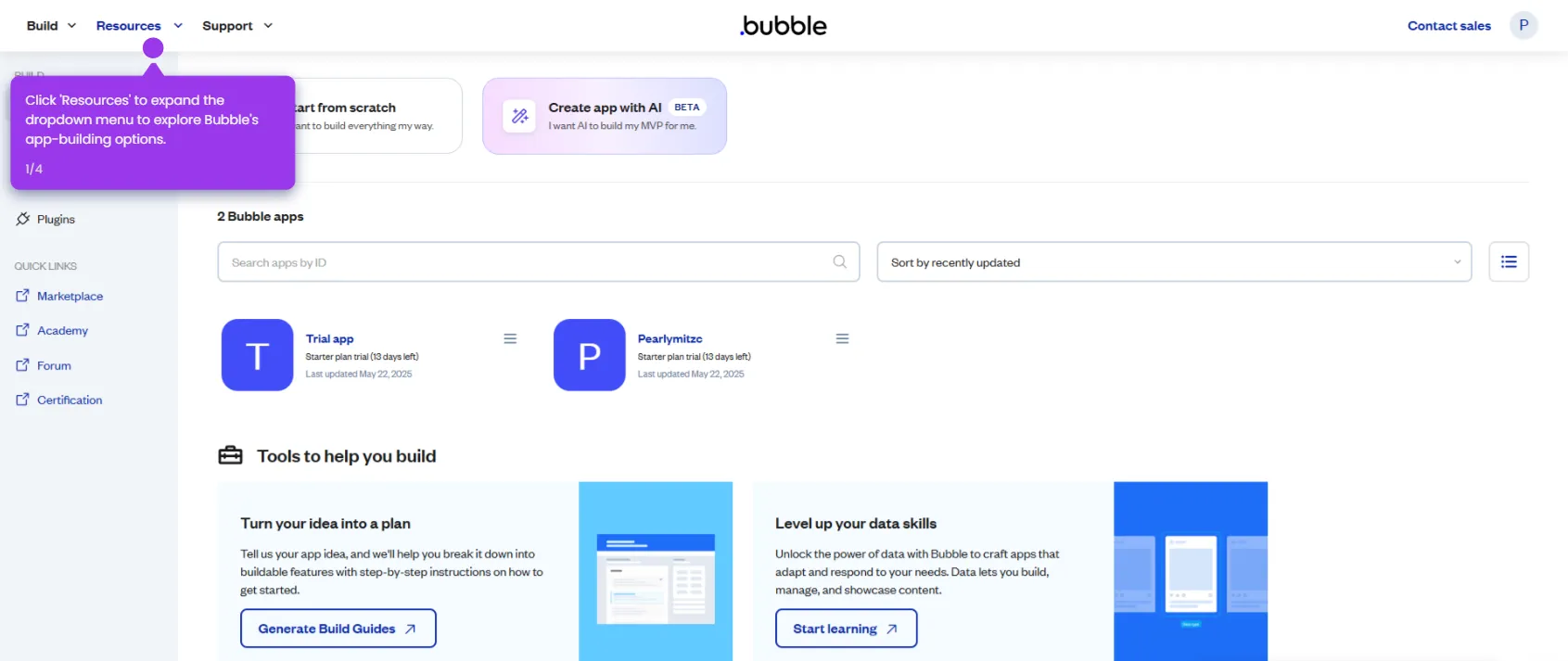
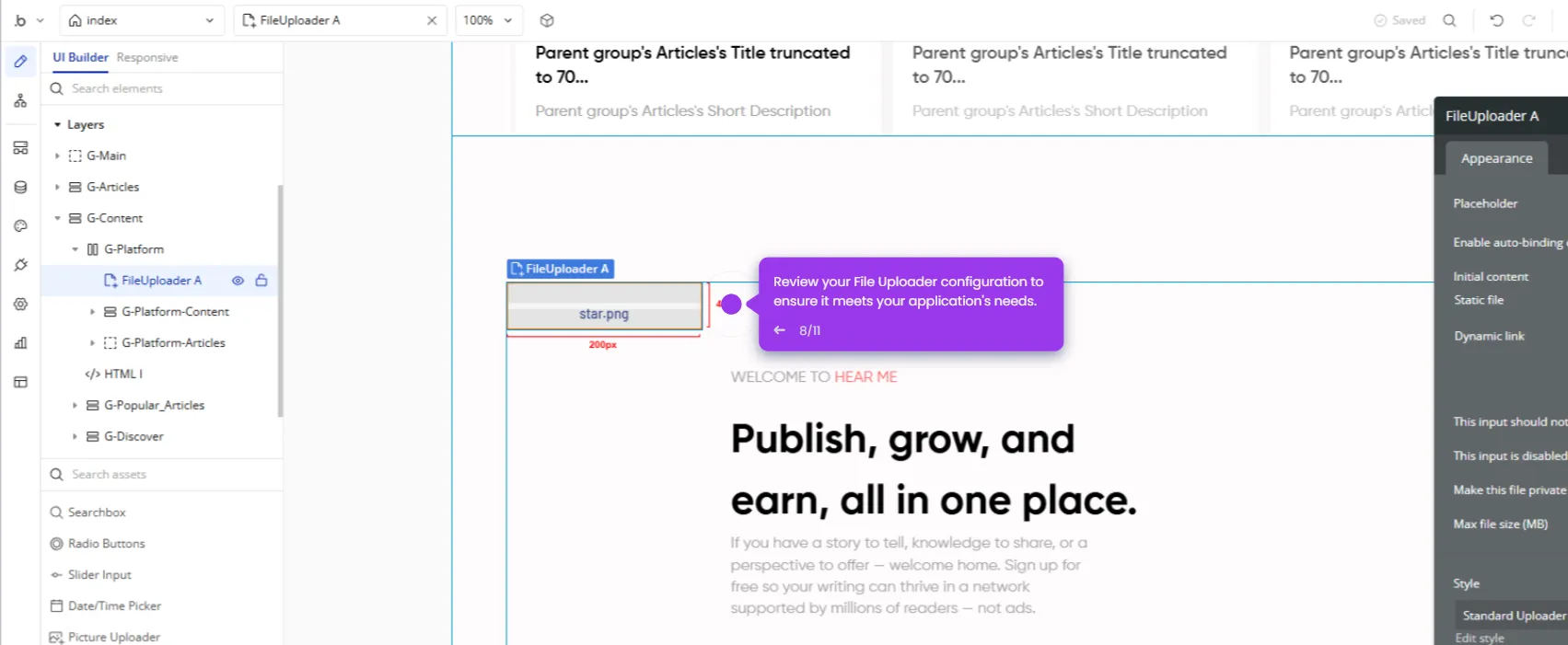
- Open the design editor in Bubble.io to begin building your responsive layout.
- Open the Layout panel to access core building blocks for your page structure.
- Navigate to the Container Layout section to control how groups are arranged on the page.
- Choose the appropriate Layout in the Property Editor for each group element.
- Set visibility options to control when elements appear and how they collapse when hidden.
- Access the element properties panel to customize your row's behavior.
- Navigate to the Responsive tab to enable your design to adapt across all devices.
- Adjust responsive settings to control how elements scale and reflow across screen sizes.
- Select the 1200px breakpoint to customize how your site appears on desktop devices.
- Adjust layout proportions for an optimal desktop viewing experience.
- Set custom positioning to control exactly where elements appear in your layout.
- Review your responsive settings to ensure consistency across all device types.
- Preview your design to see how it will appear to your users.
- Test interactions to verify that responsive elements function correctly.
- Click Deploy to save and publish your completed responsive design.