This tutorial shows how to build a basic custom visualization extension in Qlik Sense using the Extension API and a local development setup.
Notes:
- You need a text editor (such as VS Code) and Qlik Sense Desktop installed.
- Extensions are built with HTML, CSS, and JavaScript using the Qlik Sense Extension API. This tutorial covers a minimal working extension - not a full production build.
- On your computer, create a new folder inside C:\Users\[username]\Documents\Qlik\Sense\Extensions and name it after your extension (for example, my-custom-chart).
- Inside that folder, create a file named my-custom-chart.qext - this is the manifest file that Qlik Sense reads to register the extension.
- Open the .qext file in your text editor and add the required JSON metadata, including name, description, type set to visualization, and version.
- Create a second file in the same folder named my-custom-chart.js - this is the main script file where your extension logic lives.
- In the .js file, define the extension using define(["qlik"], function(qlik) { ... }) and include an initialProperties block and a paint function that renders your visualization.
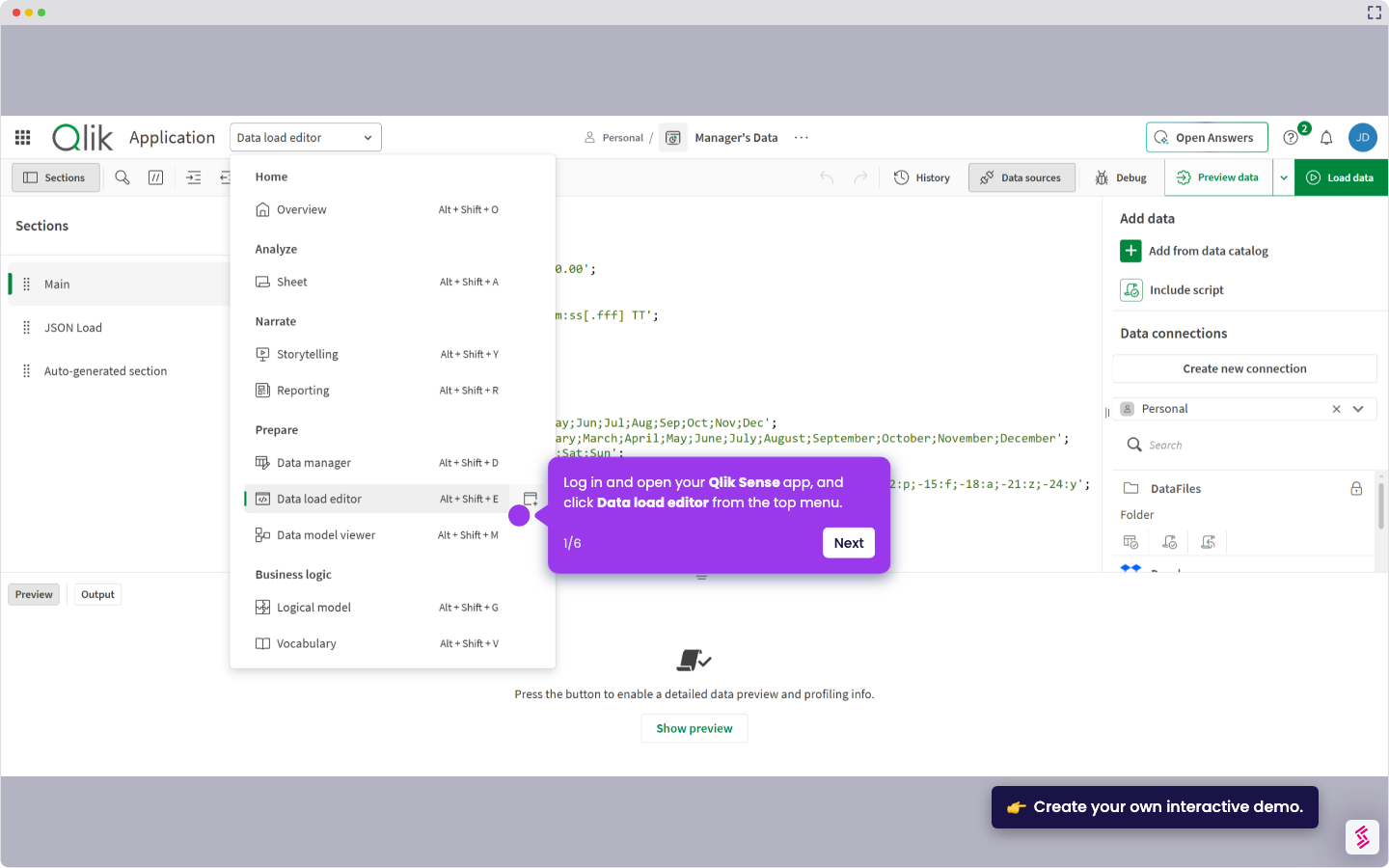
- Restart Qlik Sense Desktop and open an app in Edit mode - your extension will appear under Custom Objects in the Assets panel.
- Drag your extension onto a sheet to confirm it renders correctly.