This interactive demo was created free with Storylane in 2 minutes. Create your own demo
Start free
All Tutorials /Power BI

How to Add a Calculated Column in Power BI

Updated on:
May 12, 2026
By:
Madhav Bhandari
Use this interactive demo to learn how to create a calculated column in Power BI using DAX.

Quick summary

A calculated column in Power BI lets you extend your data table with custom values derived from a DAX expression, making it instantly available for use in reports and visuals. This walkthrough covers every step from opening a blank report to committing your formula and seeing the new column appear in your table.


Steps

  1. Open Power BI Desktop, go to the Home tab, and select Blank report.
  2. Select a data source to add data to your report.
  3. Click Load to import the data into Power BI.
  4. Click the table icon on the left panel to switch to the Data view.
  5. In the top ribbon, click New Column.
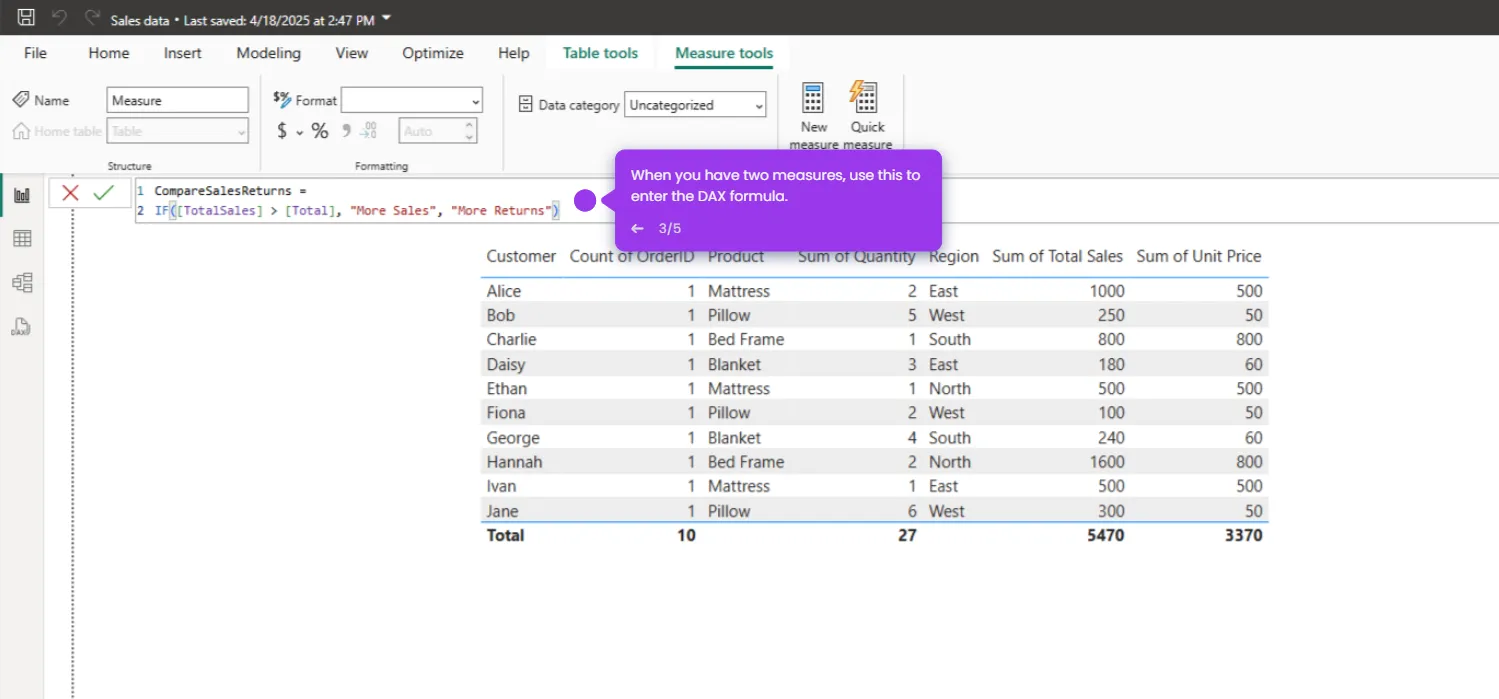
  6. A formula bar appears — write your DAX expression to define the calculated column.
  7. Click the check icon to commit and apply the formula.
  8. Power BI adds the new column to your table, ready to use in visuals.

📌 Why this matters

Adding a calculated column in Power BI enables analysts to derive new data fields directly within their data model using DAX expressions, without modifying the original source. This approach keeps business logic centralized and consistent across all reports and dashboards. Calculated columns are immediately available as dimensions or values in any visual, making it faster to build richer, more insightful reports. For teams working with large datasets in Power BI Desktop, mastering calculated columns is a foundational skill that accelerates data modeling and reduces reliance on upstream data transformations.
Your product deserves an interactive demo
Start free
Similar Articles
Power BI

How to Uninstall Power BI

Madhav Bhandari
Director of Marketing @ Storylane
Power BI

How to Compare Two Measures in Power BI

Madhav Bhandari
Director of Marketing @ Storylane
Power BI

How to Compare Months in Power BI

Madhav Bhandari
Director of Marketing @ Storylane
No items found.
Platform
Interactive Demos
Sandbox Demos
Buyer Hub
RepX
Integrations
Solutions
Product Marketers
Growth & Demand Gen
Sales Reps & AEs
Presales & SEs
Customer Success
Product Managers
Customers
Demo Showcase
Customer Stories
Finer Demos Club
Features
Demo Signals
Personalization
Deal Intelligence
Resources
Blog
The Plot
Tutorials
Events & webinars
Help Docs
What’s New
Demo Dundies
Company
Careers
Pricing
Partners
Contact
Trust Center
Backed by
Chrome Extension Icon
Chrome extension
Download
Desktop app
Download
Built in San Francisco Bay Area - ©2026 Storylane
Privacy PolicyTerms & Conditions
X Corp (formerly Twitter)LinkedIn
This website uses cookies to ensure you get the best experience on our website. Learn More
Got it
This website uses cookies to ensure you get the best experience on our website. Learn More
Got it