This interactive demo was created free with Storylane in 2 minutes. Create your own demo
Start free
All Tutorials /MS Teams

How to Integrate Microsoft Teams with Github

Updated on:
May 12, 2026
By:
Madhav Bhandari
Use this interactive demo to learn how to connect GitHub events to Microsoft Teams messages via Make.

Quick summary

This tutorial shows how to integrate Microsoft Teams with GitHub using Make (formerly Integromat) by building an automated scenario that sends Teams notifications whenever a GitHub event occurs. Once configured, your team receives real-time development updates directly inside Microsoft Teams without any manual effort.


Steps

  1. In Make, click 'Create a new scenario' to start building your automation workflow.
  2. In the scenario editor, search for 'GitHub' and click on it to add it as a module.
  3. Add GitHub to your scenario and select a trigger to define which GitHub event starts the automation.
  4. When prompted, authenticate GitHub by clicking 'Authorize Integromat' to grant Make access to your account.
  5. Customize your scenario by adding the relevant GitHub details and click 'OK' to proceed.
  6. Add and authenticate Microsoft Teams by signing in and granting access to Make.
  7. Choose the action you want to perform in Microsoft Teams when the GitHub trigger fires.
  8. Set up the full scenario mapping so that a GitHub action results in a Microsoft Teams action, then click 'OK' to proceed.
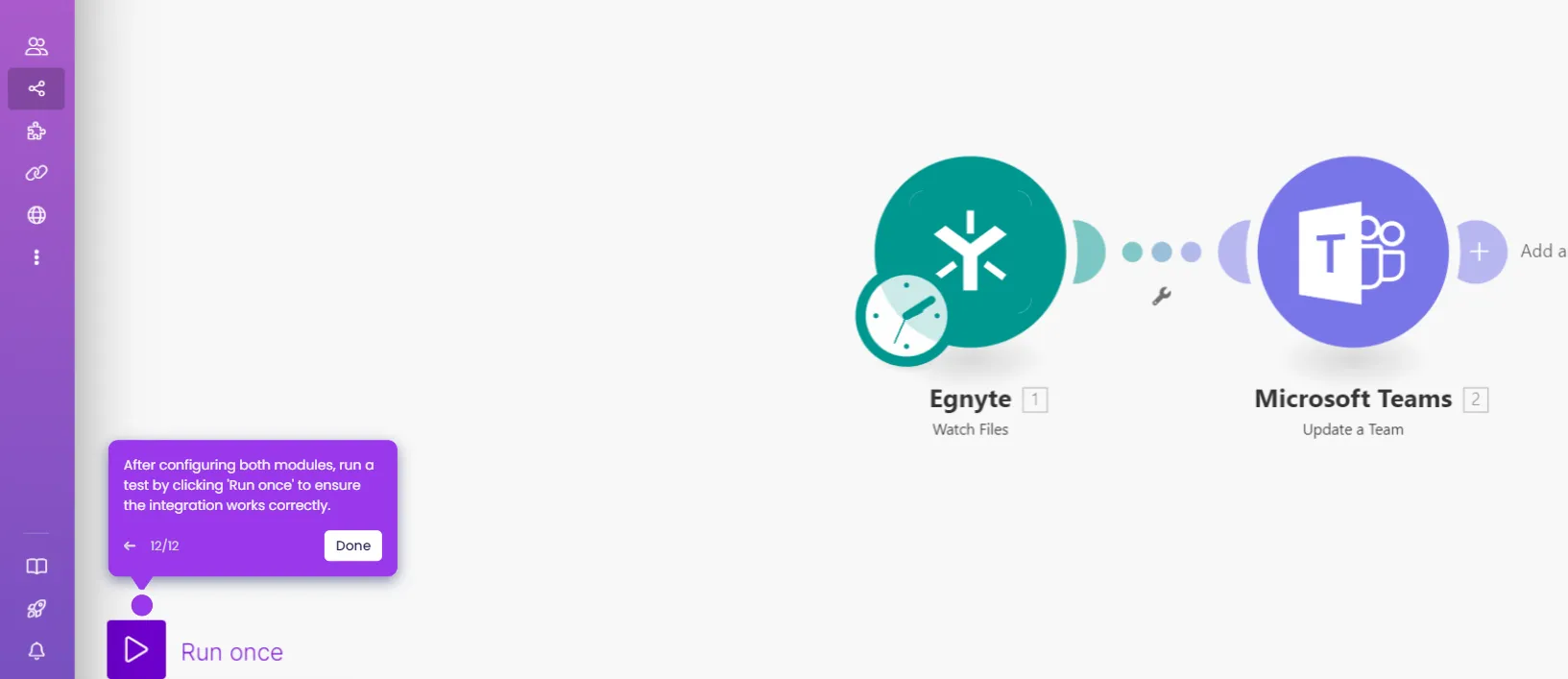
  9. Click 'Run Once' to test the integration and verify the automation works end to end.
  10. Confirm the integration is live — your team will now stay informed about development activities and issue progress directly within the Teams platform.

📌 Why this matters

Integrating Microsoft Teams with GitHub using Make eliminates the gap between code activity and team communication by automatically routing GitHub events — such as pull requests, commits, and issue updates — into Microsoft Teams channels. This no-code automation reduces context switching, keeps developers and project managers aligned in real time, and ensures no critical development update goes unnoticed. For teams managing active repositories, this integration is a straightforward way to improve DevOps visibility and accelerate response times without writing a single line of code.
Your product deserves an interactive demo
Start free
Similar Articles
MS Teams

How to Integrate Microsoft Teams with Pipedrive

Madhav Bhandari
Director of Marketing @ Storylane
MS Teams

How to Integrate Microsoft Teams with Basecamp

Madhav Bhandari
Director of Marketing @ Storylane
MS Teams

How to Integrate Microsoft Teams with Egnyte

Madhav Bhandari
Director of Marketing @ Storylane
No items found.
Platform
Interactive Demos
Sandbox Demos
Buyer Hub
RepX
Integrations
Solutions
Product Marketers
Growth & Demand Gen
Sales Reps & AEs
Presales & SEs
Customer Success
Product Managers
Customers
Demo Showcase
Customer Stories
Finer Demos Club
Features
Demo Signals
Personalization
Deal Intelligence
Resources
Blog
The Plot
Tutorials
Events & webinars
Help Docs
What’s New
Demo Dundies
Company
Careers
Pricing
Partners
Contact
Trust Center
Backed by
Chrome Extension Icon
Chrome extension
Download
Desktop app
Download
Built in San Francisco Bay Area - ©2026 Storylane
Privacy PolicyTerms & Conditions
X Corp (formerly Twitter)LinkedIn
This website uses cookies to ensure you get the best experience on our website. Learn More
Got it
This website uses cookies to ensure you get the best experience on our website. Learn More
Got it